Clear Sky Science · en
Association of periodontitis with reduced kidney function and albuminuria in early chronic kidney disease: a population-based study
Why Your Gums Matter to Your Kidneys
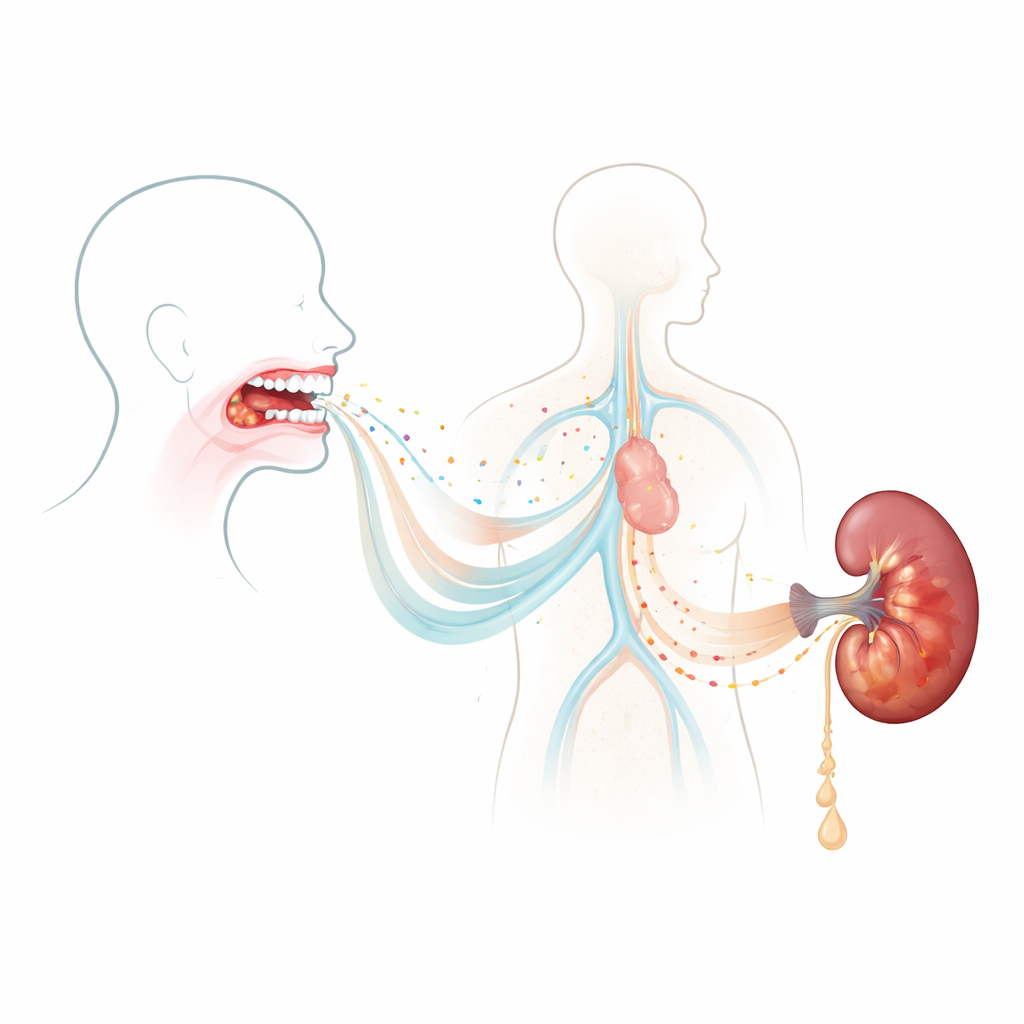
Most of us think of gum disease as a problem for dentists, not kidney specialists. But this large population study from Hamburg, Germany, suggests that unhealthy gums and early kidney damage often go hand in hand. By carefully examining thousands of adults, the researchers show that severe gum disease is linked to slightly worse kidney filtering function and more protein leakage into the urine—signals of early chronic kidney disease. The work raises an important question: could taking better care of our mouths also help protect our kidneys over the long run?
Looking at Mouth Health in the General Population
The research team drew on data from the Hamburg City Health Study, which follows city residents aged 45 to 74 years. From the first 10,000 participants, they focused on 6,179 people who had a full-mouth dental exam and no history of dialysis or kidney transplant. Specially trained staff measured the depth of pockets around every tooth and how much support the tooth had lost over time—key signs of periodontitis, a chronic infection and inflammation of the tissues that hold teeth in place. Using an international classification from 2017, they grouped people into mild-to-moderate (Stage I/II), advanced (Stage III), and severe (Stage IV) gum disease.
Checking How Well the Kidneys Work
To assess kidney health, the scientists used two standard markers. First, they calculated an estimated glomerular filtration rate (eGFR), which reflects how much blood the kidneys filter each minute, based on blood levels of creatinine and cystatin C. Second, they measured the urine albumin-to-creatinine ratio (uACR), an indicator of how much protein leaks through the kidney’s filters into the urine. Even modest drops in eGFR or rises in uACR can signal early chronic kidney disease and predict future heart and kidney problems. The team also measured blood markers of whole-body inflammation—high-sensitivity C‑reactive protein (hsCRP) and interleukin‑6 (IL‑6)—and recorded major risk factors such as age, sex, diabetes, smoking, blood pressure, and blood lipids.
More Severe Gum Disease, More Early Kidney Damage
The analyses revealed a clear pattern: as kidney function declined, severe gum disease became more common. Among people with normal kidney filtering, about 14% had severe periodontitis. In those with moderately reduced kidney function, that figure rose to 36%, and nearly half of those with the poorest kidney function had severe disease. A similar trend showed up when the team looked at protein in the urine: severe gum disease affected 21% of people without albumin in the urine but 32% of those with moderately increased albumin and close to 40% of those with the highest levels. When the researchers treated gum damage as a continuous measure rather than categories, each small step of extra damage was linked to slightly lower eGFR and higher uACR, even after accounting for age, sex, diabetes, and smoking.
Inflammation Helps Explain the Link—But Not Fully
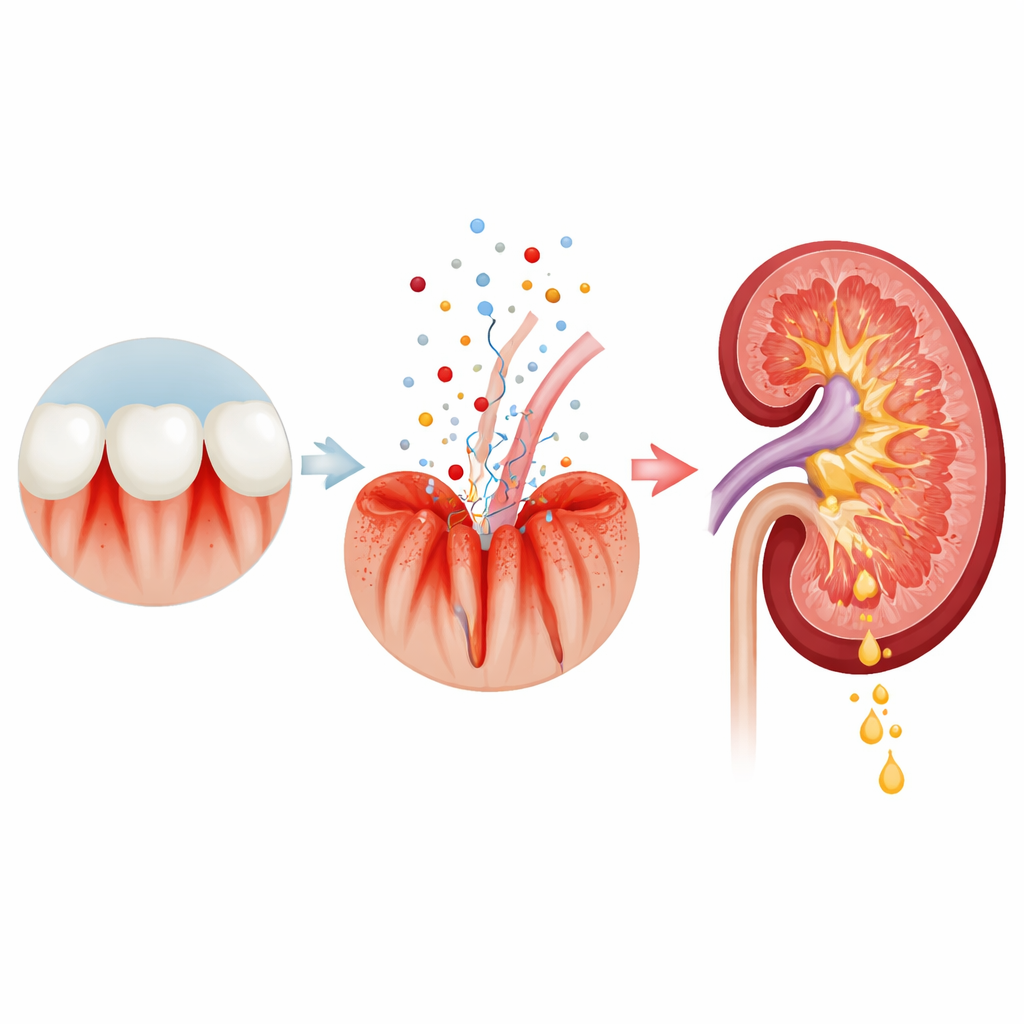
Because both periodontitis and kidney disease are inflammatory conditions, the team tested whether low-grade inflammation in the bloodstream might connect the two. People with worse gum disease, lower eGFR, or higher uACR tended to have higher levels of hsCRP and IL‑6, and the highest inflammation levels appeared in participants who had both severe periodontitis and more advanced kidney problems. Using statistical “mediation” models, the researchers estimated that hsCRP explained roughly one-third of the association between gum damage and lower eGFR, and only about one-tenth of the association with higher uACR. In other words, inflammation mattered, but most of the link between diseased gums and early kidney damage seemed to run through other pathways—possibly direct effects of oral bacteria or their products on blood vessels and kidney filters, or shared processes like oxidative stress.
What This Means for Everyday Health
For lay readers, the take‑home message is that gum disease is not just about sore gums or losing teeth. In this large community sample, people with more severe periodontitis already showed subtle signs of kidney impairment, independent of classic risk factors. While the study cannot prove that gum disease causes kidney damage, it strengthens the idea of an “oral–kidney” connection and suggests that regular dental care and early treatment of periodontitis might someday become part of how we manage kidney risk. Future long-term and treatment studies will be needed to show whether improving oral health can actually slow kidney decline—but for now, it adds another reason to brush, floss, and see the dentist regularly.
Citation: Schmidt-Lauber, C., Ebinghaus, M., Borof, K. et al. Association of periodontitis with reduced kidney function and albuminuria in early chronic kidney disease: a population-based study. Int J Oral Sci 18, 33 (2026). https://doi.org/10.1038/s41368-026-00435-6
Keywords: periodontitis, chronic kidney disease, systemic inflammation, oral–systemic health, albuminuria