Clear Sky Science · en
Multilevel analysis of individual heterogeneity and discriminatory accuracy (MAIHDA) to understand how obesity risk varies according to multiple lifestyle behavior recommendations
Why Everyday Habits Matter Together
Most of us have heard familiar advice about eating more vegetables, being active, sleeping well, drinking moderately, and avoiding cigarettes. But in real life, these habits don’t happen one at a time—they cluster together. This study asks a simple but powerful question: when you consider several lifestyle habits at once, do particular combinations dramatically change someone’s risk of obesity, or do the effects mostly just add up?
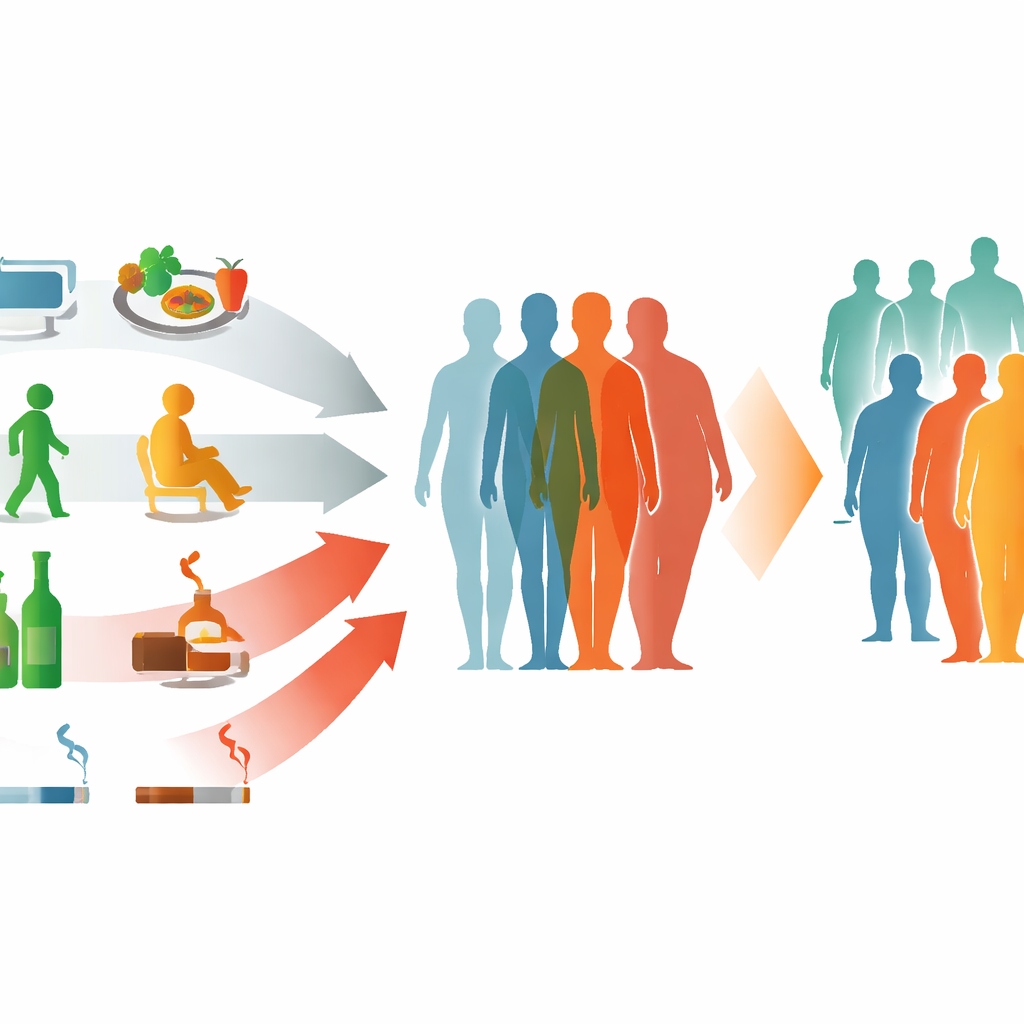
Looking at Many Habits in Real Lives
The researchers drew on data from more than 260,000 adults in the UK Biobank, a large health study of people aged 40–69. For each participant, they looked at five everyday behaviours: fruit and vegetable intake, physical activity, sleep duration, alcohol consumption, and smoking status. For four of these, they coded whether people met national guidelines—for example, getting 7–9 hours of sleep, being sufficiently active each week, keeping alcohol within recommended limits, and eating at least five portions of fruits and vegetables daily. Smoking was grouped as current, previous, or never. By combining these simple yes/no (or three-way) categories, they created 48 distinct “lifestyle profiles,” such as someone who sleeps well, is active, drinks moderately, eats enough produce, and has never smoked, versus someone who misses most recommendations and used to smoke.
A New Way to See Patterns in Risk
To understand how these lifestyle profiles related to body size, the team used a statistical framework called multilevel analysis of individual heterogeneity and discriminatory accuracy (MAIHDA). Instead of just looking at each habit on its own, MAIHDA treats each lifestyle profile as a group and then asks two questions. First, how much of the variation in body mass index (BMI) and obesity is due to differences between these lifestyle groups versus differences between individuals within the same group? Second, do certain combinations of behaviours produce extra “interaction” effects, where the whole is more (or less) than the sum of its parts? The researchers ran models separately for men and women, gradually adding lifestyle habits and background factors such as age, area-level deprivation, ethnicity, and employment.
More Healthy Habits, Lower Obesity Risk
The patterns were strikingly consistent. Among both men and women, the lifestyle profiles with the lowest average BMI and lowest probability of obesity were those in which most or all recommendations were met. For example, male non-smokers who were active, slept 7–9 hours, stayed within alcohol limits, and ate enough fruits and vegetables had the lowest predicted BMI and about one-third chance of having obesity. At the opposite end of the scale were previous smokers who missed most recommendations; in this group, predicted BMI was roughly 4–5 BMI units higher and the chance of obesity was close to four in five. Across both sexes, the profiles with the lowest obesity risk almost always included meeting guidelines for physical activity and sleep, suggesting these behaviours are especially important anchors of a healthier weight.
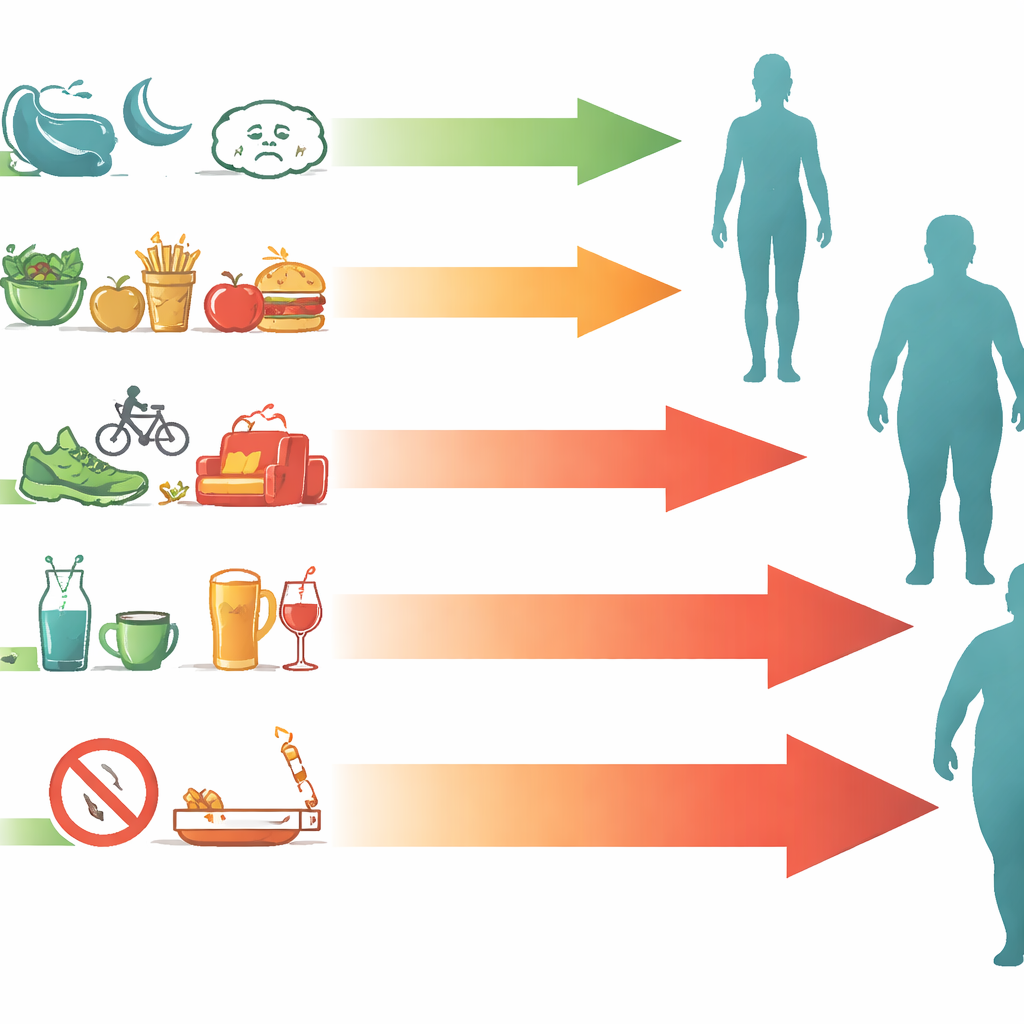
Mostly Add-Up Effects, Not Special Combinations
One might expect that certain lifestyle combinations—say, lack of sleep plus heavy drinking—would interact in a way that sharply amplifies obesity risk. The MAIHDA results offered a more down-to-earth picture. Only a small fraction of the differences in BMI and obesity risk could be traced to which lifestyle profile people belonged to. Instead, most variation arose between individuals within the same profile, reflecting other influences like work demands, neighbourhood conditions, or detailed dietary patterns not captured here. When the researchers accounted for each lifestyle habit as a separate factor, the remaining differences between profiles shrank dramatically. That pattern indicates that the effects of these behaviours are mostly additive: each extra guideline you meet nudges your risk in a healthier direction, but there is little evidence of powerful, special “super-combos” of habits. Only one small group—men who currently smoked but met only the physical activity guideline—showed a clear sign of a true interaction effect.
What This Means for Everyday Choices
For a layperson, the study’s message is refreshingly straightforward. Obesity risk does not hinge on a mysterious, perfect mix of lifestyle habits. Instead, each healthy choice—being active, eating plenty of fruits and vegetables, sleeping enough, limiting alcohol, not smoking—contributes its own separate boost. The more of these recommendations you can meet, the lower your average BMI and the less likely you are to live with obesity. At the same time, the large differences between individuals within the same lifestyle profile remind us that broader environments and life circumstances also play a big role. Still, this research suggests that steadily stacking up healthy habits—one guideline at a time—is a practical, evidence-based way to move the odds in your favour.
Citation: Swain, A., Pearson, N., Willis, S.A. et al. Multilevel analysis of individual heterogeneity and discriminatory accuracy (MAIHDA) to understand how obesity risk varies according to multiple lifestyle behavior recommendations. Int J Obes 50, 819–829 (2026). https://doi.org/10.1038/s41366-025-02010-1
Keywords: obesity, lifestyle behaviors, physical activity, sleep, BMI