Clear Sky Science · en
Mixed-effects location scale modeling of stress and contextual factors on overeating: a real-world observational study
Why everyday stress and eating habits matter
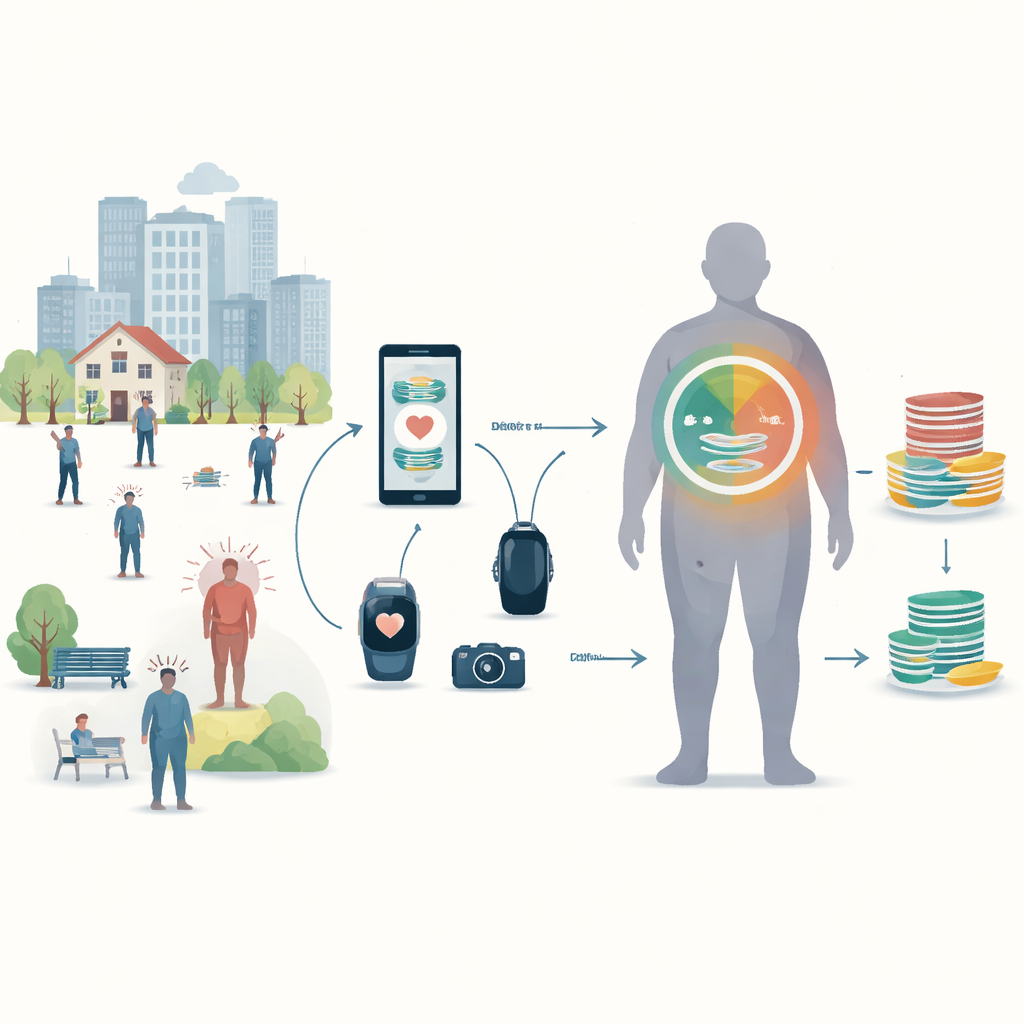
Many people notice that stressful days seem to change how they eat—sometimes leading to big, high-calorie meals, other times killing their appetite altogether. This study followed adults with obesity in their daily lives for two weeks to see, meal by meal, how stress, surroundings, and social situations were linked to how much they actually ate. By combining wearable sensors, phone surveys, and detailed dietitian interviews, the researchers could look beyond simple averages and uncover when, where, and for whom stress is most likely to fuel overeating.
Watching real life instead of the lab
Rather than bringing volunteers into a lab for a single test meal, the team tracked 47 adults with obesity as they went about their usual routines over 14 days. Participants wore several small devices: a wristband that captured movement and heart rate, a necklace-like sensor that detected eating, and a camera to help confirm meals. They also used a smartphone app to log what they ate and answer quick questions right before and after eating, including how stressed, hungry, or out of control they felt, where they were, and whether they were eating alone or with others. Dietitians later conducted in-depth phone interviews to estimate the calories in each of the 2,004 meals.
Looking at both people and moments
To untangle this rich stream of information, the researchers used a statistical approach that separates two kinds of patterns. First, it looks at how people differ from one another on average—some tend to be more stressed or eat out more often than others. Second, it looks at how the very same person changes from one meal to the next—for example, what happens on a particularly stressful lunch compared with their usual, calmer lunches. This allowed the team not only to see which factors were tied to bigger meals, but also whether they made eating more or less predictable over time, a clue to whether habits are forming.
How stress, place, and company shape meal size
The results painted a nuanced picture. People who were generally more stressed across the two weeks tended to consume more calories overall, and their meals were more consistent in size, suggesting a stable pattern of stress-related overeating. Within any given person, moments of stronger biological hunger, feeling they were overeating, and feeling out of control while eating were linked to larger meals. Social and environmental cues mattered too: restaurant and takeout meals, eating later in the day, and eating with others all tended to be higher in calories, whereas grabbing a snack instead of a full meal was associated with lower intake.
Stress does not act alone
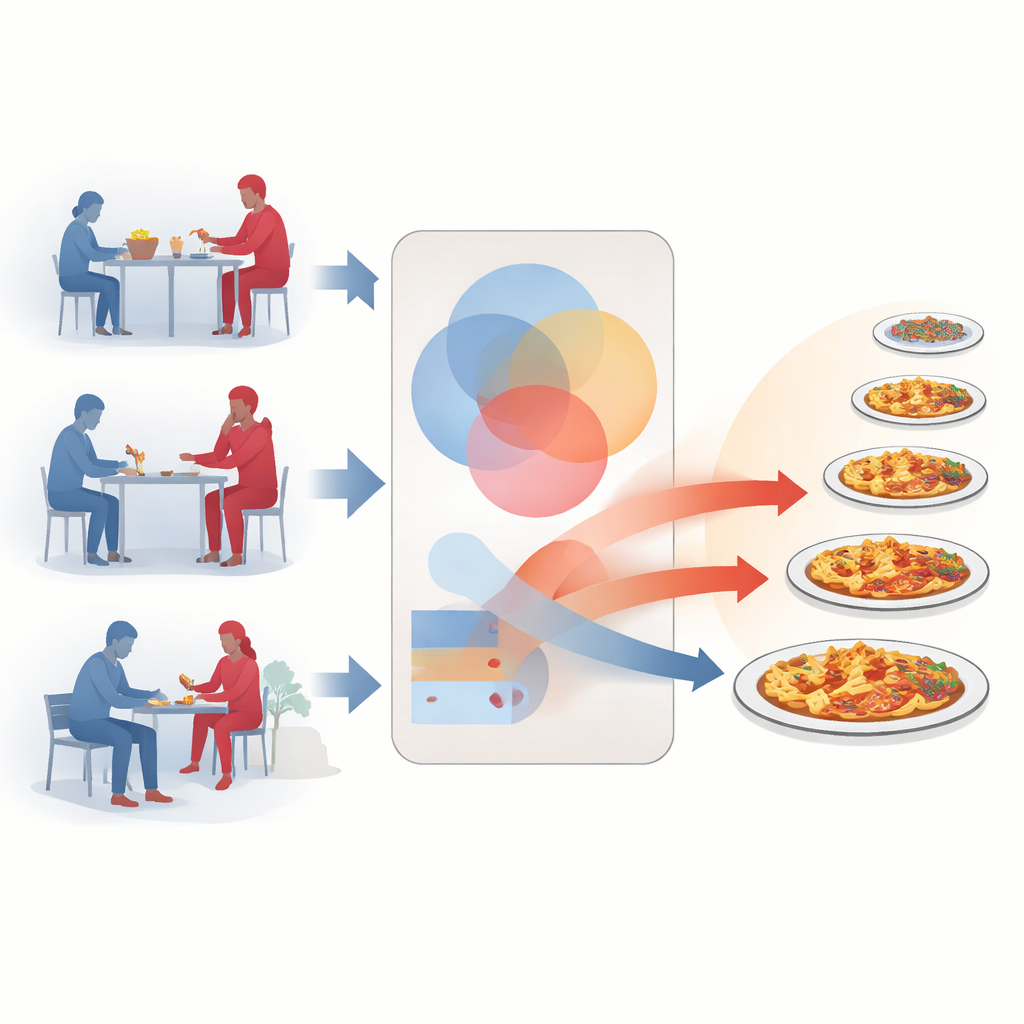
Importantly, the study showed that stress is not a simple on–off switch for overeating. When participants were stressed and eating away from home, they actually consumed fewer calories than when stressed at home. One possible explanation is that at home, high-calorie foods are easier to access, while outside the home people may face more limits on what they can eat or must expend more effort to obtain indulgent foods. The effect of stress also appeared to differ by eating style: people who more often ate for pleasure tended to show steadier meal sizes under stress, while those who were less pleasure-driven showed more ups and downs, although this pattern needs further confirmation.
What this means for tackling overeating
Overall, the study suggests that focusing on stress alone is not enough to curb overeating in real life. Instead, overeating emerges from a tangle of psychological feelings (like hunger and loss of control), social situations (like meals with friends), and environmental cues (such as restaurant dining and time of day). For people trying to manage their weight, and for clinicians designing programs, this points toward more personalized, timely strategies—for example, phone-based prompts or mindful breathing exercises delivered during stressful, high-risk moments at home, or nudges to choose smaller portions and less energy-dense foods in restaurants. By pinpointing when stress and context combine to push meals above someone’s usual level, this work lays the groundwork for "just-in-time" interventions that support healthier choices exactly when they are needed most.
Citation: Amagai, S., Zhang, X., Shahabi, F. et al. Mixed-effects location scale modeling of stress and contextual factors on overeating: a real-world observational study. Int J Obes 50, 633–639 (2026). https://doi.org/10.1038/s41366-025-01987-z
Keywords: stress eating, obesity, overeating, real-world monitoring, contextual factors