Clear Sky Science · en
Sex-dependent associations of childhood maltreatment with obesity-related traits: results from the German National Cohort (NAKO)
Why Early Life Experiences Matter for Adult Weight
Many people struggle with their weight and are told it all comes down to food and exercise. This study suggests a deeper story: experiences of abuse or neglect in childhood may leave lasting marks on the body that show up decades later on the scale and around the waist—and these effects are not the same for women and men.
Looking at Childhood and Adult Health in a Whole Country
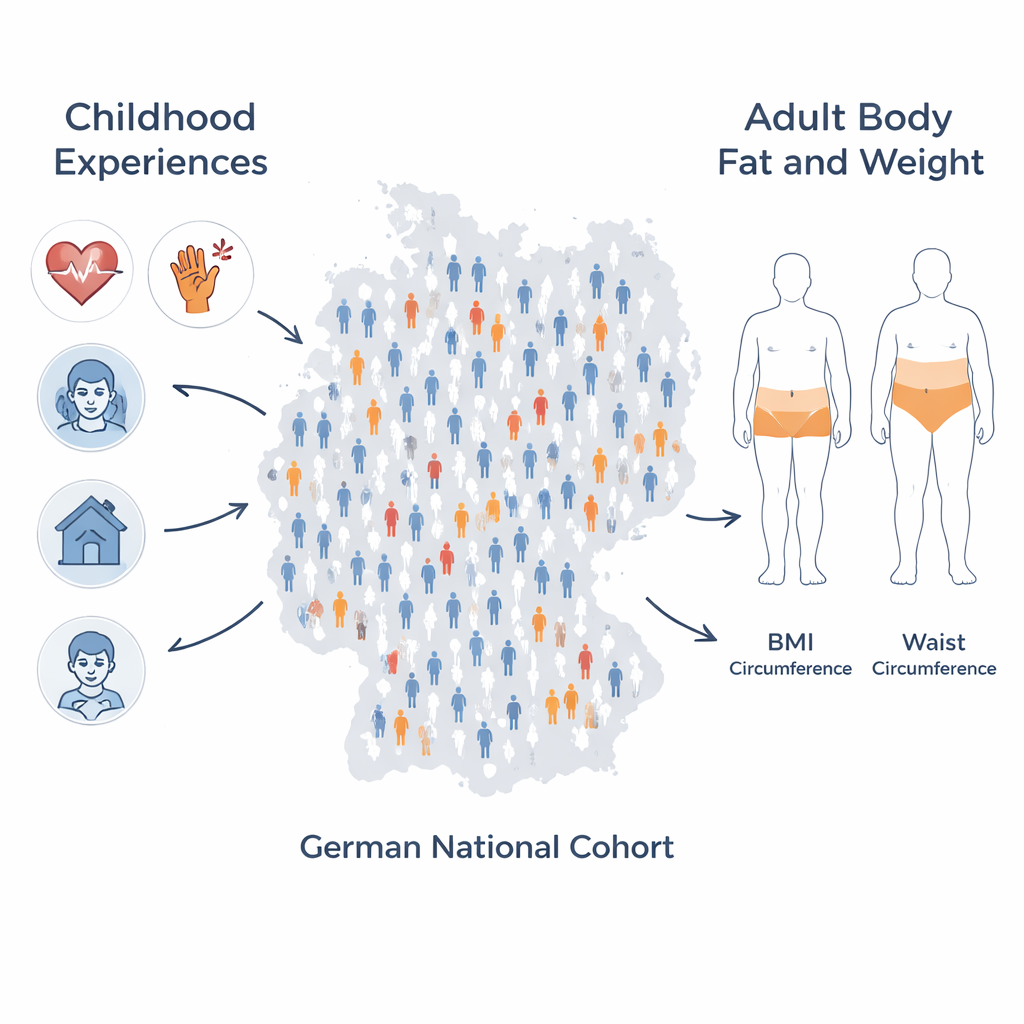
The researchers drew on data from the German National Cohort, a huge health study that followed more than 200,000 adults from across Germany. For this analysis, they focused on over 150,000 people aged 20 to 69. Participants answered short questions about whether they had experienced different forms of childhood maltreatment—such as emotional or physical abuse, sexual abuse, or emotional and physical neglect. They also underwent detailed measurements of their height, weight, waist size, and levels of body fat, including the fat that lies under the skin and the more dangerous fat stored deep in the abdomen around the organs.
Counting Both Types and Severity of Harm
To capture early life adversity, the team used a brief questionnaire that summed up how often different kinds of maltreatment had occurred, creating an overall severity score. They also counted how many distinct types of maltreatment each person had faced, from none to three or more. This allowed them to test not only whether childhood maltreatment was linked to adult obesity-related traits, but also whether the risk climbed as more types of harm were added—a “dose–response” pattern. All analyses were carried out separately for women and men, and the researchers adjusted for age, education level, and study center to reduce the influence of other factors.
Stronger Links in Women, Especially with Multiple Harms
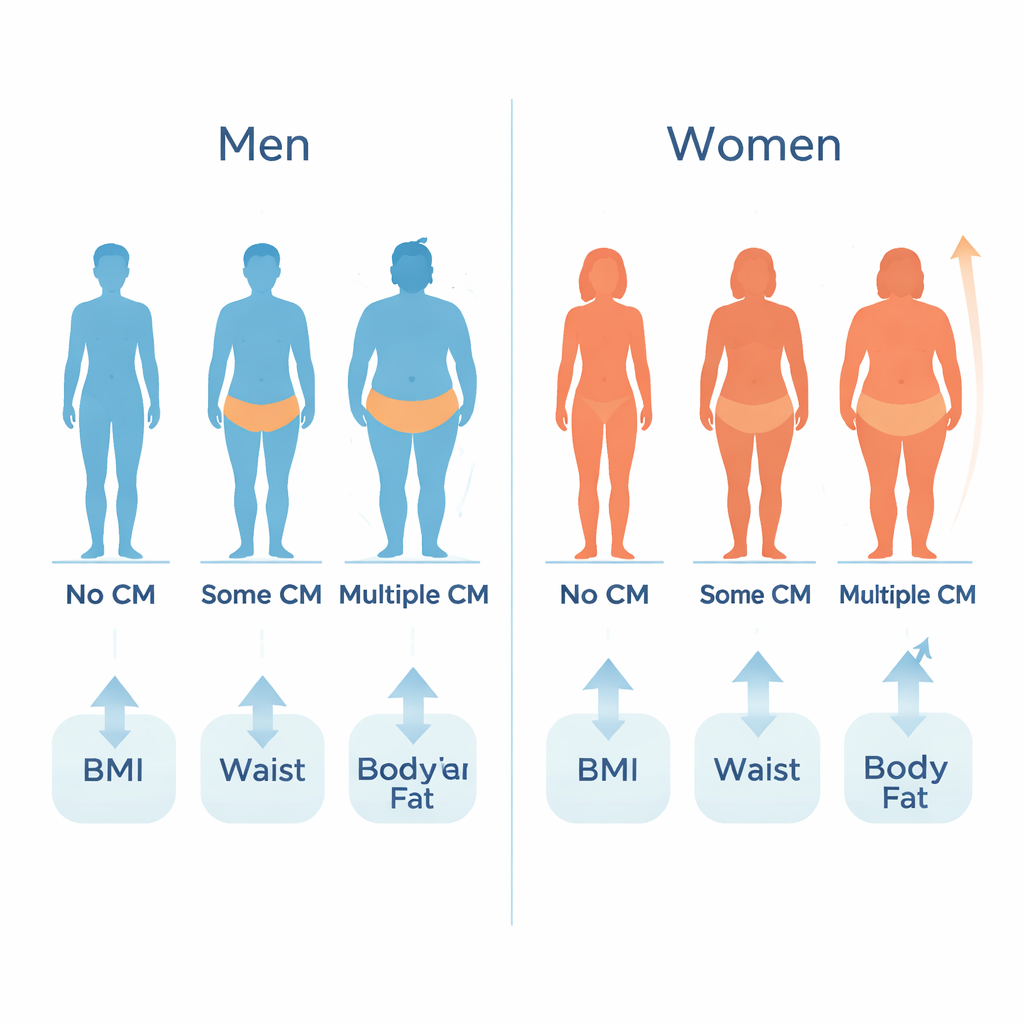
Overall, people who reported childhood maltreatment tended to have higher body weight, larger waistlines, and more body fat as adults. These links were usually stronger in women than in men. For example, each step up in overall maltreatment score was tied to a bigger increase in body mass index and waist circumference in women. When the team looked at how many different types of abuse or neglect someone had faced, they saw a clear stepwise pattern in both sexes: more types of harm went hand in hand with higher weight and larger waists. But women with three or more types of maltreatment showed particularly elevated odds of obesity and high waist size compared to women with no such history, with risks slightly higher than those seen in men with the same level of exposure.
Hidden Fat and the Role of Specific Traumas
The study also examined visceral fat—the deep belly fat that is strongly linked to heart disease and diabetes. Here, women who had experienced maltreatment, especially more than one type, tended to show a notable buildup of this risky fat. The relationship between maltreatment and visceral fat was present in men as well, but patterns were more consistent and often stronger in women. When the researchers broke down the results by type of maltreatment, emotional and physical abuse stood out in both sexes as being most strongly tied to higher weight and body fat. Emotional neglect and sexual abuse showed additional links to obesity-related traits in women but not in men. Interestingly, childhood physical neglect was associated with being slightly shorter in adulthood, suggesting that early hardship can also stunt physical growth, particularly in men.
What This Means for Prevention and Care
In plain terms, the study shows that difficult and harmful experiences in childhood can influence how the body stores fat many years later, and that women may carry a heavier physical burden than men, especially when they have endured several types of abuse or neglect. While the research cannot prove cause and effect, its large sample and consistent patterns support the idea that preventing childhood maltreatment—and recognizing it early when it does occur—could help reduce obesity and related diseases in later life. It also suggests that doctors and therapists should consider a patient’s early life experiences, and their sex and gender, when designing strategies to protect heart and metabolic health over the long term.
Citation: Töpfer, P., Klinger-König, J., Siewert-Markus, U. et al. Sex-dependent associations of childhood maltreatment with obesity-related traits: results from the German National Cohort (NAKO). Int J Obes 50, 329–337 (2026). https://doi.org/10.1038/s41366-025-01914-2
Keywords: childhood maltreatment, obesity, body fat distribution, sex differences, cardiometabolic risk