Clear Sky Science · en
Evaluation of archaeological heritage comprehensive utilization potential in Henan section of the Yellow River Basin
Why ancient sites along a great river still matter
The Yellow River is often called the cradle of Chinese civilization, and along its banks lie hundreds of ancient cities, tombs, and settlements. In Henan Province, these buried landscapes are under growing pressure from modern cities, farms, and infrastructure. This study asks a practical question with big implications: among 125 major archaeological sites in this heartland of history, which ones have the greatest potential to be protected, studied, and woven into today’s regional development—and why?
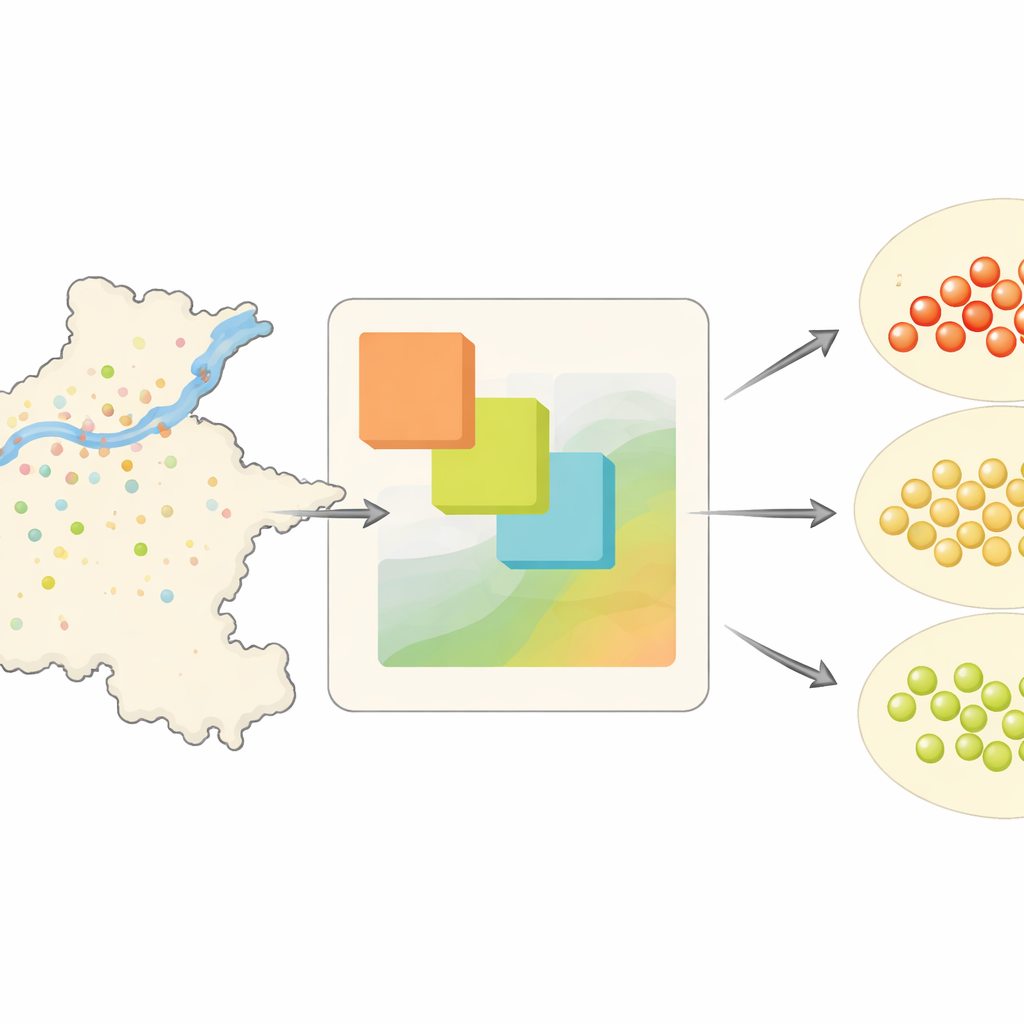
Looking at old sites in a new, practical way
Traditionally, experts judged ancient sites mainly on their historical importance or on whether they could attract tourists. The authors of this paper argue that this view is too narrow for a region where ruins, villages, highways, and factories all compete for the same land. They propose a broader idea they call “comprehensive utilization potential,” which means how likely a site is to turn its hidden strengths into real benefits—cultural, social, and economic—while still being well protected. To measure this, they examine not just what each site once was, but also how it is cared for today and what kind of surrounding environment it sits in.
Three lenses for judging ancient places
The team builds an evaluation system with three main lenses. “Core value” looks at the site’s role in the long story of Chinese civilization: Was it part of a capital city? Does it span several dynasties? Are its artifacts rare or technically impressive? “Existing conditions” focus on the present: How intact is the site? Is there a clear management body, museum, or park? Are basic services like lighting and toilets in place, and is the land legally aligned with protection goals? Finally, “regional context” considers the wider setting: Is the site easy to reach? Is it near other cultural attractions? Does the host city have a strong economy, tourism appeal, and policy support for heritage?
Turning complex data into clear patterns
To weigh these many factors fairly, the researchers combine expert judgment with hard numbers. Specialists in heritage, tourism, and government give structured comparisons of what matters most, while statistical methods measure how strongly each indicator varies among sites. These two streams are blended into a single set of weights, which is then applied to all 125 sites. Using geographic information software, the team maps how potential is distributed along river basins and across city and county boundaries. They also test whether high or low potential sites tend to cluster together, revealing “hot spots” and “cold spots” of opportunity.
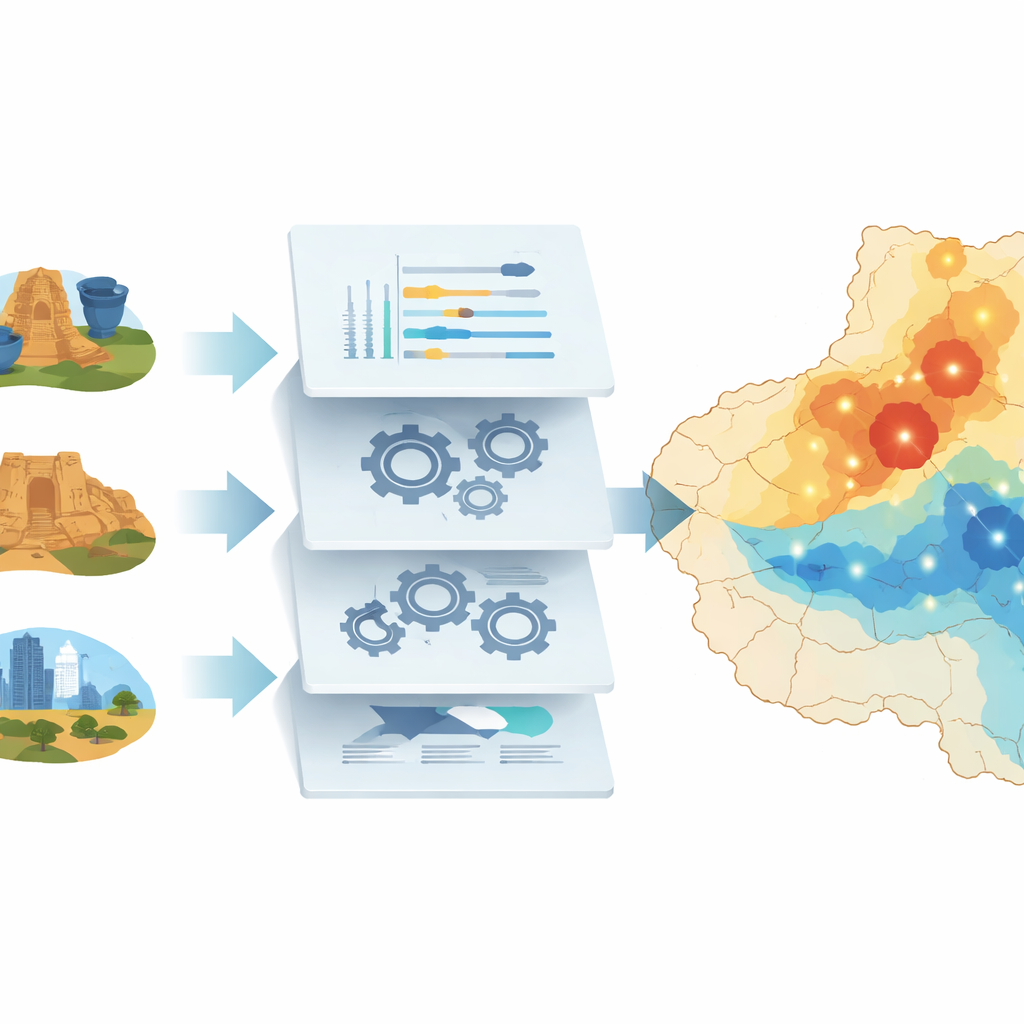
Where the promise and the problems lie
The results are striking. On a five-point scale, most sites fall into the low-potential range; only about 8% qualify as high-potential. These standout sites owe their strength mainly to exceptional core value—they are closely tied to key dynasties, large in size, or rich in scientific information. Medium-potential sites benefit more from relatively good current facilities and management, while low-potential sites often survive mostly because they sit in regions with growing economies or improving transport, even though their own value and care lag behind. Spatially, potential is not random: two clear “cores” emerge along the Yiluo and Ying river basins near historic capitals such as Luoyang and Zhengzhou, surrounded by smaller promising nodes and, in contrast, zones where sites are weak and scattered.
Guiding smarter choices for the future
For non-specialists, the takeaway is that not every ruin can or should become a star attraction—but almost all can play a role if managed wisely. The study shows that high-potential sites are best suited to become flagship parks and cultural hubs, medium-potential sites need help fixing land and facility issues to catch up, and low-potential sites should focus on gentle, community-centered uses rather than heavy development. By linking heritage value, on-the-ground conditions, and regional planning in one framework, this work offers officials a roadmap for deciding where to invest, where to coordinate across city lines, and how to keep the story-rich landscapes of the Yellow River Basin alive in a rapidly changing world.
Citation: Song, Y., Qu, L., Zhu, J. et al. Evaluation of archaeological heritage comprehensive utilization potential in Henan section of the Yellow River Basin. npj Herit. Sci. 14, 191 (2026). https://doi.org/10.1038/s40494-026-02459-x
Keywords: archaeological heritage, Yellow River Basin, cultural landscape, heritage management, sustainable development