Clear Sky Science · en
Community-engaged digital safeguarding of intangible cultural heritage: a review of methods and challenges
Why keeping living traditions alive matters
Across the world, people pass down songs, stories, crafts, and rituals that cannot be locked in a display case. These living traditions—known as intangible cultural heritage—are at risk as younger generations move to cities and life speeds up online. At the same time, powerful new digital tools promise to help record and share this heritage more widely than ever before. This article asks a timely question: can digital technology help these traditions stay alive, rather than turning them into lifeless museum pieces on a screen?
What counts as living cultural heritage
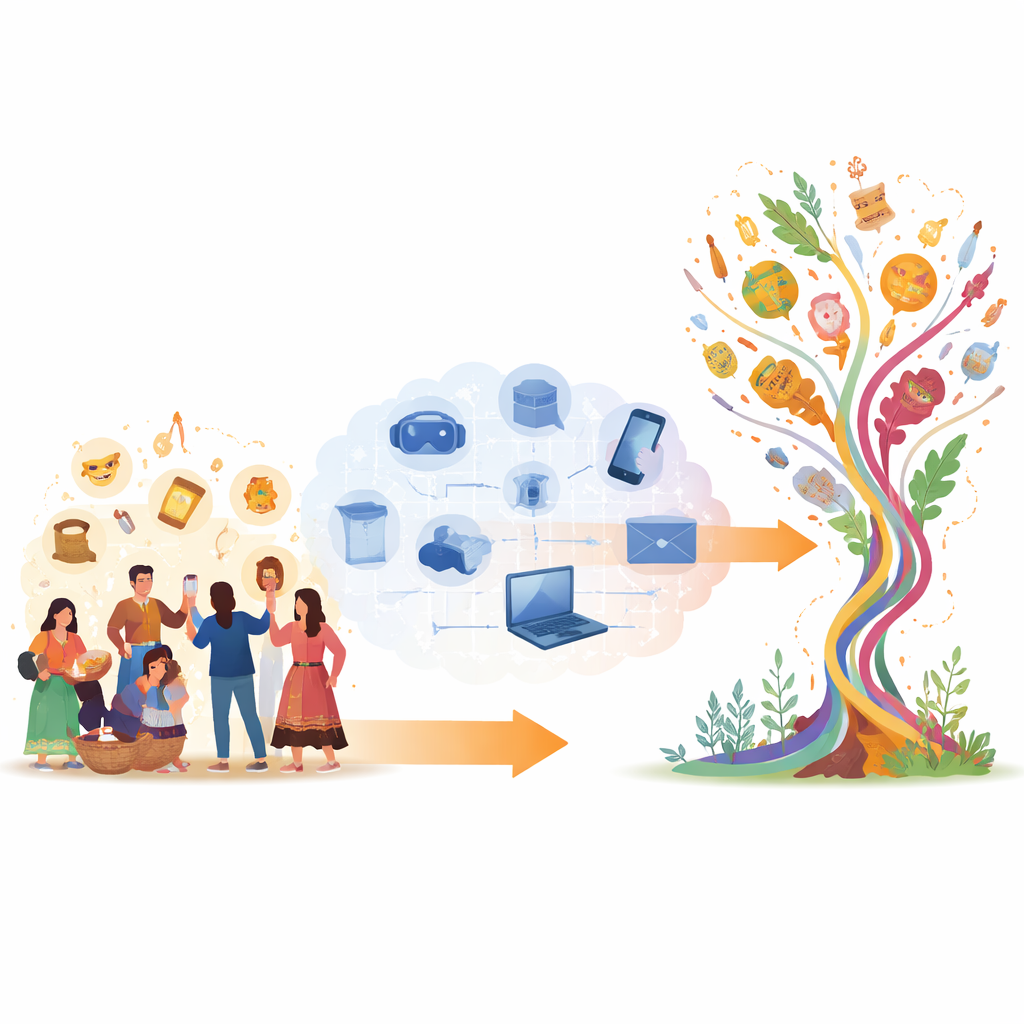
The paper starts by explaining that intangible cultural heritage includes everyday practices and skills that communities see as part of who they are, from dance and theater to craft techniques and oral histories. Since 2003, a global agreement led by UNESCO has urged countries to protect such living traditions in ways that keep communities at the center. That means safeguarding is not just about recording a performance once; it is about supporting people so they can keep practicing, adapting, and teaching it. Growing pressures from globalization, urbanization, and economic change, along with rapidly evolving digital tools, make this balancing act both harder and more urgent.
The digital boom and a missing connection
Over the last decade and a half, there has been an explosion of digital projects around cultural heritage: 3D scanning of objects and spaces, virtual and augmented reality experiences, motion capture of dance, and even early experiments with metaverse platforms and artificial intelligence. Yet many of these efforts focus mainly on the technology itself—how sharp the scan is, how impressive the headset feels—while treating communities as passive subjects. Other studies, by contrast, focus on how communities participate in decisions, but pay less attention to which digital tools are used and why. This split leaves a blind spot: we still know too little about how specific technologies and specific forms of community involvement work together, for better or worse, in real projects.
A new way to match people and technology
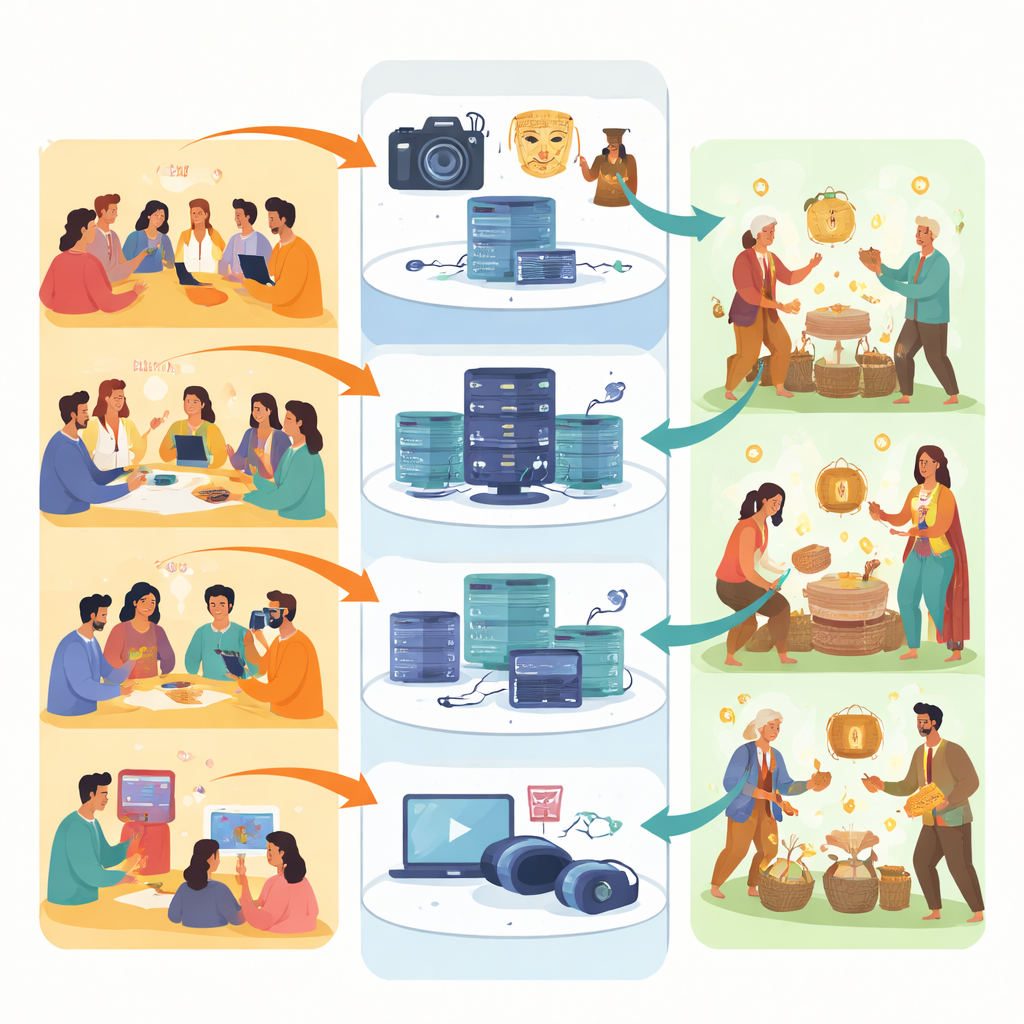
To bridge this gap, the authors reviewed 79 studies published between 2010 and 2025 and created what they call the Technology–Community Synergy Framework. In simple terms, this framework treats a digital heritage project as a chain that runs from guiding principles, to technology choices, to community practice, to cultural impact. On the technology side, it looks at steps such as capturing heritage, managing data, and presenting it through immersive or online tools. On the community side, it traces how people are involved: are they merely informed, consulted, co-designing content, or helping to govern the project itself? The key idea is that strong projects carefully match these two sides while respecting ethics, consent, and community control over knowledge.
What works, what fails, and why it matters
Using this framework, the authors show that about 60 percent of the projects they studied clearly support the “liveness” of heritage when technology and participation are aligned. For example, virtual museums built through co-creation workshops, or immersive educational experiences scripted with cultural bearers, allow communities to shape how their traditions appear online and to use digital tools for teaching younger generations. Citizen science projects where local people help label and interpret cultural data can also boost pride and awareness. By contrast, projects that concentrate on high-end recording without real community input often end up with what the authors call “digital fossilization”: beautifully detailed records that freeze a practice in time and may even discourage natural evolution. Automated AI labeling without deep consultation can strip away important meanings that only insiders understand.
Obstacles, blind spots, and future directions
The review also uncovers major hurdles. The digital divide means that the most advanced tools are often available only in wealthier regions, while communities elsewhere rely on basic phones or radio—but may actually have stronger, more participatory approaches. Historical experiences of exploitation can make people wary of outsiders who want to “digitize” their culture, especially when ownership, benefit-sharing, and the handling of sacred or sensitive knowledge are unclear. Legal systems built around individual intellectual property rarely fit collective, evolving traditions. Meanwhile, much of the published research still comes from Europe, North America, and East Asia, leaving many community-led, low-tech success stories in Africa, Latin America, and Oceania underdocumented.
How this helps traditions live, not just survive
In the end, the article argues that digital technology can either help living traditions thrive or unintentionally turn them into static relics, depending on who holds the reins. The Technology–Community Synergy Framework offers a practical roadmap: start from community needs and values, choose tools that people can actually use and shape, and build safeguards for consent, fairness, and long-term control into every stage. Rather than chasing the flashiest gadgets, the most successful projects are those where community members become co-creators and co-stewards of their own digital heritage. If used in this way, digital methods can extend the reach of intangible cultural heritage while keeping its heartbeat—ongoing practice, adaptation, and shared meaning—firmly in community hands.
Citation: Tan, YC., Yang, LH. & Wang, B. Community-engaged digital safeguarding of intangible cultural heritage: a review of methods and challenges. npj Herit. Sci. 14, 184 (2026). https://doi.org/10.1038/s40494-026-02458-y
Keywords: intangible cultural heritage, digital preservation, community participation, virtual and augmented reality, cultural sustainability