Clear Sky Science · en
A multi-analytical investigation of inorganic pigments’ composition in Kerala mural and Theyyam folk art
Colors That Tell Stories
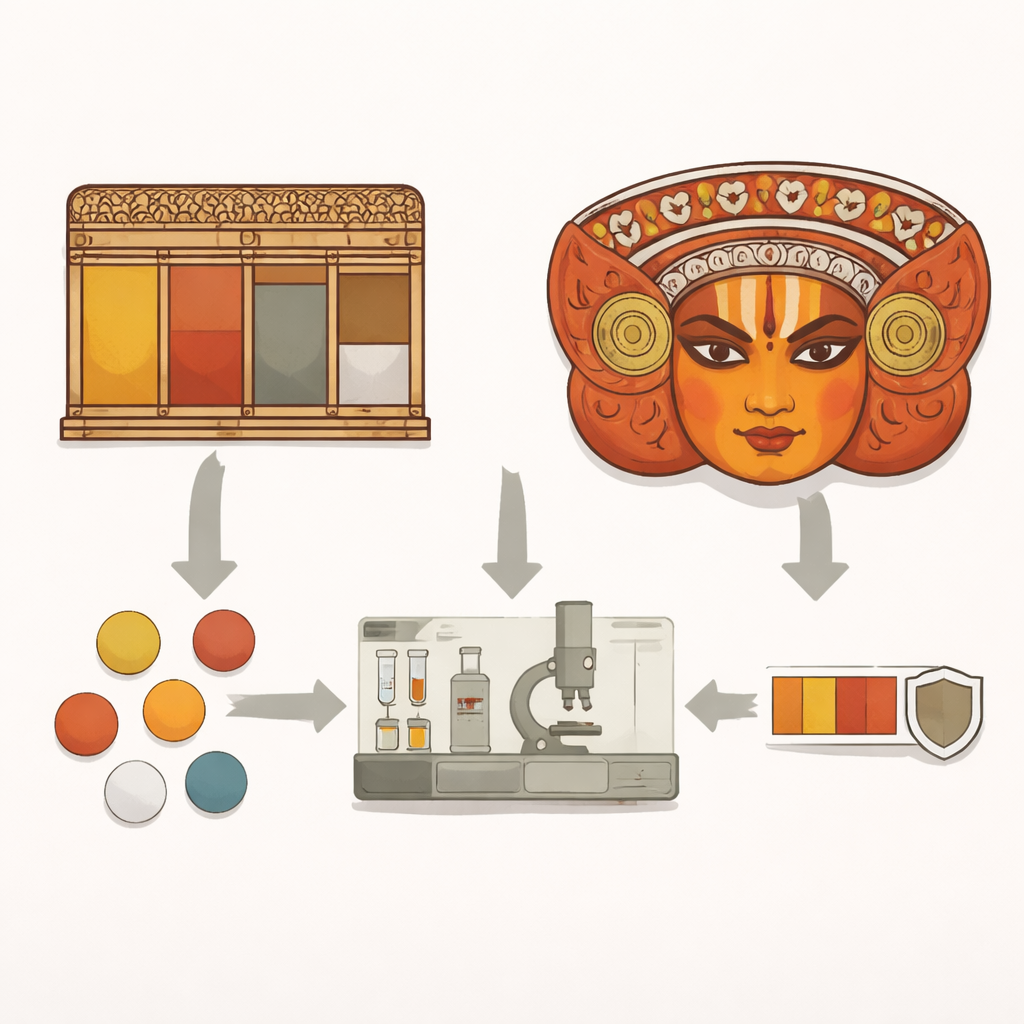
From temple walls glowing with mythic scenes to the fiery faces of ritual performers, the art of Kerala in southern India is instantly recognizable for its bold colors. But what, exactly, are those colors made of? This study peeks behind the paint, using modern laboratory tools to decode the minerals and modern pigments that give Kerala murals and Theyyam face painting their striking hues—and to show how changing materials may affect how we preserve these fragile traditions.
Two Art Forms, One Cultural Thread
The researchers focused on two very different but closely linked visual traditions. Kerala murals are long-lasting wall paintings in temples and palaces, created with a limited set of five colors known as Panchavarnam and carefully prepared from local stones, plants, and soot. Theyyam, by contrast, is a living ritual in which performers are transformed into deities through elaborate costumes and vivid face and body painting that lasts only for a single performance. Because Theyyam paints are used and then discarded, there are no historic samples to test—so the team turned to pigments currently used by practicing artists as stand-ins for both past and present materials.
From Rock and Powder to Lab Bench
Artists collaborating with the scientists supplied eight pigment samples: earthy and bright yellows and reds, a blue for murals, and red, orange, and yellow for Theyyam face painting. Traditional mural pigments are still prepared in a labor-intensive way: stones from specific hills are ground, soaked in water, repeatedly purified, and dried into fine powders. In the lab, the team examined each sample using a suite of methods that can reveal what elements are present, how atoms are bonded, and how crystals are arranged. Together, these techniques create a kind of chemical fingerprint for each color.
Earth Colors and Modern Additions
The results showed that many mural colors still come from natural earths. A soft, “faded” yellow was identified as yellow ochre, based on the iron mineral goethite mixed with clay and quartz. An earthy red was red ochre, colored by the iron mineral hematite with similar natural companions. A brighter yellow used in both murals and Theyyam turned out to be orpiment, a vivid but arsenic-rich yellow sulphide, while a bright red mineral for murals was cinnabar, a mercury sulphide once prized around the world. The blue paint used in murals was not a traditional mineral but Prussian blue, a historic synthetic pigment, mixed with mineral fillers such as baryte and calcite to adjust its handling and appearance.
Shifts in Ritual Paints
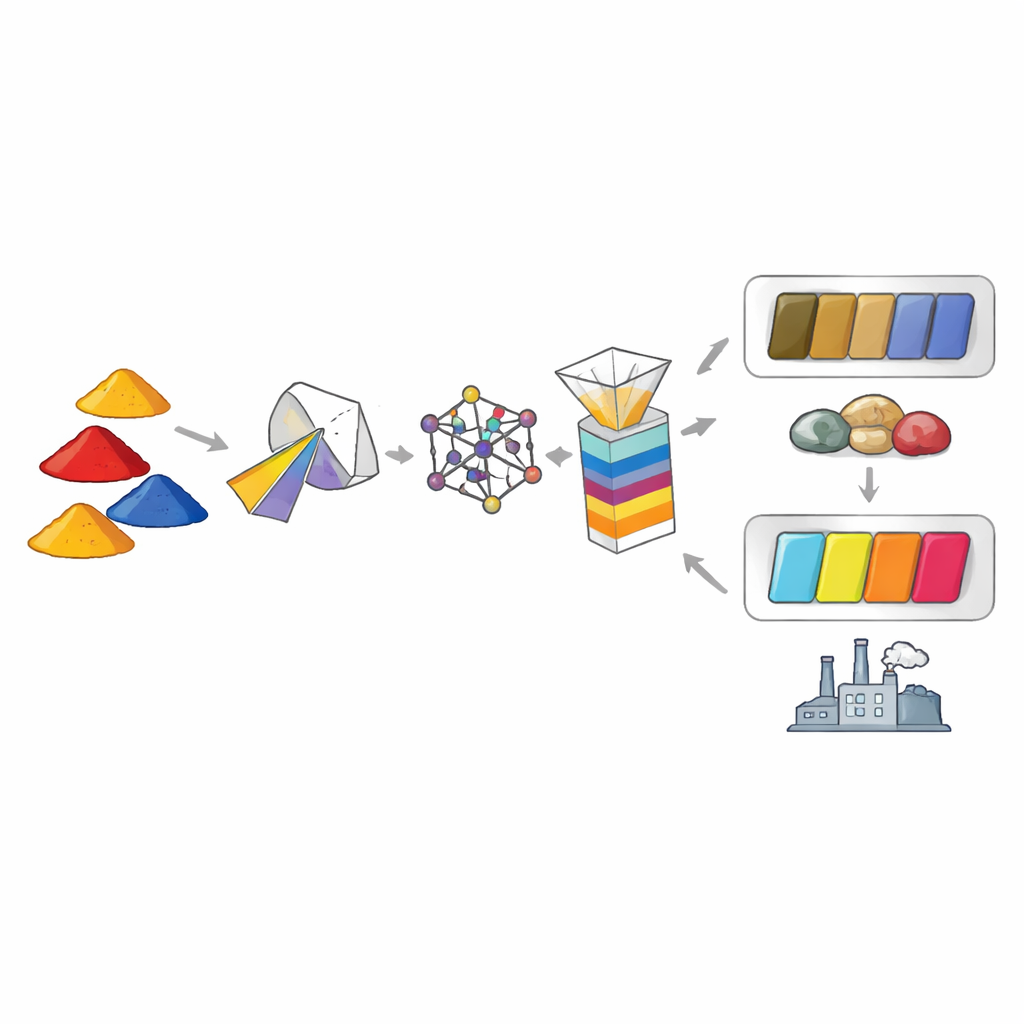
In Theyyam, the researchers found even stronger signs of modern change. The red face paint is based on iron pigments but heavily bulked out with additives like baryte, calcite, silica, and calcium–magnesium silicate, typical of commercial formulations. The brilliant orange was identified as minium, or red lead, another manufactured pigment. The bright yellow used for Theyyam today was again orpiment, but its extremely clean chemical signature suggests a synthetic version rather than a natural mineral. Historical accounts suggest that These ritual colors were once made from materials such as turmeric, limestone, and locally available stones, so the new findings point to a clear shift from handmade earth-based colors to ready-made industrial products.
Why These Hidden Ingredients Matter
By mapping local pigment names to their chemical identities, this study builds an essential reference for conserving Kerala’s painted heritage. Knowing which minerals and synthetic compounds are present allows conservators to choose repair materials that will not react badly with the originals, and helps them anticipate how colors may fade or degrade over time. The work also documents a quiet turning point: while mural painters like the artist studied still rely heavily on locally sourced earth colors, Theyyam paints have moved largely to commercial, synthetic pigments. Understanding this evolution lets scientists, historians, and communities make informed choices about how to preserve not only the look of these artworks, but also the knowledge and practices that once brought their colors from rock and plant to sacred image.
Citation: Anand, P., Balaji, A. & Mani, M. A multi-analytical investigation of inorganic pigments’ composition in Kerala mural and Theyyam folk art. npj Herit. Sci. 14, 192 (2026). https://doi.org/10.1038/s40494-026-02453-3
Keywords: Kerala mural painting, Theyyam, art conservation, traditional pigments, Indian heritage science