Clear Sky Science · en
Screening of Dittrichia viscosa (L.) Greuter metabolites as potential natural biocides for cultural heritage applications
Plants Helping to Protect Our Past
Historic stone buildings, sculptures, and murals are constantly under quiet attack from tiny organisms that grow on their surfaces. Over time, these green films and slimy layers can stain, weaken, and hide precious cultural treasures. This study explores whether a very common Mediterranean weed, Dittrichia viscosa, might secretly produce natural substances that could one day help conservators keep monuments and artworks cleaner, using fewer harsh synthetic chemicals.
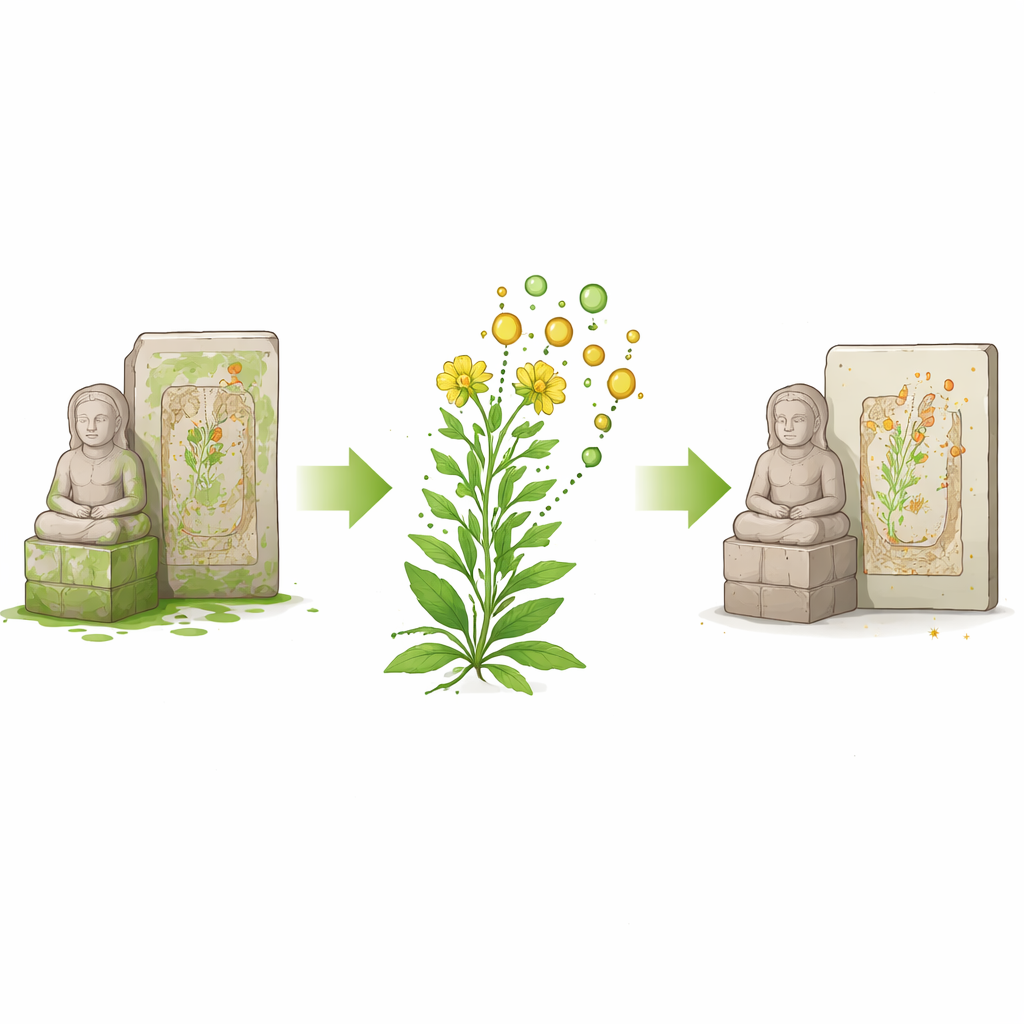
Why Microbes Threaten Monuments
Outdoor stone, architectural decorations, and wall paintings are ideal landing pads for microscopic life. Bacteria, fungi, algae, and cyanobacteria settle there and build dense, sticky films. These living layers can slowly nibble at the surface, cause tiny cracks, change colors, and leave dark or green stains that spoil the appearance of works of art. Traditional ways to stop this growth include strong chemical biocides and intense radiation treatments, which can be dangerous for people, the environment, and sometimes the art itself. This has sparked a search for gentler, plant-based options that are still tough on unwanted growth.
A Weed With Hidden Powers
Dittrichia viscosa is a hardy plant that thrives along roadsides and in neglected flowerbeds around the Mediterranean. Far from useless, it is known to produce a rich mix of natural chemicals that can deter insects, fungi, and other plants. The researchers collected its aerial parts and carefully extracted the oily compounds using water, alcohol, and a series of purification steps. From this complex mixture they isolated four specific molecules, all belonging to a family of natural products called sesquiterpenoids. These four were named tomentosin, 11α,13-dihydrotomentosin, inuviscolide, and α-costic acid, and their structures were confirmed with advanced instruments that read molecular fingerprints.
Testing the Plant Chemicals on Algae
To find out whether these molecules could slow down unwanted growth, the team turned to a standard test microalga, Raphidocelis subcapitata. Although this species does not normally colonize stone, it is widely used as a sensitive, well-understood model organism. The scientists grew the algae in nutrient-rich water and exposed them either to the crude plant extract or to each purified compound at different concentrations. Over three days they measured how many cells were present and how much of their green and yellow pigments remained, which reveals how well the cells are growing and performing photosynthesis.
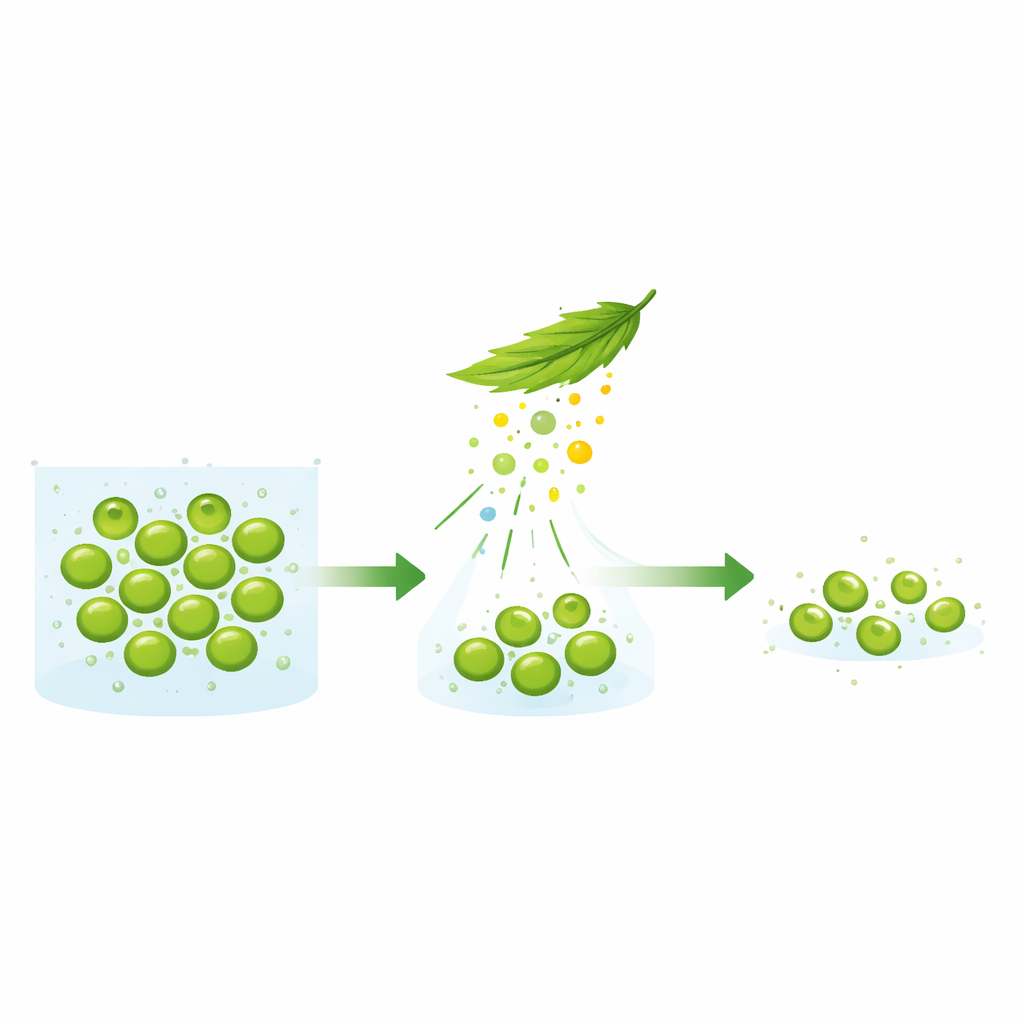
Which Molecules Do the Real Work?
The crude extract from Dittrichia viscosa clearly stressed the algae, reducing cell numbers and pigment content compared with untreated cultures. However, its effect did not increase smoothly with dose, hinting that several substances in the mix may be interacting in complex ways. When the four isolated molecules were tested separately, a clearer picture emerged. Two of them, α-costic acid and 11α,13-dihydrotomentosin, barely affected algal growth at the tested levels. In contrast, tomentosin strongly reduced growth in a clean, dose-dependent way: above a certain concentration, the algae were almost completely suppressed. Inuviscolide also slowed growth and reduced pigments, but more gently and without reaching full blockage within the tested range.
What This Could Mean for Heritage Conservation
By pinpointing tomentosin and, to a lesser degree, inuviscolide as potent inhibitors of algae, this work shows that Dittrichia viscosa is a promising natural source of future “green” surface treatments. The tests were done in simple lab flasks, not on real stone or murals, and the algae species used is only a stand-in for true colonizers of monuments. The authors stress that many steps remain: checking effects on the actual microbes that damage heritage, ensuring that the compounds do not harm valuable materials, designing safe formulations, and comparing them fairly with existing products. Even so, the study lays an important foundation, suggesting that an everyday roadside plant could help conservators develop safer, more sustainable tools to protect irreplaceable works of art for generations to come.
Citation: Morelli, M., De Rosa, A., Silvestre, G.M. et al. Screening of Dittrichia viscosa (L.) Greuter metabolites as potential natural biocides for cultural heritage applications. npj Herit. Sci. 14, 188 (2026). https://doi.org/10.1038/s40494-026-02436-4
Keywords: cultural heritage conservation, biofilms, natural biocides, Dittrichia viscosa, algal growth inhibition