Clear Sky Science · en
Early bronze metallurgy at Guniushan City site in the lower Yangtze River, Anhui Province, China
Ancient City, Hidden Metal Story
On the surface, the Guniushan city site in southern Anhui, China, looks like many other early fortified towns. But beneath its fields and moat lie the remains of furnaces and slag that reveal how this community helped power one of the world’s great bronze civilisations. By examining these industrial leftovers in detail, the study uncovers how people living nearly 3,000 years ago mined, smelted, and traded copper and bronze, and how a single city could knit together mines, workshops, and distant regions into a thriving metal economy. 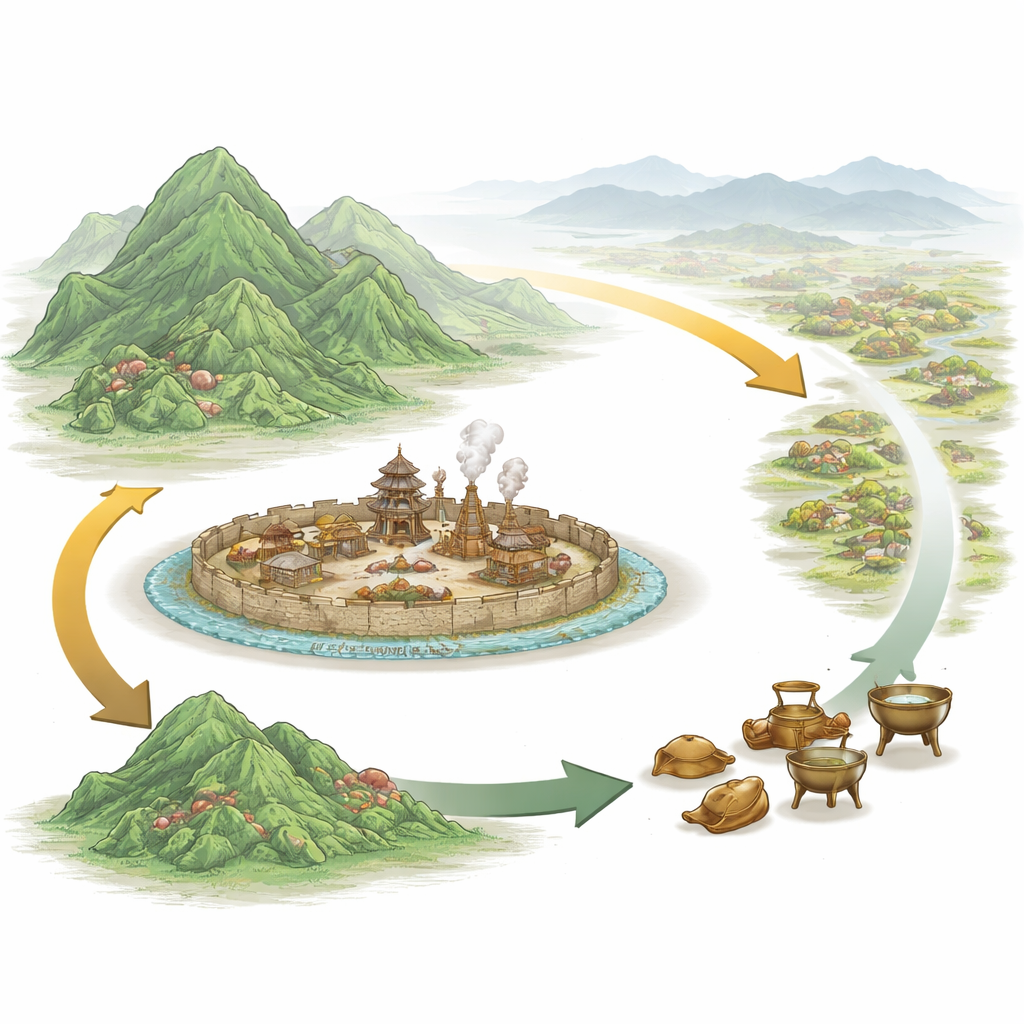
Land of Copper and Early Cities
The lower Yangtze River region of southern Anhui is unusually rich in copper ores, with large clusters of ancient mines and smelting sites spread over about 2,000 square kilometres. From the Western Zhou to the Spring and Autumn periods (roughly 1100–500 BCE), this area supplied much of the copper needed to cast bronze vessels and weapons in early China. Guniushan lies on the eastern edge of this mining heartland. Surrounded by a wide moat and covering about 700,000 square metres, the city was occupied during the same centuries that saw intense mining and smelting nearby. Archaeological digs and surveys have revealed pottery, tools, slag, and other traces showing that Guniushan was closely linked to this booming metal industry.
A City Tied to Mines, Fields, and Tombs
Guniushan did not stand alone. About 15 kilometres to the west stretched the core mining and smelting zone, while thousands of mound tombs dotted the surrounding river basin. Some tombs close to the city have yielded mining tools, copper fragments, and bronze objects, suggesting that miners, metalworkers, and overseers were buried with the symbols of their trade. Within the city itself, layers of red-baked soil, thick spreads of copper slag, pottery wasters, rice remains, and fishing gear show that residents combined metalworking with farming, pottery making, and river-based livelihoods. Together, the city, mines, workshops, and cemeteries formed an integrated landscape in which metal production was both an economic engine and a marker of social status.
Reading Metal History in Slag
To move beyond general impressions, the researchers analysed twelve slag blocks collected from formal excavations in the late 1990s and from a field survey in 2015. Under the microscope, these pieces of once-molten waste revealed trapped metal droplets and mineral phases that act like fingerprints of the smelting process. The team found two main types of products: relatively pure copper and tin-bronze (with hints of lead–tin bronze). By examining the proportions of iron, silica, alumina, lime, and other oxides, and applying statistical methods, they showed that most slag came from copper smelting, while a smaller portion formed when tin was added later to hot copper to create bronze. The chemistry also captured how furnace wall materials and ore composition influenced the slag, tying the process back to local geology and workshop design. 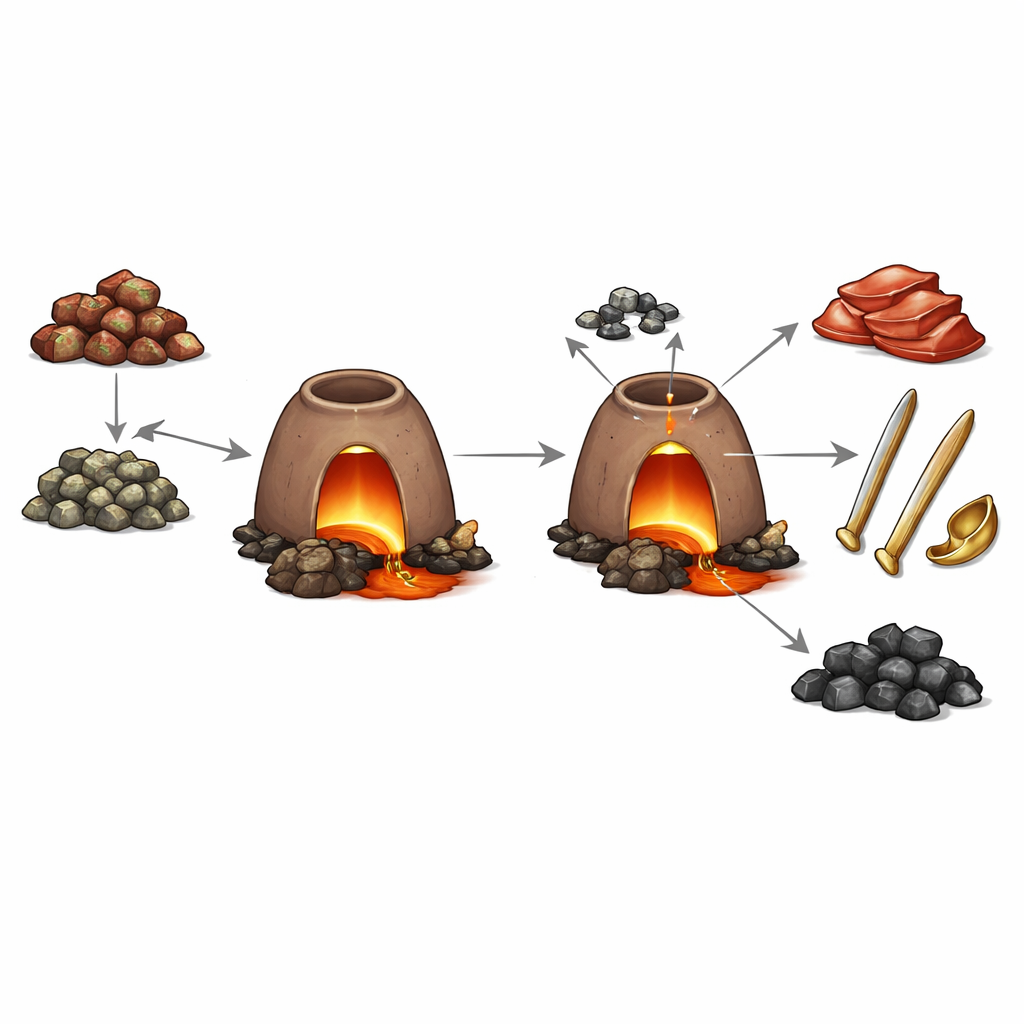
Metal, Movement, and Local Know-How
Guniushan’s slag does more than prove that bronze was made inside the city walls; it helps explain how a regional metal system functioned. Unlike some parts of Central China, where large capitals tightly controlled bronze casting, southern Anhui saw many small and medium settlements making their own tin- and arsenic-bronze objects, often using household-scale workshops. Guniushan appears to have acted as a hub and coordinator: close enough to mines to oversee production, but also well placed on river routes that carried copper and bronze toward neighbouring cultural regions and even to central states farther north. Local craftspeople showed a sophisticated grasp of alloy recipes, often using high-tin mixtures for weapons and ritual vessels, and adjusting lead content to suit decorative needs.
What This Reveals About an Early Metal World
In plain terms, the study shows that Guniushan was more than a fortified town next to some mines. It was a key node in a "mine–smelt–cast" chain that linked mountain ores to finished bronzes and to wide-ranging trade. The repeated discovery of tin-bronze particles in slag proves that bronze was actually produced within the city, not just imported. At the same time, the loose control over small workshops and the far-reaching movement of metal point to an early economy with strong commercial and social dimensions, not just royal command. By tying together chemistry, archaeology, and landscape, the work helps us see how one regional centre in the lower Yangtze helped sustain—and benefit from—the broader bronze age of ancient China.
Citation: CUI, C., LI, Y., LI, H. et al. Early bronze metallurgy at Guniushan City site in the lower Yangtze River, Anhui Province, China. npj Herit. Sci. 14, 185 (2026). https://doi.org/10.1038/s40494-026-02435-5
Keywords: bronze metallurgy, Guniushan city, southern Anhui, ancient copper mining, lower Yangtze archaeology