Clear Sky Science · en
Multi-analytical characterization of Western Han wooden lacquerware from the Xiaotaoyuan Cemetery, Shandong, China
Ancient Art That Still Shines
More than two thousand years ago, craftspeople in China’s Western Han dynasty coated everyday objects and coffins with glossy red finishes that have survived in the ground for millennia. This study peels back those shining layers from three lacquer fragments found in a cemetery in Shandong Province to see exactly how they were made, what they were made of, and how this knowledge can help museums preserve similar treasures today.
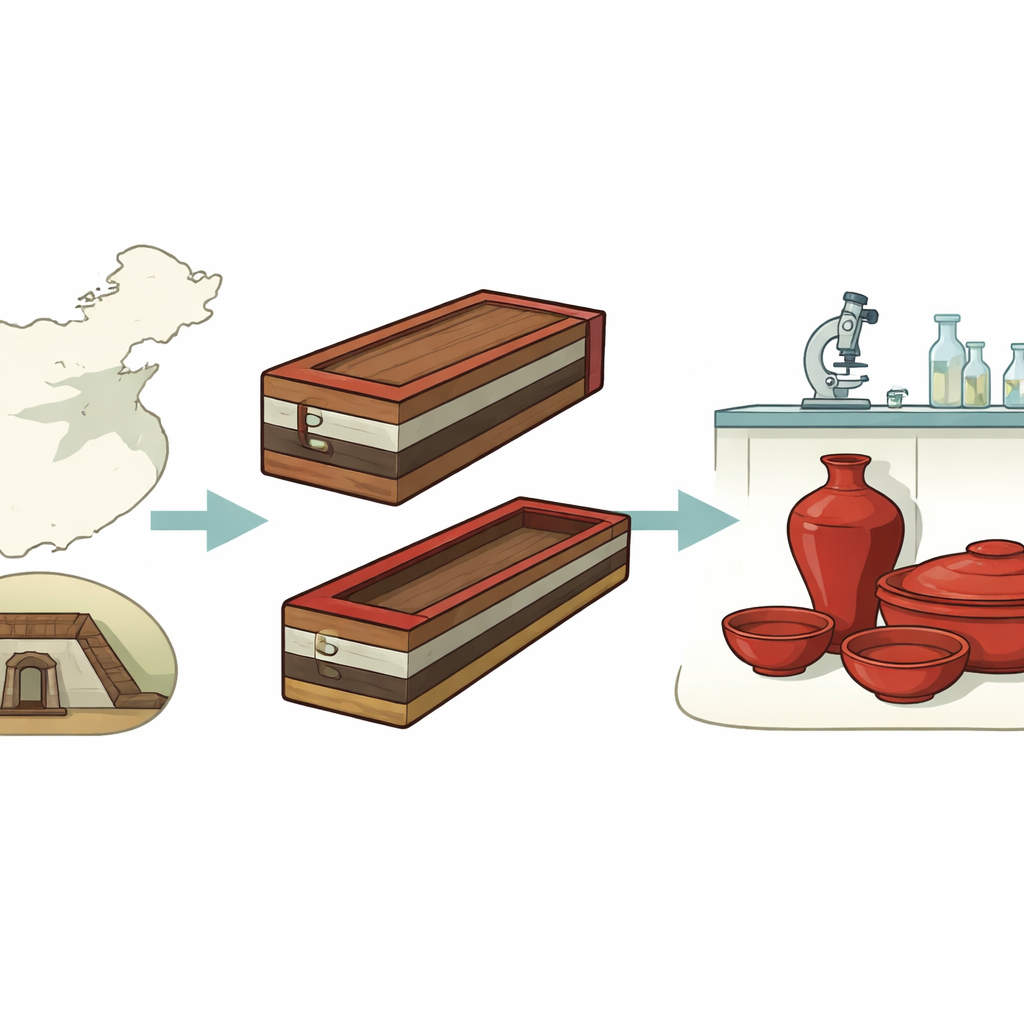
Finding Stories in a Hill of Graves
The Xiaotaoyuan Cemetery in eastern China dates to the Western Han period, when lacquered wood objects were widely used and exported across East Asia. Archaeologists uncovered dozens of lacquered coffins, boxes, trays, and combs. From this rich haul, the researchers chose three naturally detached pieces: a fragment from a coffin and two from lacquered boxes. Because these objects are fragile, the team relied on a set of “gentle” tools—powerful microscopes, light-based chemical probes, and careful heating of dust-sized samples—to explore their structure without causing extra damage.
Wood Chosen With Purpose
Thin slices from the wooden cores were examined under high magnification and compared with reference atlases. The coffin wood proved to be catalpa, a hardwood known for its straight grain and resistance to decay, making it well suited to long-lasting burial furniture. One of the boxes was made from willow, a softer but tough and flexible wood that can be bent into thin, curved shapes ideal for lightweight containers. Chemical tests on the coffin wood showed that much of its original sugar-based framework had broken down during burial, confirming that while the lacquer coating survived well, the underlying timber had significantly aged.
Layer Upon Layer of Craft
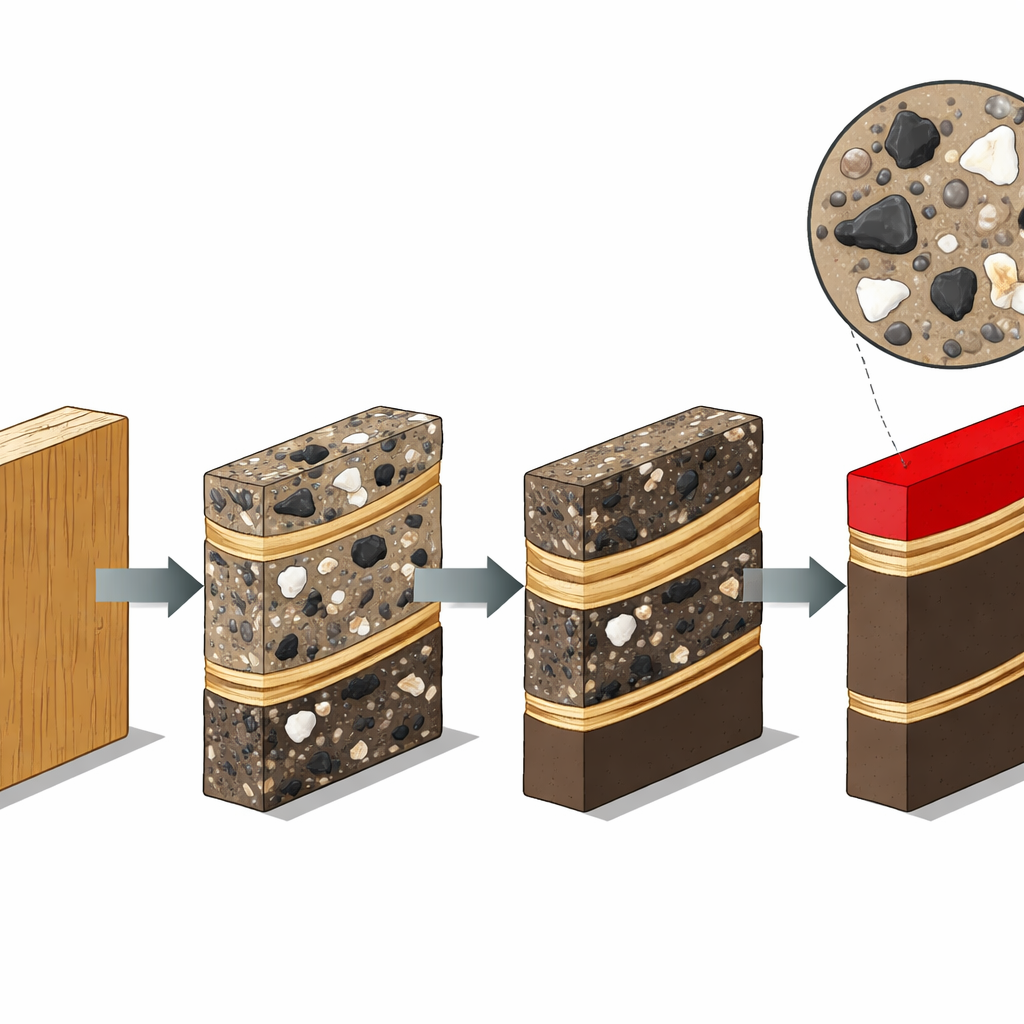
Cross-section images of the fragments revealed that the objects share a carefully built stack of layers: a wooden core, a thick “mortar” layer, a smoother ground layer, and finally a thin red surface coat. In the boxes, some areas expanded to nine distinct layers, where fabric or loose plant fibers were sandwiched between mortar coatings at stress points such as joints and curves. Infrared tests showed these fibers come from bast plants, similar to hemp or ramie. Historical texts describe such fabric reinforcement as the “Xiazhu” technique—using cloth and plant fibers to strengthen thin wood—while the mortar built up with powdered minerals and lacquer is known as “Wanqi.” The study shows both methods were in active use in Han-era Shandong, adapted to the shape and function of each object.
Minerals, Sap, and Oils in the Shine
To find out what filled each layer, the team used laser-based Raman spectroscopy and electron microscopes that can detect elements. The vivid red coating is based on cinnabar, a mercury-rich mineral prized across ancient China. The black areas on the boxes come mainly from naturally darkened tree sap rather than added pigments. The mortar layers contain a mix of quartz grains, carbon black, calcium carbonate, and a calcium phosphate mineral known as hydroxyapatite, which would have been produced by heating animal bone or shell. This recipe suggests craftspeople deliberately blended local clay, ground bone, lime-rich material, and soot with sticky lacquer sap to produce a strong, shapeable filler. Further tests that gently burned microscopic samples in the presence of a reagent showed that the glossy film itself is Chinese lacquer—sap from Toxicodendron vernicifluum—enriched with plant drying oils such as perilla and linseed oil to improve flow and durability.
Linking Past Skill to Present Care
Together, these findings reveal a flexible and sophisticated craft system. Artisans chose wood species that matched each object’s job, combined lacquer sap with different mineral powders and animal-derived fillers, and used fabric reinforcement only where it was most needed. Recognizing this complexity allows modern conservators to design repairs that respect the original materials instead of guessing. By recreating compatible mixtures of lacquer, bone ash, lime, clay, carbon, and plant oils, and by stabilizing fragile catalpa and willow cores with suitable consolidants, museums can better protect the Han dynasty’s red-lacquered legacy. In short, the paper shows how careful scientific detective work can turn tiny fragments from an ancient graveyard into a detailed handbook for preserving a whole artistic tradition.
Citation: Li, J., Lan, D., Zhao, X. et al. Multi-analytical characterization of Western Han wooden lacquerware from the Xiaotaoyuan Cemetery, Shandong, China. npj Herit. Sci. 14, 181 (2026). https://doi.org/10.1038/s40494-026-02432-8
Keywords: Chinese lacquerware, Western Han dynasty, heritage conservation, archaeological science, material analysis