Clear Sky Science · en
Digital rebirth: how task-technology fit drive immersion and user engagement in intangible cultural heritage VR
Why Virtual Reality Matters for Living Traditions
Many of the world’s most cherished traditions are not monuments or artifacts, but songs, dances, festivals, crafts, and rituals passed from person to person. These "living" forms of culture are fragile in a fast-changing, digital world. This study explores how virtual reality (VR) can give such traditions a new life, using an advanced VR recreation of China’s Dunhuang cave murals as a test case. By examining what makes people feel absorbed, delighted, and willing to come back, the authors show how smart design choices in VR can help keep intangible cultural heritage alive for future generations. 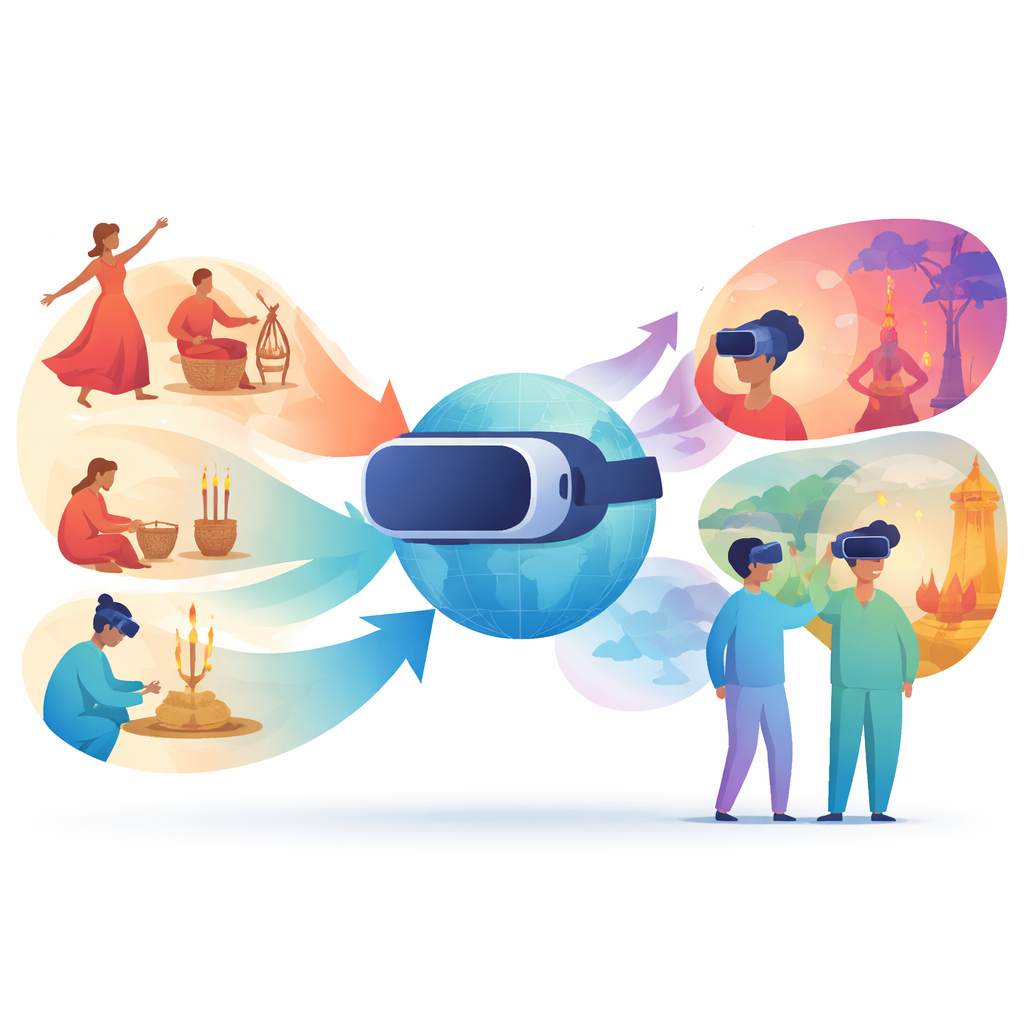
From Watching Culture to Stepping Inside It
Traditional museums often ask visitors to stand behind ropes and read labels. VR turns this passive viewing into active participation. In the Dunhuang experience studied here, participants don headsets and find themselves standing inside a richly reconstructed cave, able to look around freely and explore at their own pace. Similar projects around the world digitally rebuild festivals, historic squares, dances, and craft skills. This shift lets people, especially younger audiences raised on digital media, feel as if they have traveled across time and space to be part of the scene instead of just looking at it from afar.
What the Study Set Out to Test
The researchers wanted to move beyond the simple question of whether people "like" VR. They asked three deeper questions: how the nature of the cultural tasks (such as exploring, learning, or performing) and the features of the technology (such as image quality and interaction) shape people’s experience; how these design choices spark feelings like curiosity, joy, and a sense of control; and how those feelings lead to immersion and a desire to return. To do this, they combined two well-known ideas from technology research—one about how well a tool fits the task, and another about the role of fun and enjoyment—and tested them with a large sample of 387 users.
Inside the VR Experience: Tasks, Tools, and Feelings
Participants tried the "VR Journey to Dunhuang" exhibition for about 15–20 minutes, then answered detailed questions about what they did, how the system felt, and what emotions it stirred. The study found that three elements work together. First, when the VR system is easy to use—controls are simple, movement feels natural—people feel that it is useful and enjoyable rather than tiring or confusing. Second, rich technical features, like high visual realism and smooth performance, make people feel that they are in charge of their journey and that the experience is worth their time. Third, the way the cultural tasks are designed—clear goals, meaningful stories, and chances to explore—strongly boosts curiosity and joy. These emotional reactions are not side effects; they are central to whether people feel truly immersed and want to come back. 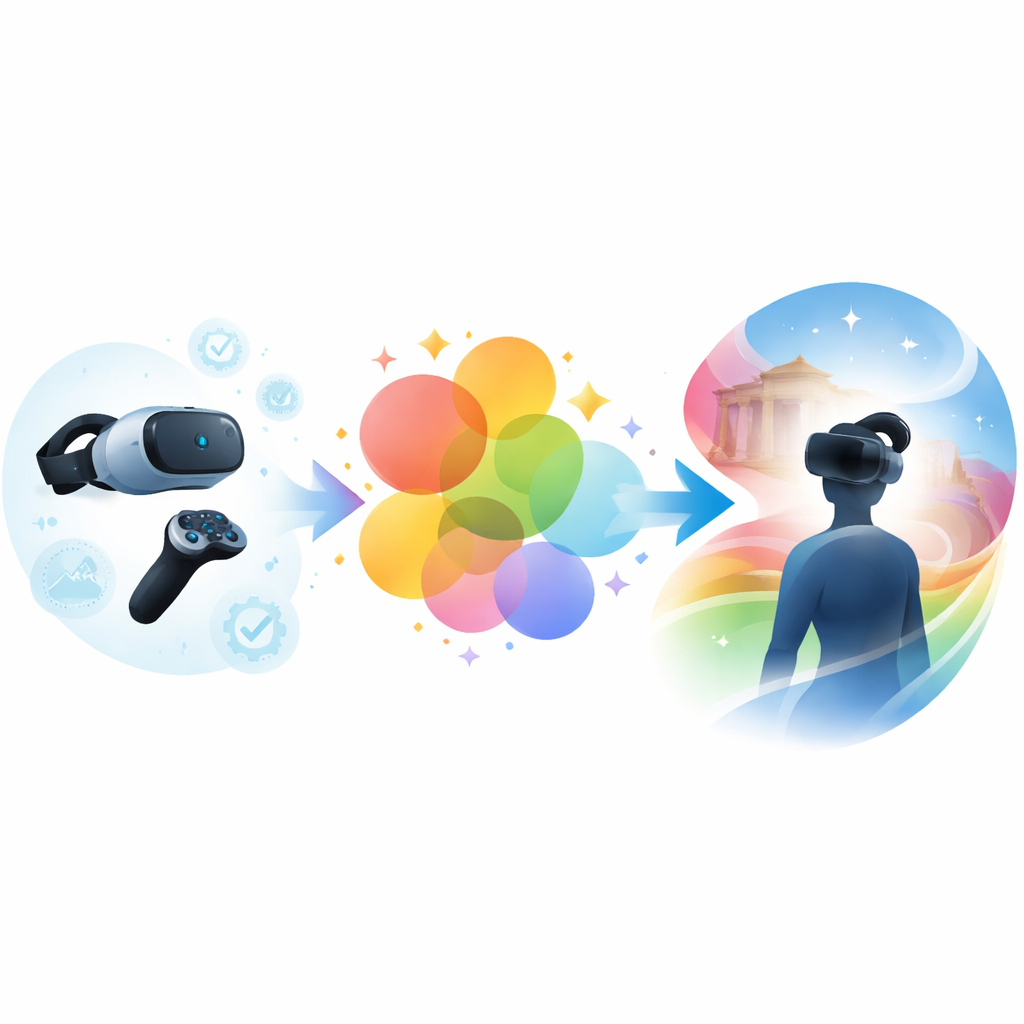
What Drives People to Stay and Return
Using a mix of statistical modeling and artificial neural networks, the authors show that immersion acts as a bridge between design and behavior. When users feel deeply absorbed—losing track of time and feeling "inside" Dunhuang—they are much more likely to say they would revisit the VR experience, recommend it to friends, or seek out similar cultural content. Interestingly, joy and curiosity emerge as especially powerful drivers: when people feel delighted and eager to explore, they not only learn more but also form a stronger bond with the culture being shown. Technical quality matters, but mainly because it supports these emotional and immersive states.
Bringing Old Traditions into a Digital Future
For a lay reader, the takeaway is clear: if we want VR to help safeguard living traditions, it must be more than a flashy gadget. The study shows that the best results come when the tasks fit the medium, the technology is smooth and comfortable, and the experience sparks curiosity, joy, and a sense of control. Done right, VR can turn distant or endangered traditions into vivid, memorable journeys that people want to repeat and share. In this way, virtual reality can become a powerful ally in passing intangible cultural heritage from today’s audiences to tomorrow’s.
Citation: Ren, X., Hao, X., Xu, J. et al. Digital rebirth: how task-technology fit drive immersion and user engagement in intangible cultural heritage VR. npj Herit. Sci. 14, 157 (2026). https://doi.org/10.1038/s40494-026-02425-7
Keywords: virtual reality, cultural heritage, immersion, user engagement, digital museums