Clear Sky Science · en
OBI designer: zero-shot oracle bone inscription artistic characters generation with multimodal style transfer
Bringing Ancient Symbols to Life
Over three thousand years ago, people in China carved questions to the gods onto turtle shells and animal bones. The symbols they used, known as oracle bone inscriptions, are the oldest known form of Chinese writing and have a striking, picture-like beauty. Today, artists and designers want to reuse these shapes in logos, posters, games, and cultural products—but doing so by hand is slow and demands rare expertise. This paper introduces an artificial intelligence system called OBI-Designer that can automatically turn these ancient signs into new, expressive artworks while still keeping them recognizable and respectful of their origins. 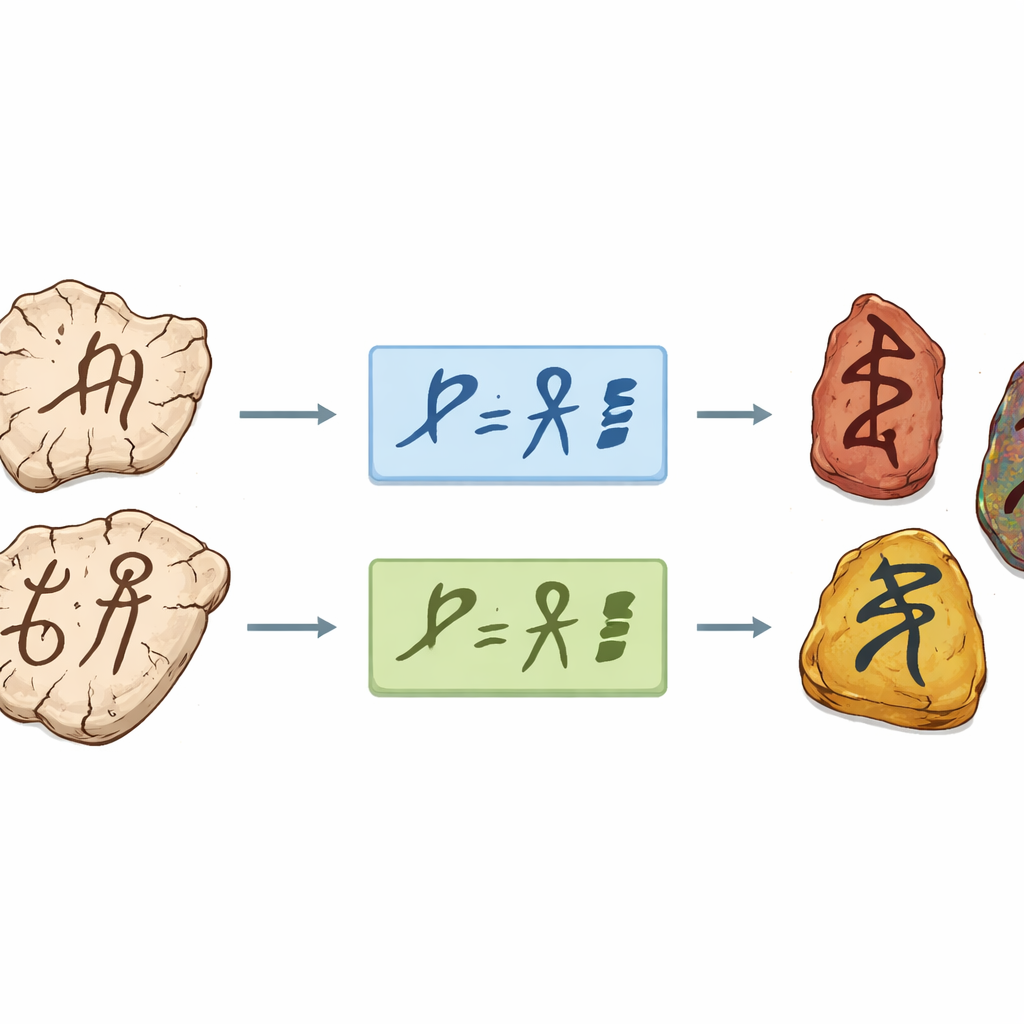
Why These Ancient Signs Matter
Oracle bone inscriptions are not just old writing; each character is a tiny picture that hints at its meaning—a flame for “fire,” an animal for “horse,” a stylized face for parts of the body. Because of this pictorial nature, they are a rich source for modern visual design, calligraphy, and cultural branding. But several obstacles stand in the way. Digital versions of the characters are limited, making it hard to train big AI models. If artists change the shapes too much, the characters lose their historical authenticity and become impossible to read. And “artistic feel” is subjective, which makes it difficult to measure or automate. The authors aim to overcome all three problems at once: they want a system that needs little data, protects readability, and still allows bold visual creativity.
Building a Better Digital Alphabet
The first step is to create a more precise digital version of the oracle characters. Existing computer fonts describe each glyph with only a few control points, which makes them hard to reshape smoothly. The researchers carefully reprocess a commercial oracle bone font so that every character is rebuilt from many small curves. An adaptive algorithm adds extra points only where they are most needed—such as tight corners or curves—without cluttering simple areas. The result is a new dataset in which each character is stored as a flexible outline that can bend and stretch gracefully. This geometric foundation allows the AI system to change the shapes in subtle, controlled ways instead of warping them randomly.
From Simple Outline to Smart Shape
OBI-Designer then reshapes these outlines to echo the meaning of a chosen word or phrase. In the first stage, called glyph synthesis, the system takes a base character and a text prompt like “head of a dog.” It renders the outline as an image, feeds it into a powerful image-generation model, and asks: “What would a picture that matches this phrase look like?” Instead of letting the model invent an entirely new image, the system uses the model’s internal signals as gentle guidance to nudge the control points of the original character. Additional rules act like guardrails: one keeps the small triangles inside the outline from changing their angles too much, and another preserves the broad light-and-dark pattern of the character. Together, these constraints let the glyph take on new, semantically meaningful features—ears, tails, or flames—while staying structurally close enough to be read as the same ancient symbol.
Painting Texture Without Losing the Line
In the second stage, called texture synthesis, OBI-Designer focuses on surface style. It first traces the refined outline to capture its key strokes and edges. A specialized network then uses this edge map as a blueprint, making sure that any new image it generates sticks closely to the original structure. On top of this, another lightweight technique fine-tunes only a small slice of the image model so it can learn specific looks—such as paper-cut art, brush-and-ink calligraphy, wood carving, neon glow, or graffiti—without retraining the entire system. The final output combines crisp, faithful lines with richly varied surfaces, giving designers a menu of styles that all grow from the same historical roots. 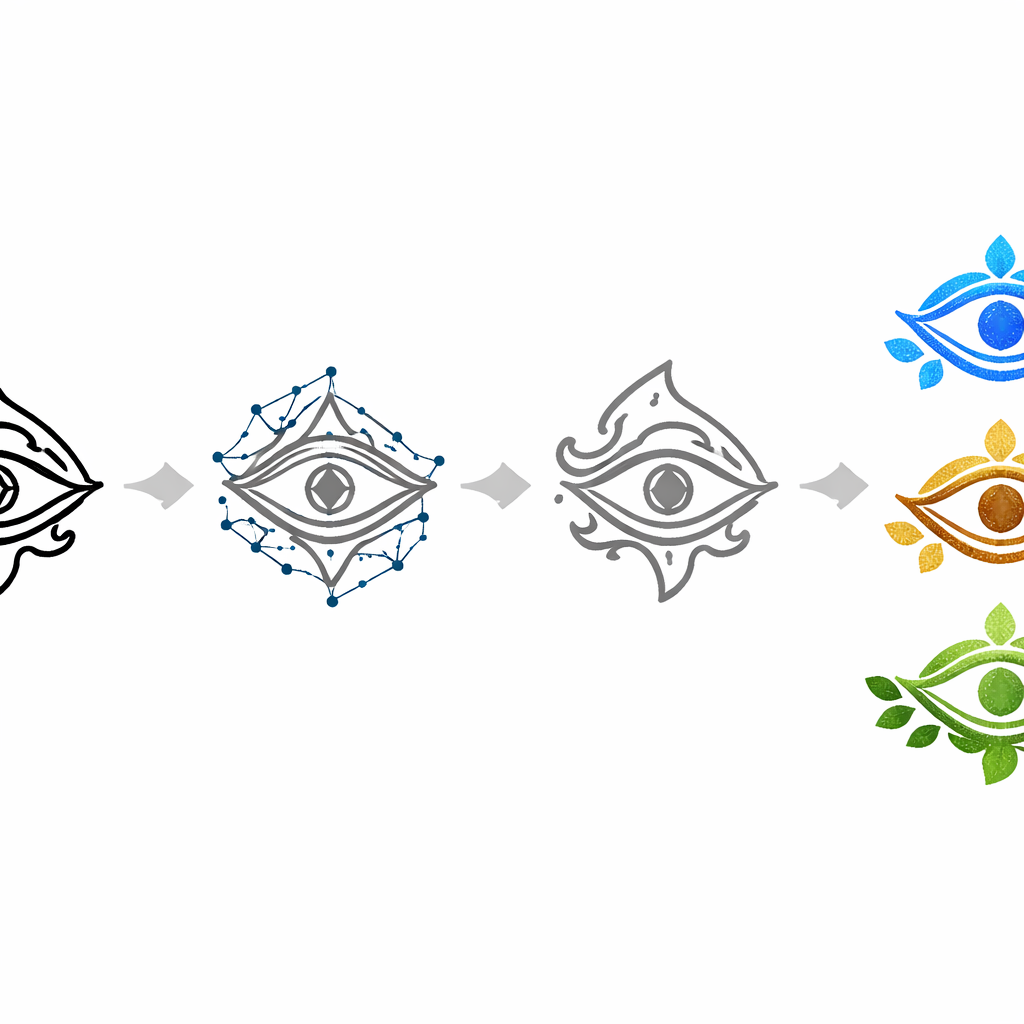
Testing Beauty and Clarity
To check whether these artworks still “read” as oracle characters, the authors run them through a computer system trained to recognize original inscriptions. That system correctly identifies the AI-generated characters nearly 94 percent of the time, only a little below its accuracy on untouched originals. Human volunteers with some knowledge of ancient writing also rate the new characters higher than those from several competing methods, judging them more structurally complete, semantically fitting, and visually appealing. Further experiments show a delicate balance: adding more geometric control points lets the system push the designs toward more dramatic, picture-like forms, but too many points reduce machine readability. This trade-off gives users a clear dial for choosing between legibility and artistic freedom.
New Art From Old Bones
In simple terms, OBI-Designer is a smart assistant for turning some of humanity’s oldest written symbols into fresh, modern artwork. It respects the essential shapes that make oracle bone inscriptions historically meaningful while using advanced image models to suggest new forms and textures. The authors stress that such tools should clearly mark their output as AI-generated, to avoid confusion with genuine archaeological finds. Looking ahead, the same approach could help revive other ancient scripts, offering museums, educators, and creators a way to celebrate cultural heritage through living, evolving visual design rather than locking it away in archives.
Citation: Zhang, J., Deng, F., Yuan, J. et al. OBI designer: zero-shot oracle bone inscription artistic characters generation with multimodal style transfer. npj Herit. Sci. 14, 152 (2026). https://doi.org/10.1038/s40494-026-02417-7
Keywords: oracle bone inscriptions, artistic text generation, cultural heritage, diffusion models, font stylization