Clear Sky Science · en
Exploring the evolution of global trends and knowledge structure in intangible cultural heritage: insights from topic modeling
Why the Hidden Life of Culture Matters
Every community has songs, stories, festivals, recipes, and craft skills that are passed from person to person rather than stored in monuments or museums. These living practices, known as intangible cultural heritage, are increasingly under pressure from globalization, climate change, and rapid urban growth. This article takes a big-picture look at how the world’s scholars have studied these fragile cultural traditions over the past decade, revealing which themes are rising, which tools are being used, and how research is shifting toward technology, sustainability, and planning for future risks.
Looking at Thousands of Studies at Once
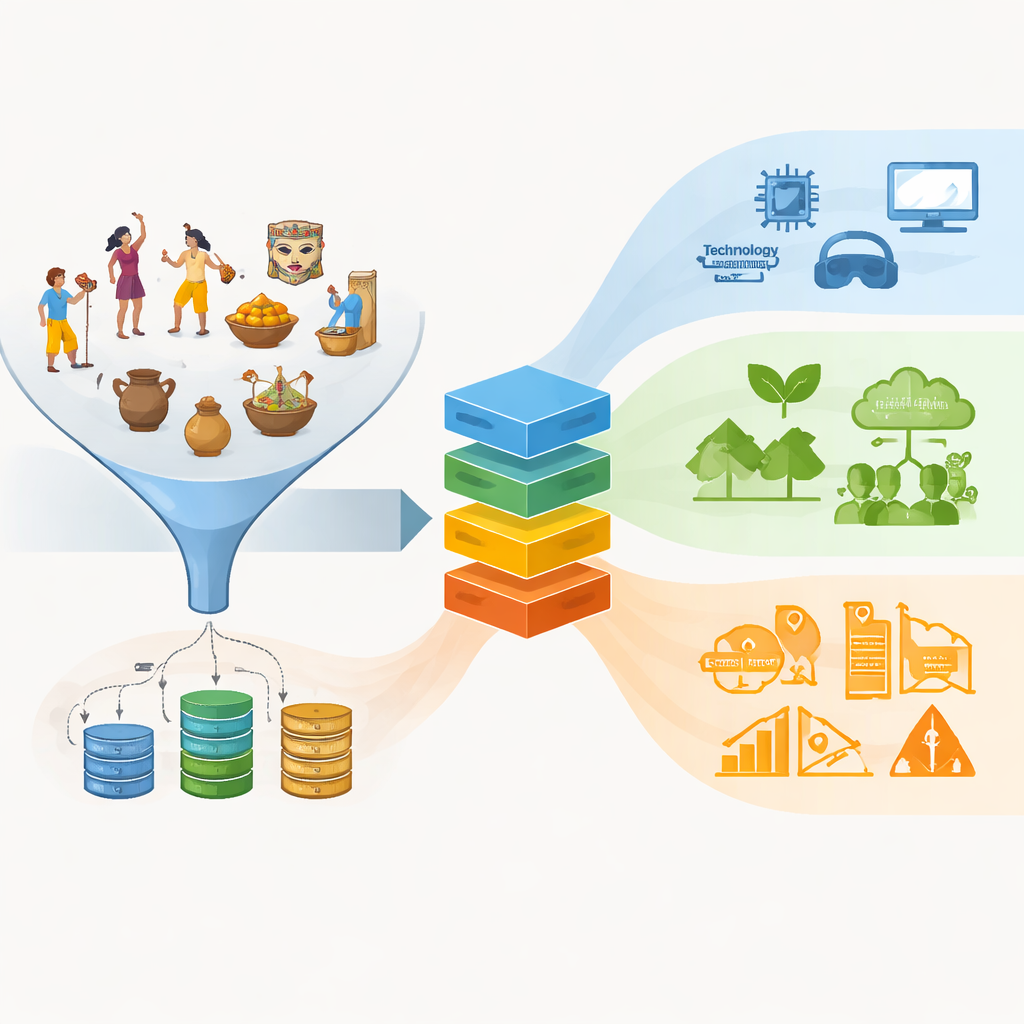
Instead of reading hundreds of papers one by one, the author used a computational method called structural topic modeling to detect patterns in 622 research articles that explicitly used the term “intangible cultural heritage” between 2014 and 2024. All of these papers came from a large citation database and were screened to include only peer-reviewed research articles written in English. The method analyzes titles, abstracts, and keywords to find groups of words that frequently appear together, which in turn reveal the main subjects that researchers focus on. It also links topics to information such as publication year, country, and journal to see how attention shifts over time and across regions.
Eight Main Themes Behind Today’s Heritage Research
The computer analysis uncovered eight major topics running through recent studies. Some focus on scientific and technical approaches to heritage, such as examining traditional materials, restoring old fabrics and papers, or using artificial intelligence to track dance movements and recognize opera styles. Others look at how cultural traditions support tourism, education, and local identity, or how rural food practices and craft skills strengthen communities. Additional topics concentrate on how heritage is governed in cities, how it can withstand climate change, and how risks such as floods or urban redevelopment threaten long-standing practices. Although the topics are mathematically distinct, careful reading of highly relevant papers helped translate them into clear labels and explanations.
Three Big Storylines: Technology, Sustainability, and Place
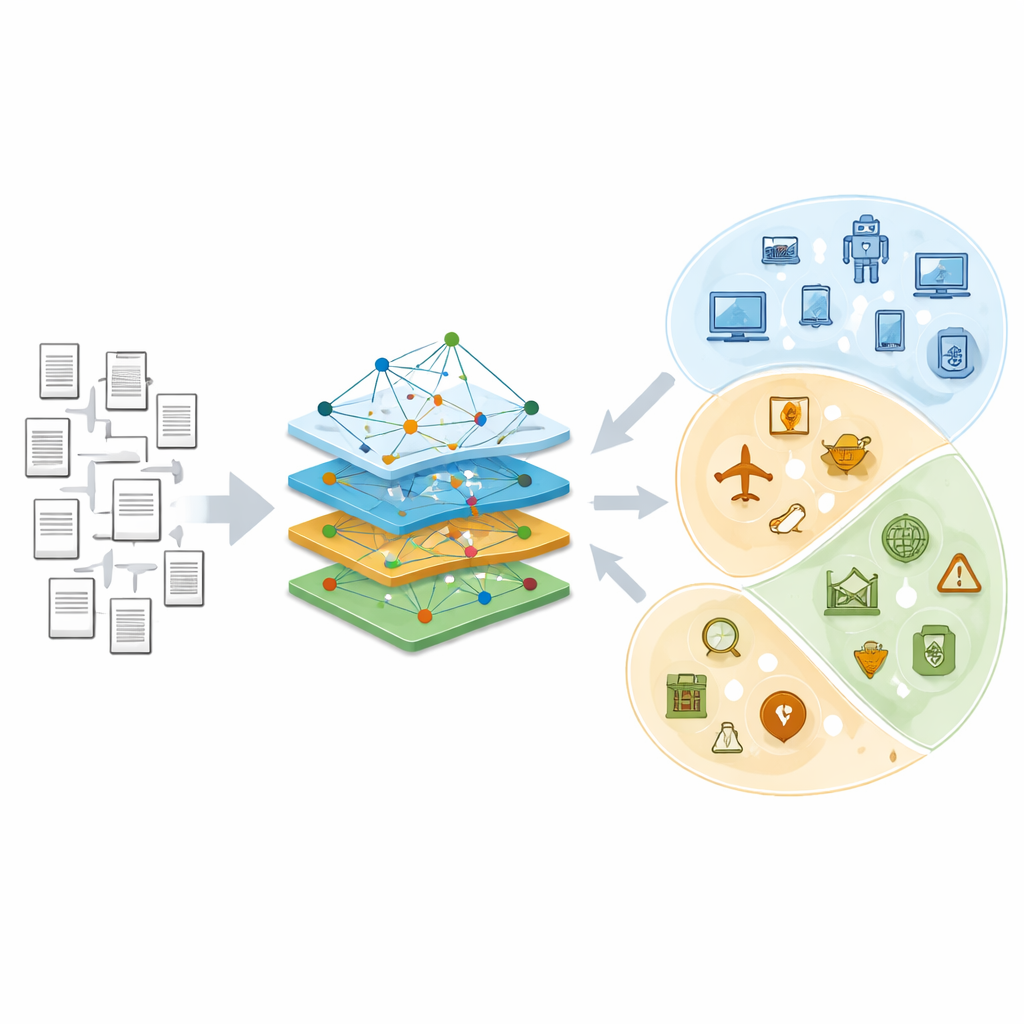
To make sense of these eight topics, the study groups them into three broader storylines. The first centers on technological and digital innovation: from materials science to virtual reality and deep learning, researchers are increasingly using advanced tools to document, analyze, and present living traditions in new ways. The second revolves around sustainability and community life, highlighting how festivals, foodways, handicrafts, and healing practices contribute to rural development, social resilience, and culturally rooted tourism. The third focuses on space and risk, using mapping tools and environmental data to understand where traditions flourish, where they are most vulnerable, and how policies can help them adapt to climate and social change. Together, these domains show that current heritage research is deeply interdisciplinary, blending computer science, social science, geography, and environmental studies.
Changing Patterns Across Countries and Years
The analysis also tracks how attention to these themes has evolved over the decade. Overall, papers labeled with intangible cultural heritage have grown rapidly, with especially strong increases after 2017. China, Italy, Spain, England, Greece, South Korea, France, the United States, Malaysia, and Australia account for about 90 percent of the publications, reflecting both research capacity and policy interest in these places. Topics related to heritage tourism, digital innovation, and the spatial distribution of traditions are particularly prominent in these countries. Some themes, such as technical studies of heritage materials, peaked earlier; others, like spatial analysis and climate-related risk, have gained momentum more recently, mirroring wider global debates about sustainability and adaptation.
What This Means for the Future of Living Traditions
For non-specialists, the key takeaway is that the world of research is treating songs, rituals, and everyday skills not as quaint leftovers from the past but as active parts of our future. This mapping exercise shows that scholars are investing heavily in digital tools, community-based development, and risk-aware planning to understand and support intangible cultural heritage. At the same time, the study warns that research is unevenly distributed across languages, regions, and databases, and that computer models must be paired with local knowledge and fieldwork. By clarifying where attention is concentrated and where gaps remain, the article offers a roadmap for governments, cultural organizations, and communities to collaborate more effectively in safeguarding the living threads of culture that connect generations.
Citation: Han, Q. Exploring the evolution of global trends and knowledge structure in intangible cultural heritage: insights from topic modeling. npj Herit. Sci. 14, 149 (2026). https://doi.org/10.1038/s40494-026-02410-0
Keywords: intangible cultural heritage, topic modeling, digital heritage, heritage tourism, cultural sustainability