Clear Sky Science · en
Continuance intention of cultural museum virtual human based on PLS-SEM analysis of MRT and UGT
Bringing Museum Guides to Digital Life
Museums around the world are experimenting with “virtual humans” – lifelike digital guides that talk, gesture, and lead visitors through history. This study asks a simple but crucial question: what makes people want to keep using these virtual guides, rather than trying them once and moving on? By looking at how engaging, useful, and culturally meaningful these digital characters feel, the research reveals how they can help protect and pass on cultural heritage in the digital age.
More Than Just Talking Avatars
The virtual humans in this study are not generic cartoon hosts or customer-service bots. They are designed specifically for cultural institutions, such as China’s National Museum or heritage sites like the Dunhuang caves. Their main purpose is to tell stories, explain artifacts, and create emotional connections with visitors, not to sell products or simply answer quick questions. To do this, they draw on carefully researched content, express themselves through voice, movement, and virtual environments, and are checked by historians and curators for cultural accuracy. In short, these guides are intended to embody the spirit of a place and its traditions, turning a visit into an immersive cultural experience rather than a simple tour.
What Makes a Virtual Guide Feel “Rich”
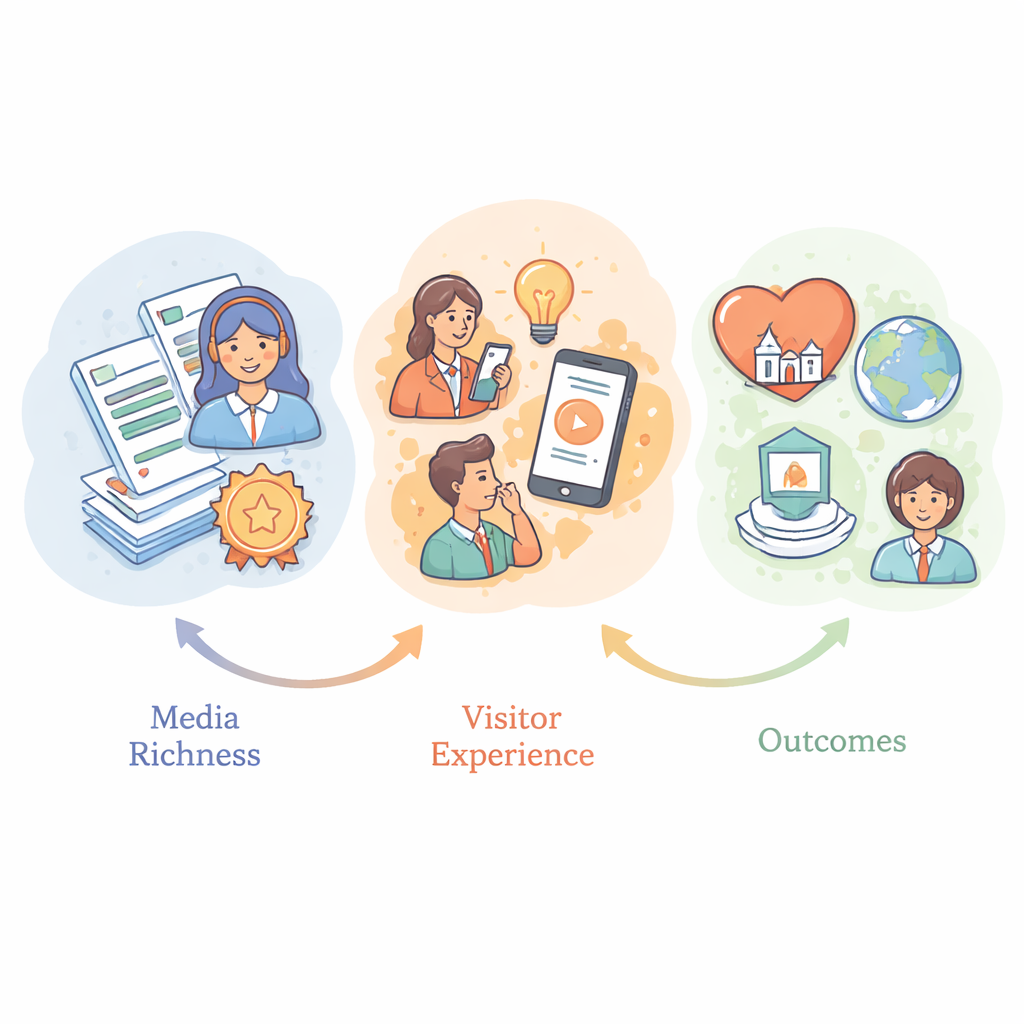
The authors combine two well-known ideas from media research. The first looks at “richness” – how fully a form of media can communicate using multiple cues, quick feedback, and clear messages. For virtual museum guides, richness means three things: content that goes beyond scattered facts to give layered cultural meaning; expressive presentation using images, gestures, tone, and believable virtual settings; and high-quality information that is accurate, easy to understand, and faithful to the heritage being shown. The second idea focuses on “gratifications” – the needs people hope to satisfy: learning useful information, enjoying themselves, and finding technology convenient and easy to use. The study adds two more pieces: visitors’ cultural identity (how strongly they feel connected to their culture) and their information literacy (how comfortable they are finding, judging, and using information online.
How Rich Media Turns Into Lasting Engagement
The researchers surveyed 359 visitors in China after they experienced virtual humans in two museums. Using a statistical technique that looks at complex cause-and-effect patterns, they found that all three richness aspects – content, expression, and quality – strongly boosted visitors’ sense of learning, enjoyment, and technological ease. Enjoyment and ease of use, in turn, clearly increased people’s willingness to keep using virtual humans and to recommend them to others. Learning alone, however, did not directly predict repeat use; information by itself was not enough. Instead, learning, enjoyment, and ease of use all fed into a deeper outcome: a stronger sense of cultural identity. Visitors who felt that the virtual humans helped them appreciate the depth, distinctiveness, and “charm” of their culture were more likely to want to return and re-engage.
Why Skills and Belonging Matter
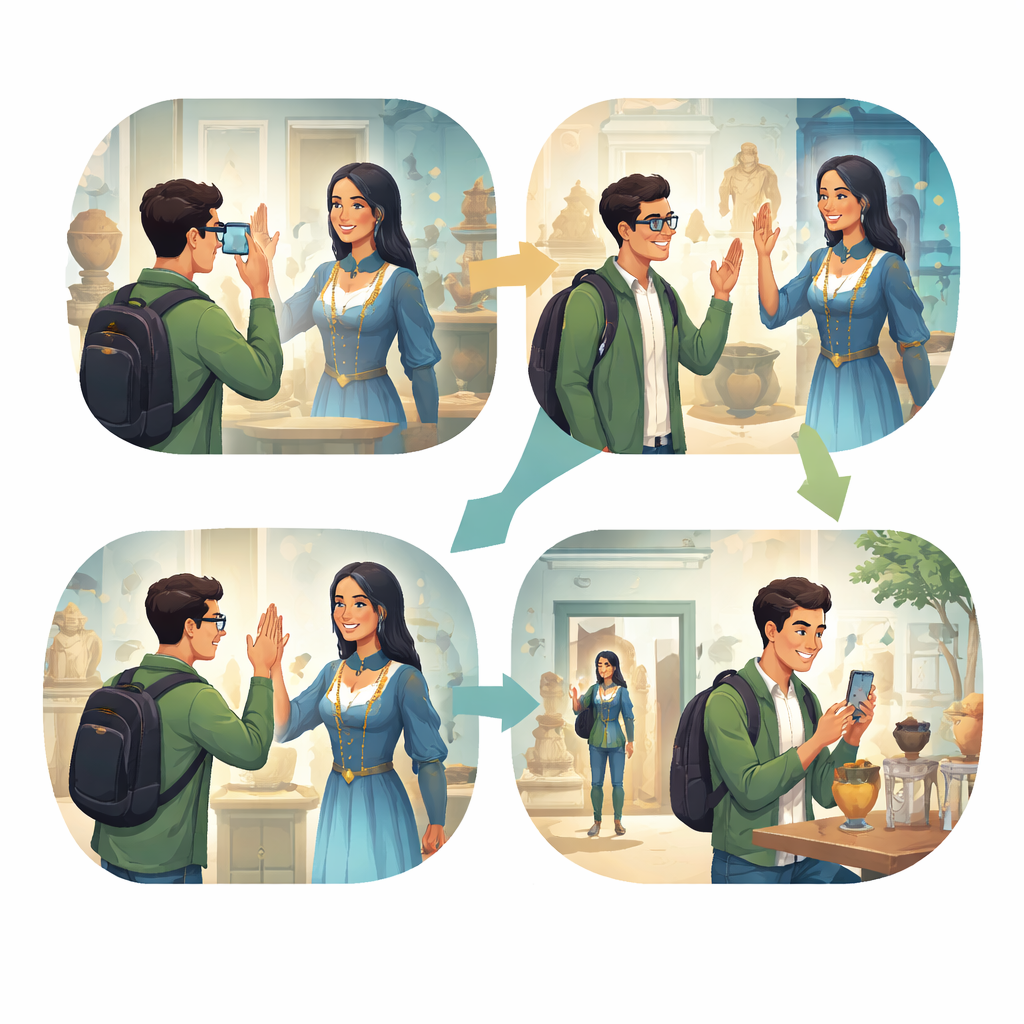
The study also found that visitors’ information literacy changed how technology satisfaction led to continued use. People who were more skilled at navigating digital information were better able to turn a smooth, useful virtual-human interaction into a firm intention to keep using the system. In contrast, those skills did not strongly change the effect of fun or learning; pleasure comes mainly from good design, and basic cultural information can still be appreciated even with modest digital skills. Overall, the findings suggest that museums should design their virtual humans not just for visual flash, but also for clear operations and layered content that can “scale up” for more advanced users.
What This Means for Future Museum Visits
To a lay visitor, the takeaway is straightforward: virtual human guides work best when they tell meaningful stories, feel easy and enjoyable to use, and help you see your culture – or someone else’s – in a more vivid, personal way. When those conditions are met, people are more likely to come back, explore further, and share their experiences, turning digital encounters into lasting cultural bonds. For museums, this means investing in carefully crafted narratives, culturally faithful performances, and interfaces that support both beginners and digitally savvy visitors. Done well, virtual humans can become powerful bridges between past and present, making cultural heritage feel alive and worth revisiting.
Citation: Sun, X., Wang, F. & Jin, W. Continuance intention of cultural museum virtual human based on PLS-SEM analysis of MRT and UGT. npj Herit. Sci. 14, 139 (2026). https://doi.org/10.1038/s40494-026-02407-9
Keywords: virtual museum guides, digital cultural heritage, media richness, cultural identity, visitor engagement