Clear Sky Science · en
Research on spatial pattern and formation mechanism of Yunnan’s traditional village toponymic cultural heritage
Why village names matter
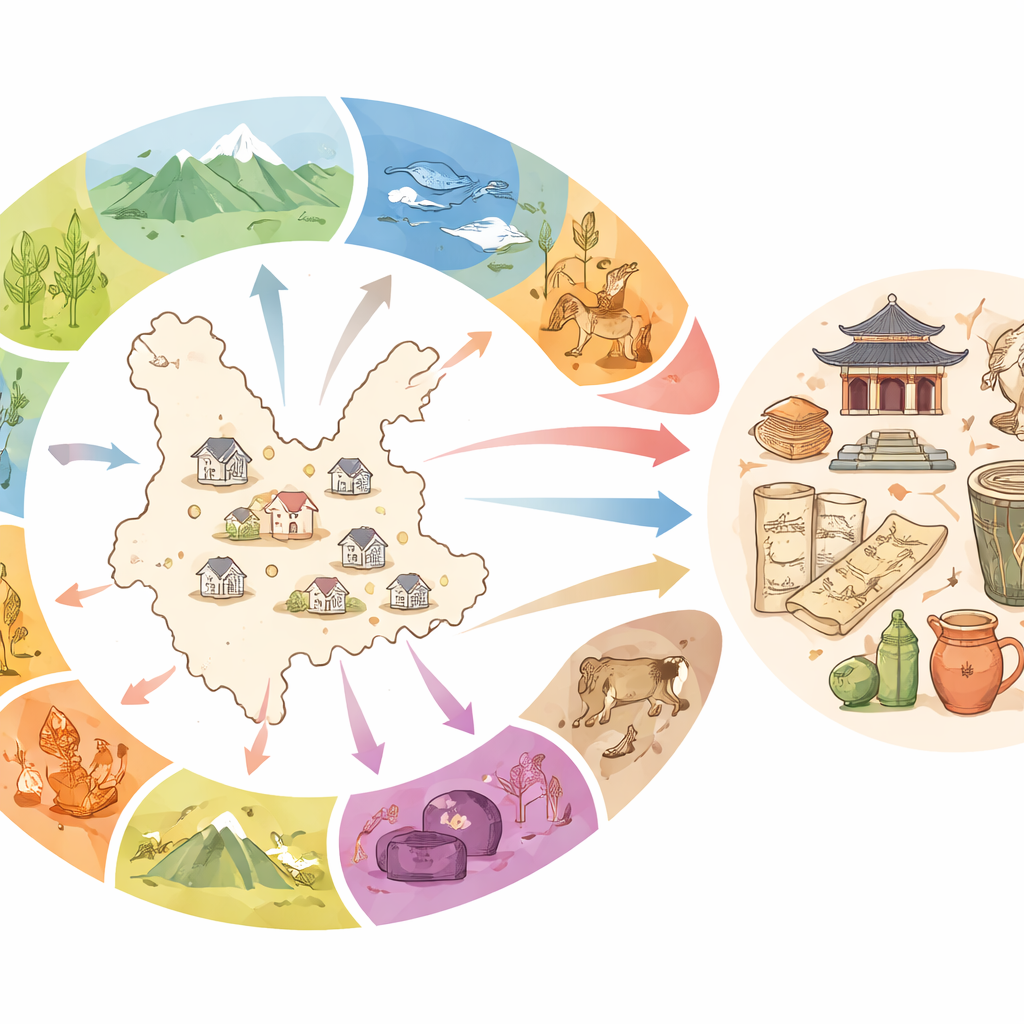
Across Yunnan, a mountainous province in southwest China, thousands of traditional villages carry names that are more than simple labels. These place names quietly record how communities have lived with rivers and ridges, how different ethnic groups mixed, which crops and crafts sustained them, and what they hoped or feared. This study treats those village names as a kind of living archive, asking what patterns they form on the map, how they changed through history, and what they reveal about the deep connections between people, landscape, and culture.
A map of stories in the landscape
The researchers gathered data on 783 officially recognized traditional villages in Yunnan. For each one they recorded its coordinates, when it was founded, which ethnic groups live there, and, crucially, the meaning behind its name. Using mapping tools such as geographic information systems, they plotted every village and used statistical methods to see where names cluster and what kinds of environments they occupy. This allowed them to treat the province as a giant story map, where river valleys, trade routes, and political centers all leave traces in the language of place.
Nature names and people names
The team sorted each village name into two broad families: those rooted in the natural world and those shaped mainly by human culture. Natural names slightly outnumber cultural ones. Many refer to landscape features such as mountains, slopes, rivers, fields, colors, or climate, or to plants, animals, and mineral resources like tea, pines, cattle, salt, or metals. Cultural names reflect clans and surnames, ethnic groups, religious buildings, markets, military posts, bridges, tools, legends, and wishes for good fortune. Overall, landscape and emotion-filled names are the most common, suggesting that villagers were especially attentive to their surroundings and to expressing hope, gratitude, or awe through naming.
Patterns across mountains, rivers, and peoples
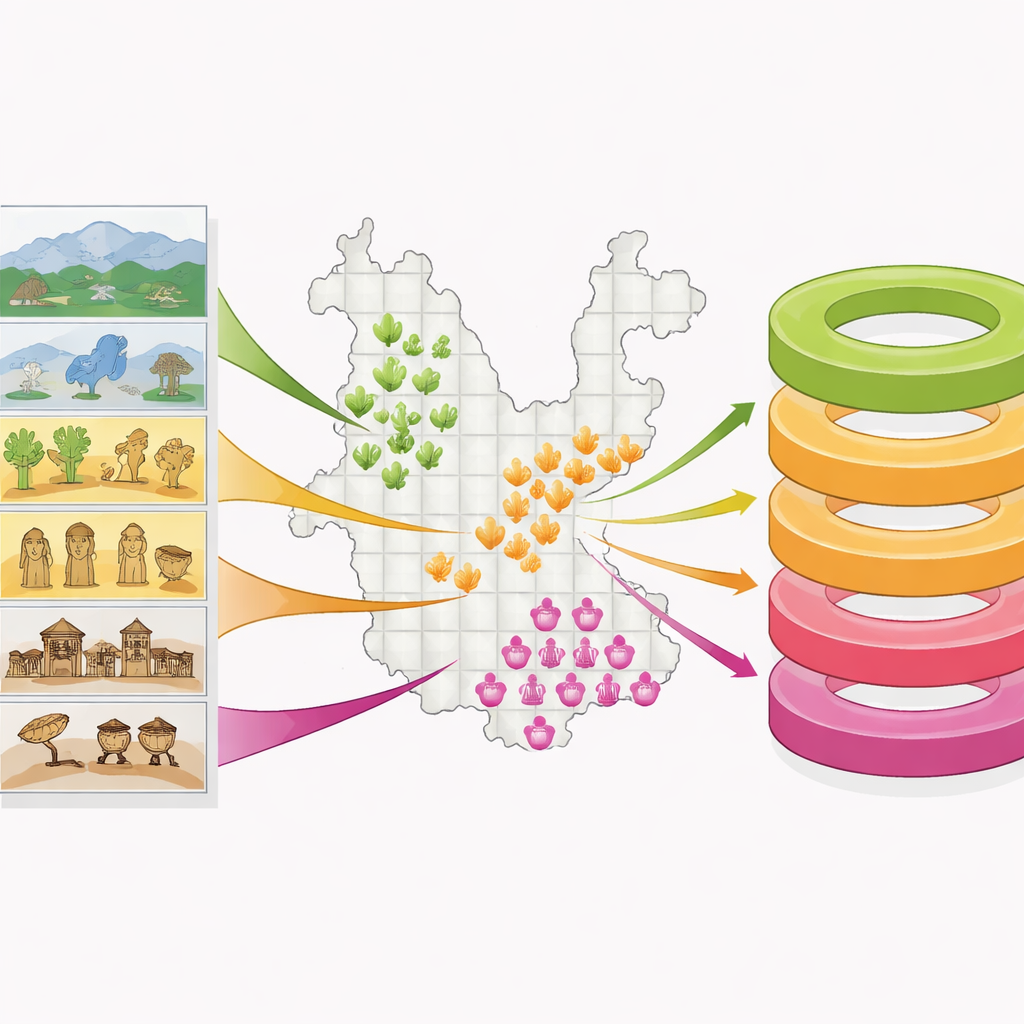
When these categories are laid over Yunnan’s rugged topography, clear patterns appear. Natural names cluster in central and northwestern regions, often along sunny hillsides between about 1,250 and 2,500 meters and close to rivers or dense vegetation. Villages named for water tend to lie within a short walk of streams; those named for plants and animals sit in particularly green areas rich in life. Human-centered names also form clusters, especially along the historic Tea-Horse Road and near old political and military hubs like Dali and Kunming. Here, names referencing forts, granaries, post stations, temples, and markets record centuries of frontier defense, trade, and religious exchange. Clan-based and ethnic names trace the movements and mingling of groups such as the Han, Bai, Hani, Naxi, Tibetan, Dai, Yi, Wa, and others, showing how kinship and belief became anchored in particular valleys and ridges.
How names grow from land and life
Beyond mapping, the authors propose several intertwined forces that generate these naming patterns. First, an “environmental orientation” force: in steep, river-cut terrain, people chose sites and names that help remember where water, fertile soil, and safe slopes lie, and they often treated forests, peaks, and animals with reverence. Second, a “belief identification” force: temples, sacred mountains, lucky animals like dragons and phoenixes, and blessings for peace and good harvests all leave their mark in names. Third, an “ethnic lineage continuity” force: surnames, tribal labels, and paired names like “old” and “new” villages encode family splits, migrations, and the growth of settlements. Fourth, an “environmental modification” force: as people built roads, bridges, post stations, kilns, and distinctive landmarks, these new creations themselves became reference points and names. Finally, an “administrative integration” force: shifting capitals and frontier policies under different dynasties pulled the center of naming activity from Dali toward Kunming and encouraged new types of names tied to officials and bureaucratic units.
Why protecting names protects memory
For non-specialists, the message is straightforward: village names in Yunnan are a form of fragile, living heritage. They compress information about ecology, migration, faith, work, and politics into a few characters that can easily be lost or standardized away. By classifying and mapping these names, this study shows how deeply they are rooted in the province’s mountains and its many ethnic traditions, and it offers a scientific basis for treating them as cultural treasures. Safeguarding these names—through documentation, thoughtful planning, and digital tools—helps keep alive a rich record of how diverse communities learned to thrive together in a demanding landscape.
Citation: Zhong, H., Yuan, X., Wang, Y. et al. Research on spatial pattern and formation mechanism of Yunnan’s traditional village toponymic cultural heritage. npj Herit. Sci. 14, 199 (2026). https://doi.org/10.1038/s40494-026-02398-7
Keywords: place names, Yunnan villages, intangible heritage, ethnic cultures, cultural landscapes