Clear Sky Science · en
Soundscapes as heritage value: multilevel modelling of tourist perception and satisfaction in Shanxi, China
Why the sounds of old places matter
When we visit famous temples, grottoes or palaces, we usually remember what we saw: towering statues, painted roofs, stone walls. But our ears are just as busy as our eyes. From traffic outside the gates to bells and birds inside the courtyards, these layers of sound quietly shape how relaxed, moved and connected we feel. This study asks a simple but overlooked question: how do the everyday sounds of heritage sites affect visitors’ enjoyment and their desire to return?
A journey through four kinds of spaces
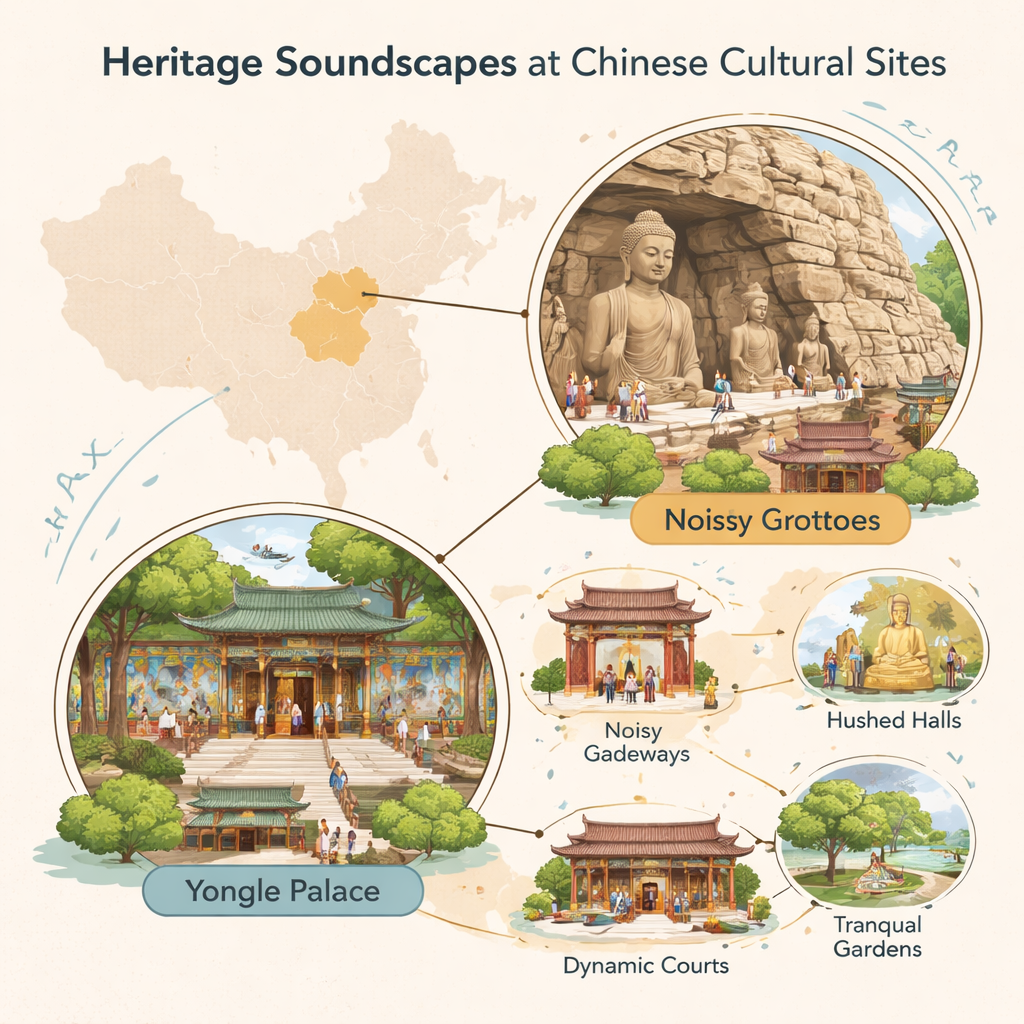
Researchers focused on two celebrated sites in China’s Shanxi Province: the Buddhist Yungang Grottoes and the Daoist Yongle Palace. Both welcome hundreds of thousands of visitors each year and contain a rich mix of sacred buildings, open courts and green corners. By measuring sound levels, mapping visitor routes and surveying more than 400 people, the team discovered that both places share a similar “sound journey.” As visitors move from the entrance to the inner areas, they pass through four zones: noisy gateways crowded with people and announcements, hushed halls where statues and murals dominate, lively courts used for performances and shows, and finally tranquil gardens and rest areas where natural sounds take over. This four-part rhythm, the authors argue, creates a kind of narrative that guides mood and memory.
Listening to noise, culture and quiet
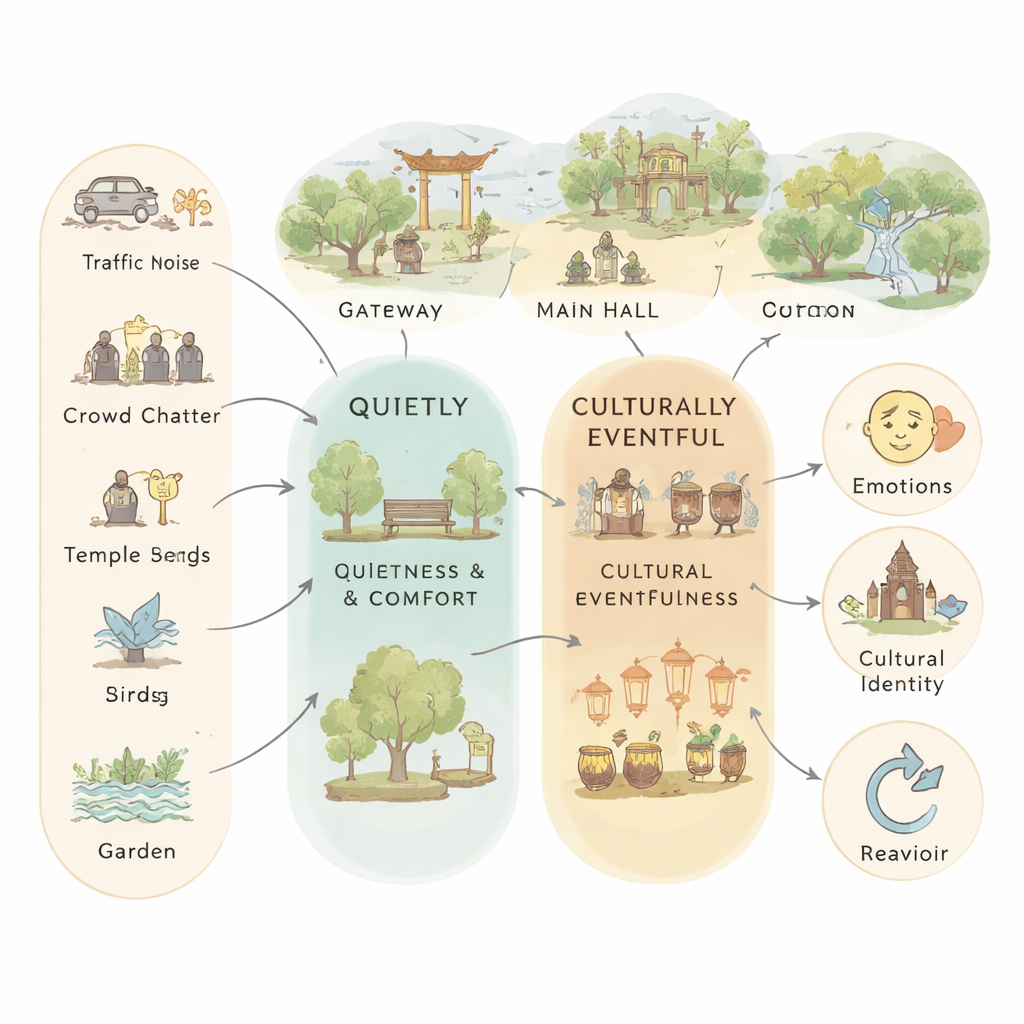
To go beyond simple decibel readings, the study asked visitors how they felt in each zone: Was it calm or chaotic, gentle or harsh, dull or lively, ordinary or unique, modern or traditional, secular or religious? When the researchers analysed these answers statistically, two big dimensions emerged. One was “quietness and comfort” – whether the soundscape felt calm, pleasant and not too shrill. The other was “cultural eventfulness” – whether visitors heard distinctive, traditional and religious sounds that made the place feel special and alive. Entrance areas often scored low on both counts, dominated by loudspeakers and crowd noise. Core halls and performance spaces tended to feel rich in cultural meaning, thanks to bells, chanting, guided commentary and music. The gardens and rest areas were the only zones that combined both high cultural flavour and genuine quiet.
From sound to feelings, stories and loyalty
The team then built a causal model linking what visitors heard to how they felt and behaved. Quiet, comfortable soundscapes were strongly tied to emotional benefits: people reported feeling restored, satisfied, proud and reverent, and were less bothered by noise. Sounds loaded with cultural meaning—temple bells, ritual drums, traditional music—were linked to a deeper sense of historical and religious experience. These, in turn, fed into “loyalty” outcomes: how well the visit matched expectations, whether visitors planned to return and whether they would recommend the site to others. Interviews helped explain this chain. Visitors said natural sounds and soft backgrounds created mental “space” for reflection, while iconic religious sounds turned that calm state into a stronger bond with the site’s history and identity. In contrast, blaring loudspeakers or traffic could abruptly break the spell and make the place feel less authentic.
Designing better sound stories for heritage
Because they combined measurements, surveys and in-depth interviews, the researchers could propose concrete design ideas. They suggest buffering traffic and commercial noise at gateways, so that visitors step into a noticeably different acoustic world as soon as they enter. Inside, managers can “tune” each zone: using narration and ritual sounds more carefully in main halls, balancing volume and direction in performance courts so shows are engaging but not overwhelming, and preserving or enhancing natural sound in gardens. Subtle audio cues—like bells, soft music or short spoken hints—can even help guide movement and behaviour without jarring alarms. Overall, the study shows that soundscapes are not just background; they are an active tool for conservation and tourism planning.
What this means for everyday visitors
For a lay visitor, the takeaway is that how a heritage site sounds can be as important as how it looks. A well-designed sound environment can lower stress, heighten wonder and make history feel present and personal. Quiet zones help people slow down and open up emotionally, while carefully chosen cultural sounds—rather than random noise—turn that openness into lasting attachment and a wish to come back. By treating sound as part of heritage, not just a side effect, site managers can protect fragile places while offering richer, more memorable experiences for everyone.
Citation: Jin, M., Chen, Z., Xu, H. et al. Soundscapes as heritage value: multilevel modelling of tourist perception and satisfaction in Shanxi, China. npj Herit. Sci. 14, 137 (2026). https://doi.org/10.1038/s40494-026-02397-8
Keywords: soundscape, cultural heritage, tourist experience, acoustic environment, heritage tourism