Clear Sky Science · en
Transforming urban experience through virtual tours: a digital storytelling of Gdańsk and its heritage
Why your next city walk might be online
Imagine exploring a historic European city without leaving your living room—or using your phone on a real stroll to see lost buildings spring back to life. This article looks at how virtual tours and digital storytelling are changing the way people experience Gdańsk, a thousand‑year‑old Polish port city. By blending traditional walking tours with tools like 3D scanning, virtual reality and augmented reality, the authors show how technology can deepen, rather than replace, our connection to streets, buildings and shared memories.
From wandering on foot to walking with a screen
For centuries, writers and planners have treated walking as the best way to understand a city. Thinkers such as Henry David Thoreau, Jane Jacobs and many others argued that strolling lets people observe details, meet neighbors and slowly piece together how a place really works. The article starts from this tradition and then asks what happens when today’s walkers carry smartphones, use digital maps or slip on VR headsets. While some fear that screens cut us off from the world, the authors argue that—used thoughtfully—digital tools can actually help us notice more, learn more and share stories that might otherwise stay hidden.
How Gdańsk was turned into a digital walk
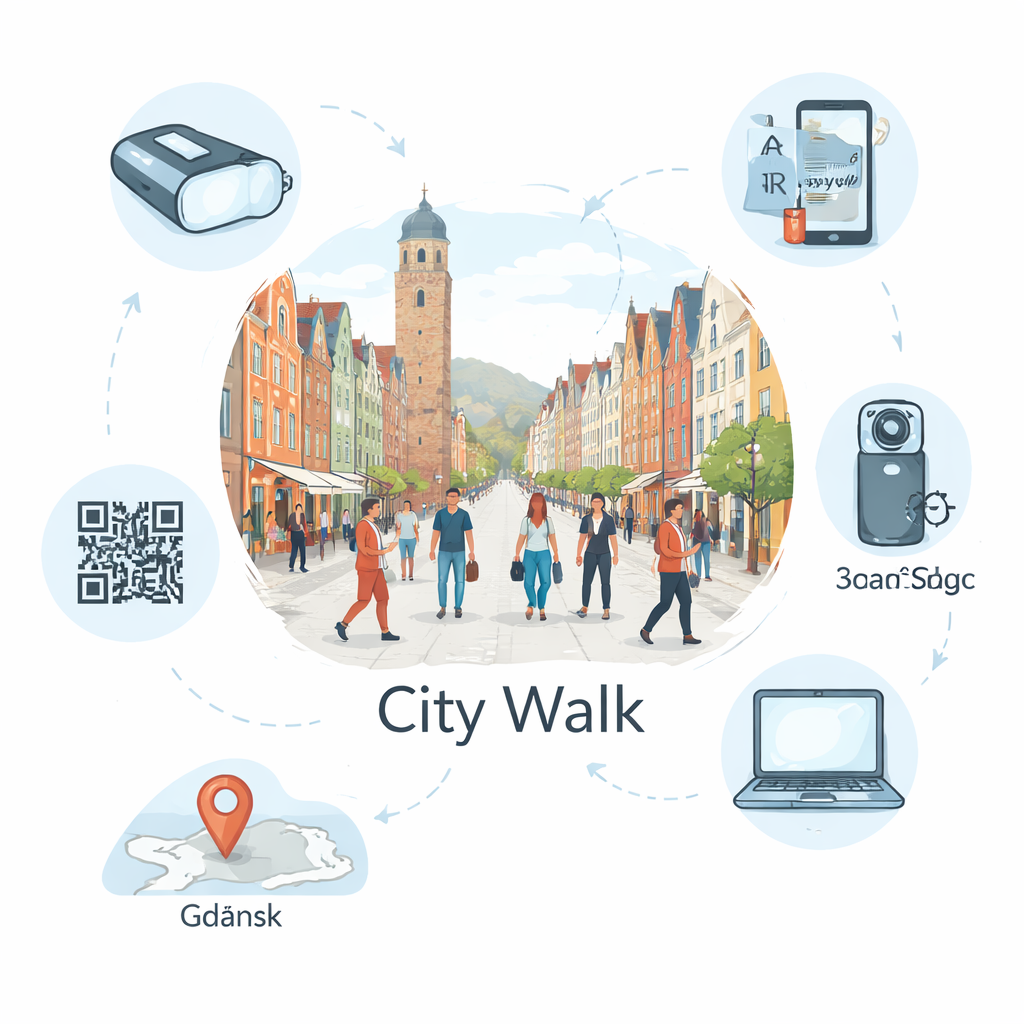
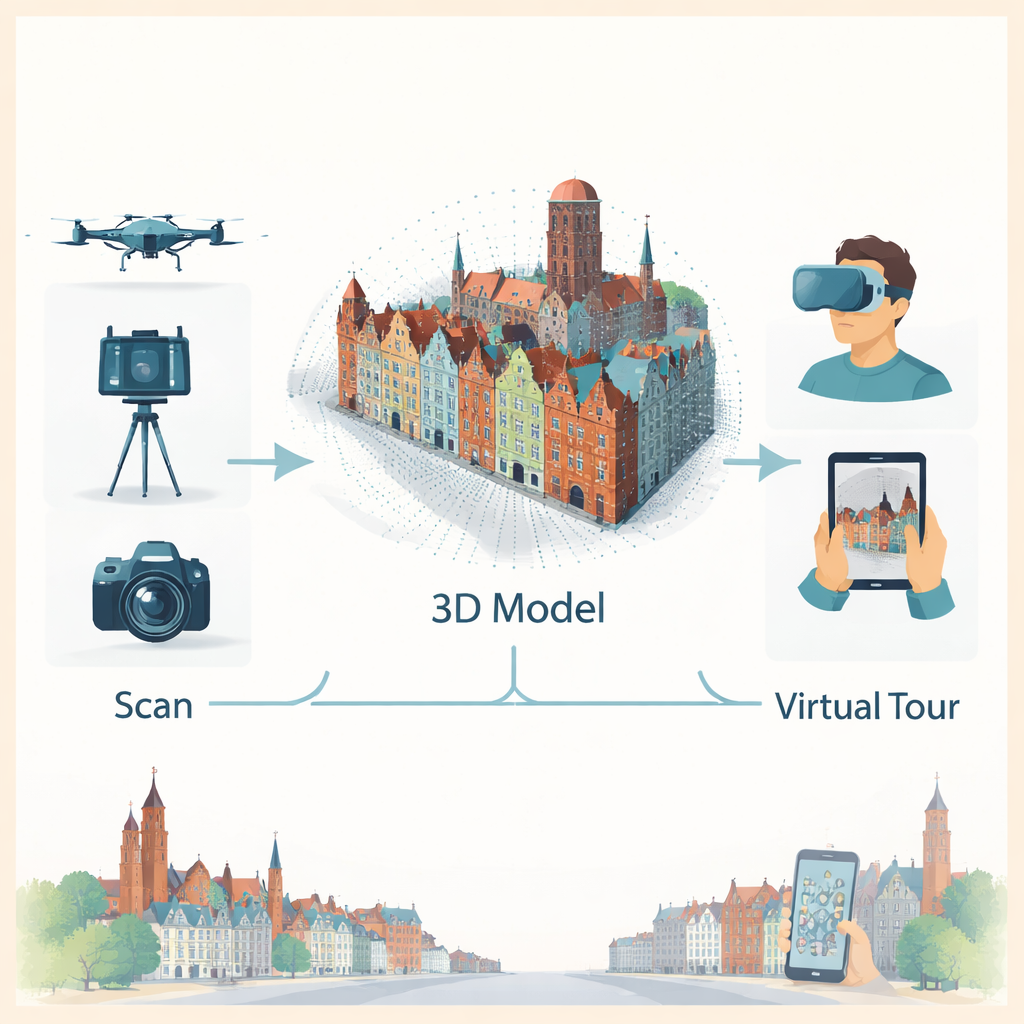
To test these ideas, the researchers used Gdańsk as a living laboratory. They combined community walks inspired by Jane Jacobs with powerful surveying tools such as laser scanners, drones and detailed photography. These devices captured streets, towers and courtyards in 3D, creating highly accurate digital copies of parts of the city. From these models they built virtual tours that link 360‑degree images, sound, drawings and short texts. Viewers can move from spot to spot, click on "hotspots" for extra stories, and even jump between past, present and imagined futures of the same street.
Stories behind streets, gates and balconies
Several Gdańsk routes show how this works in practice. One walk through the Lower Town fortifications used a mobile app with QR codes and simple augmented‑reality views, aimed especially at young adults. By pointing a phone at selected places, participants could see reconstructions, old drawings and short explanations layered onto the real scene. Another project focused on Long Street and the Royal Route, the main historic axis of the city. Here, a summer school team turned 3D scans and archival research into themed story paths—such as tales about swans, princesses and musicians—that visitors can follow virtually or on site. A third tour centered on Mariacka Street, famous for its terraces and stonework. Students built a detailed digital model of the entire street and linked it to a 360‑degree walk where users can zoom into balconies, doorways and decorative details that are easy to overlook in person.
What digital walks add—and where they fall short
Across these examples, walking remains the starting point: people still meet, talk and look around together. The digital layer adds extra time and depth. It can revive forgotten areas, let distant visitors explore Gdańsk, and turn heritage into an "edutainment" experience that mixes learning with play. The projects also help students and residents build digital skills and contribute their own photos or stories, giving them a sense of ownership over how the city is presented. At the same time, the authors note real challenges. Not everyone has a suitable phone or fast internet; the 3D data are heavy and time‑consuming to process; and apps need ongoing maintenance if they are to stay useful and accurate. There is also a risk that flashy effects distract from the physical feel of stones, wood and water that make Gdańsk special.
Why this matters for future cities
In simple terms, the article concludes that technology works best when it supports walking, not when it replaces it. When used carefully, virtual tours and related tools can reveal layers of history and memory, invite people to participate in telling the story of their city, and help planners think about how spaces are used and valued. The Gdańsk experiments suggest a model that other cities could adapt: start with community‑led walks, capture places digitally, and then build virtual experiences that send people back into the streets with fresh eyes. For everyday city dwellers, this means that the phone in your pocket can become less a distraction and more a lens that sharpens your sense of place.
Citation: Borucka, J., Picchio, F. Transforming urban experience through virtual tours: a digital storytelling of Gdańsk and its heritage. npj Herit. Sci. 14, 129 (2026). https://doi.org/10.1038/s40494-026-02395-w
Keywords: virtual tours, digital heritage, urban walking, Gdańsk, augmented reality