Clear Sky Science · en
InSwAV: involution enhanced feature clustering and swapped assignments for porcelain relic microscopic image classification
Why broken porcelain matters to the present
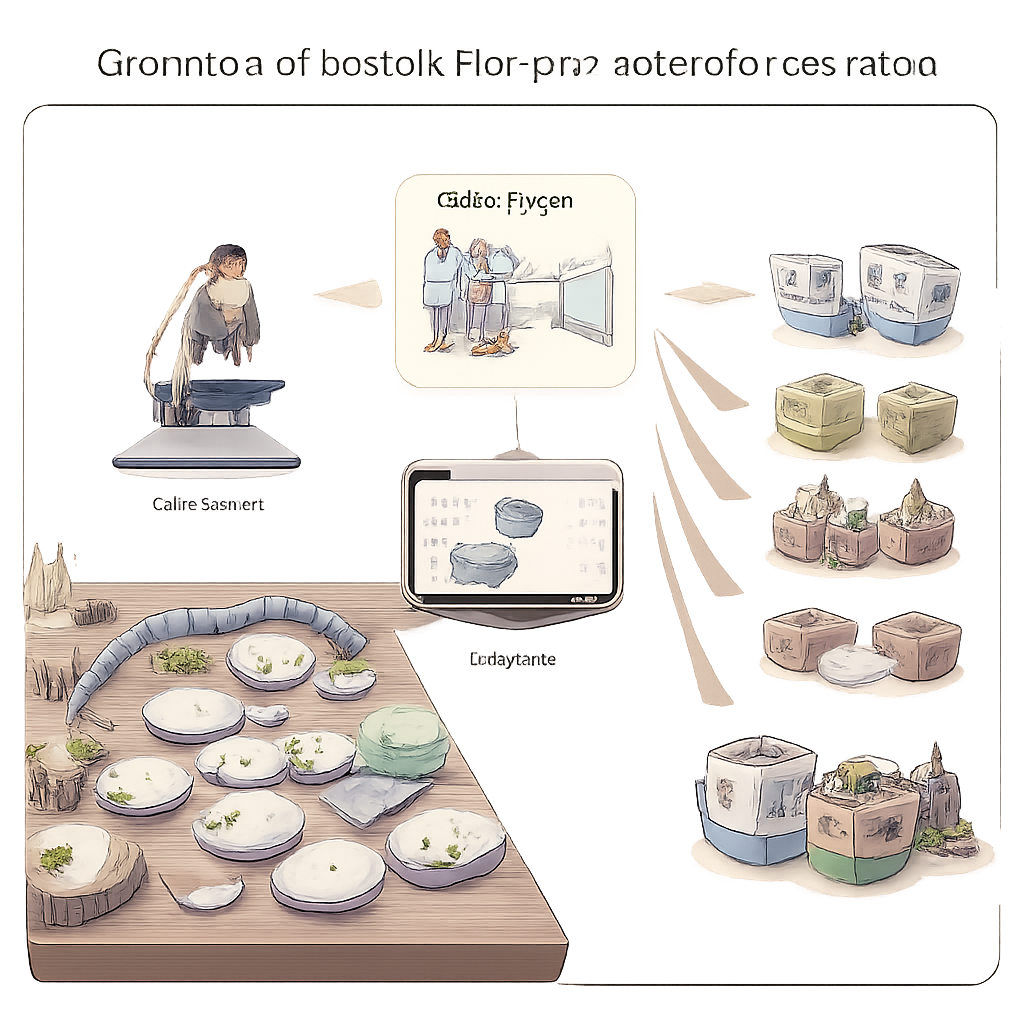
Across China and beyond, archaeological digs unearth mountains of shattered porcelain. Each fragment carries clues about how people lived, traded, and mastered high‑temperature firing centuries ago. Yet sorting and matching these countless shards is slow, expert work. This study presents a new artificial intelligence approach, called InSwAV, that learns from microscopic images of porcelain surfaces to automatically group fragments by type. Faster, more reliable classification could dramatically speed restoration work and deepen our understanding of cultural heritage.
Seeing history in tiny bubbles
To the naked eye, many porcelain pieces look confusingly similar: white or pale green glazes, worn patterns, and damaged edges. Under a microscope, however, another world appears. Tiny bubbles trapped in the glaze record details of the clay, glaze recipe, firing temperature, and even the habits of individual kilns or workshops. Prior research showed that the size, shape, and distribution of these bubbles vary between production centers and time periods, making them powerful fingerprints for identification and dating. But extracting and interpreting these subtle patterns by hand or with traditional image processing tools is labor‑intensive and sensitive to noise.
Letting the computer teach itself
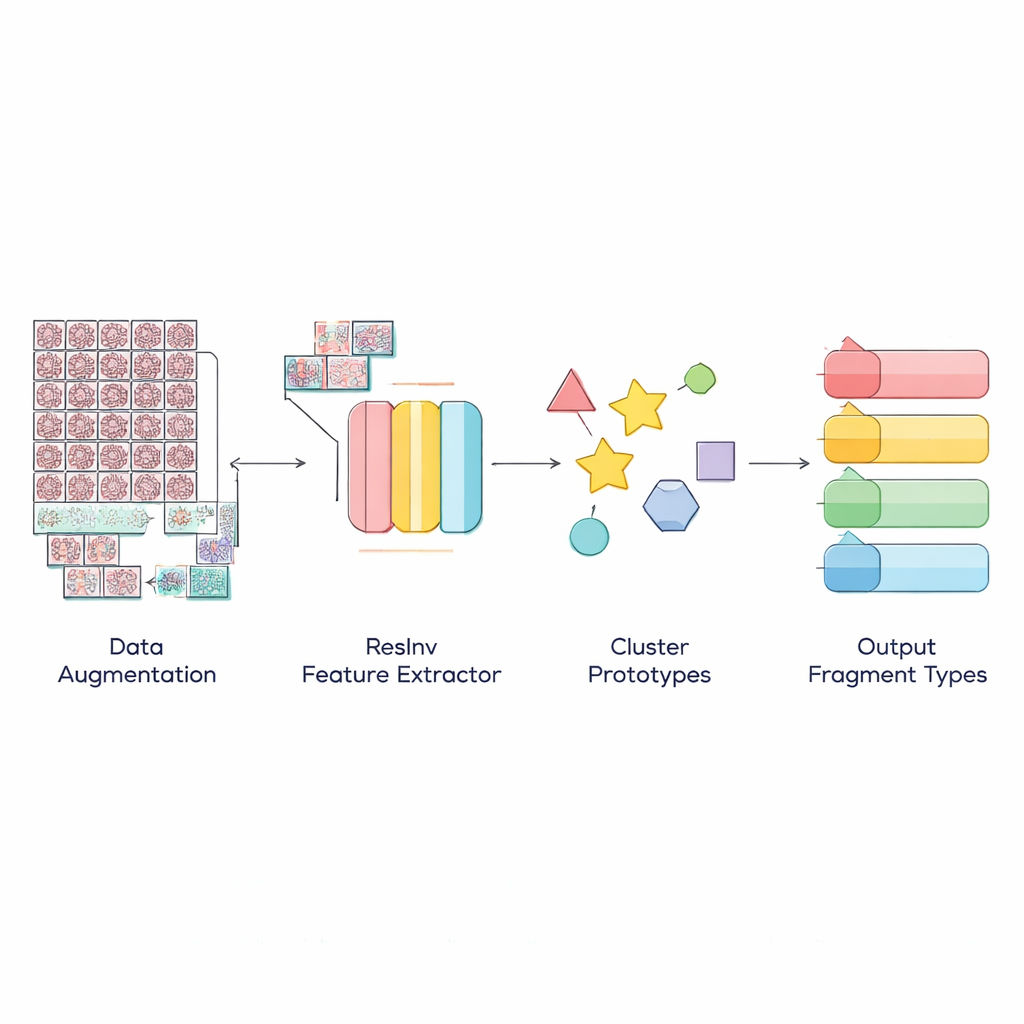
A major obstacle in this field is the lack of labeled data: specialists can only annotate a limited number of microscopic images, and some fragment types are rare. Instead of relying on thousands of expert‑labeled examples, the authors turn to self‑supervised learning, where a neural network is trained to discover structure in data on its own. They build the Porcelain Relic Microscopic Image (PRMI) dataset, containing 7425 high‑magnification images from five porcelain categories. For each original micrograph, the system creates multiple altered versions by cropping, flipping, changing colors slightly, and blurring. These “views” show the same material in different ways, encouraging the computer to focus on stable, meaningful features rather than superficial details.
A smarter way to spot patterns
The heart of the method is InSwAV, a network built around a custom feature extractor named ResInv. Standard image networks use fixed convolution filters that slide across the image. ResInv instead mixes these with “involution” operations that adjust their behavior depending on position, better capturing the irregular, multi‑scale shapes of glaze bubbles and cracks. Once ResInv has turned each image into a compact signature, InSwAV does not compare individual images directly. Rather, it assigns them to a set of learned “prototypes,” or cluster centers, and then checks whether different augmented views of the same fragment land in compatible clusters. A mathematical balancing step prevents the model from lazily dumping everything into just a few groups, forcing it to uncover real, finer‑grained structure.
Accuracy, speed, and what they reveal
On the PRMI dataset, InSwAV correctly distinguishes the five porcelain categories 96.2% of the time, clearly beating several leading self‑supervised methods and even a strong supervised baseline that had access to labels. It also trains much faster, reaching high accuracy after only a few hours on modern graphics hardware. Visualizations of the network’s internal activity show that ResInv concentrates on the bubbles and key microstructural details, while a standard architecture tends to be distracted by background regions. The approach is also robust to different choices of how many clusters the model uses, suggesting it can adapt well to new datasets.
What this means for broken pots and beyond
In plain terms, the study shows that a computer can learn to tell different porcelain relics apart by studying their microscopic “bubble landscapes,” even when experts provide few labels. This ability could help museums and archaeologists sort large collections more quickly, match fragments for virtual reassembly, and support studies of kiln technology and trade networks. The authors plan to expand their dataset, test the method on broader image collections, and further streamline the model for field use. As such tools mature, they promise to turn fragile shards from time‑consuming puzzles into rich, rapidly accessible records of the past.
Citation: Liu, Y., Liu, J., Liu, X. et al. InSwAV: involution enhanced feature clustering and swapped assignments for porcelain relic microscopic image classification. npj Herit. Sci. 14, 117 (2026). https://doi.org/10.1038/s40494-026-02391-0
Keywords: porcelain relics, microscopic imaging, self-supervised learning, cultural heritage restoration, image classification