Clear Sky Science · en
A spatial anthropology perspective on the coupling mechanism between infrastructure and market settlements
Why old river towns still matter today
Anyone who has walked along an old riverside market or taken a train past small towns has seen how roads, railways, and waterways shape everyday life. This article looks at Dongguan, a city in China’s Pearl River Delta, to ask a big question with very current relevance: how do bridges, canals, ports, and tracks change traditional market towns—and how do those towns push back and reshape the infrastructure in return? The answers offer lessons for protecting historic places while cities rapidly modernize.
Rivers, railways, and the rise and fall of markets
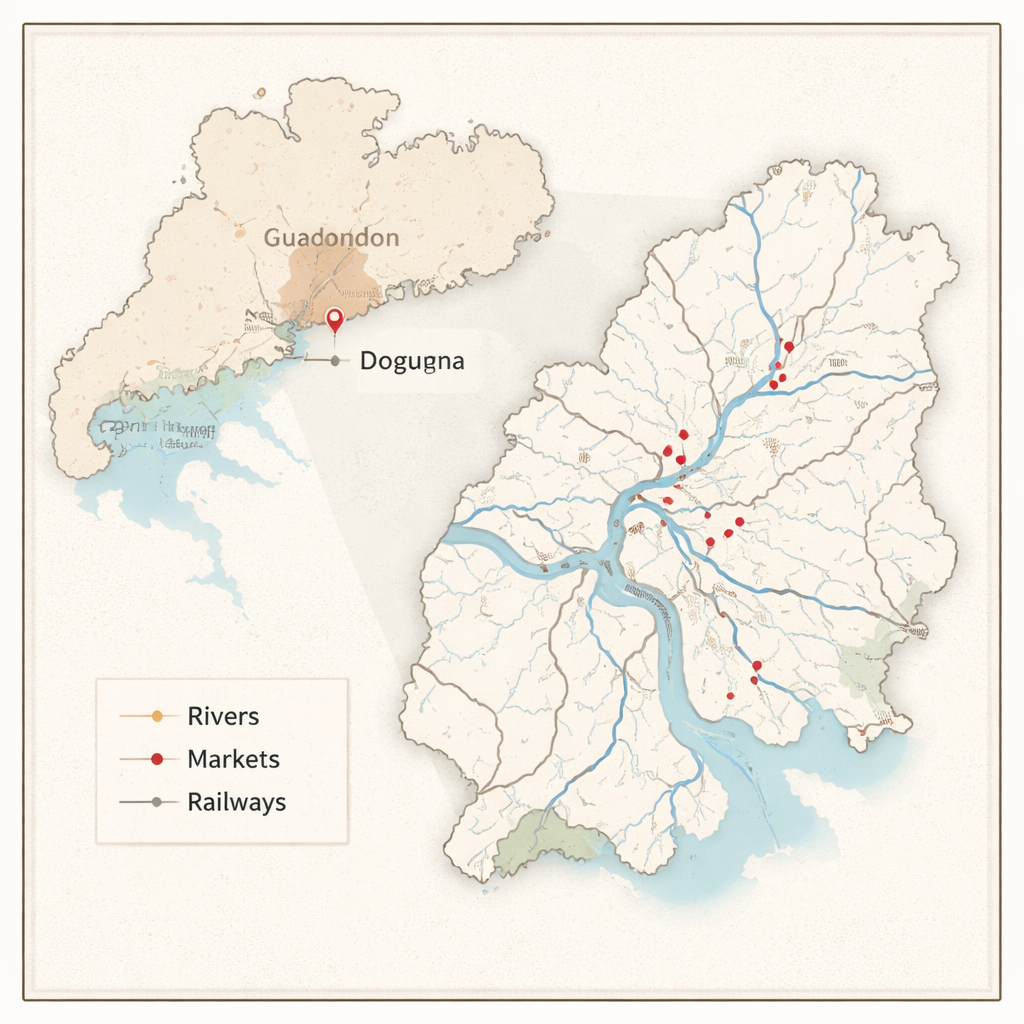
The study focuses on the period from 1840 to 1949, when China was forced open to global trade, invaded, and repeatedly reorganized. Dongguan, sitting in a dense web of branches of the Dongjiang River, became a key link between Guangzhou and Hong Kong. At first, most markets lined the waterways, using boats to move goods and people. Later, new roads and a major railway cut across this river network. Markets close to stations or road junctions grew into regional hubs, while others, stranded away from the new lines, shrank or disappeared. Using historical maps, satellite images, and local records, the authors show how shifts in transport reshuffled which places thrived and which faded.
More than docks and tracks: how people use space
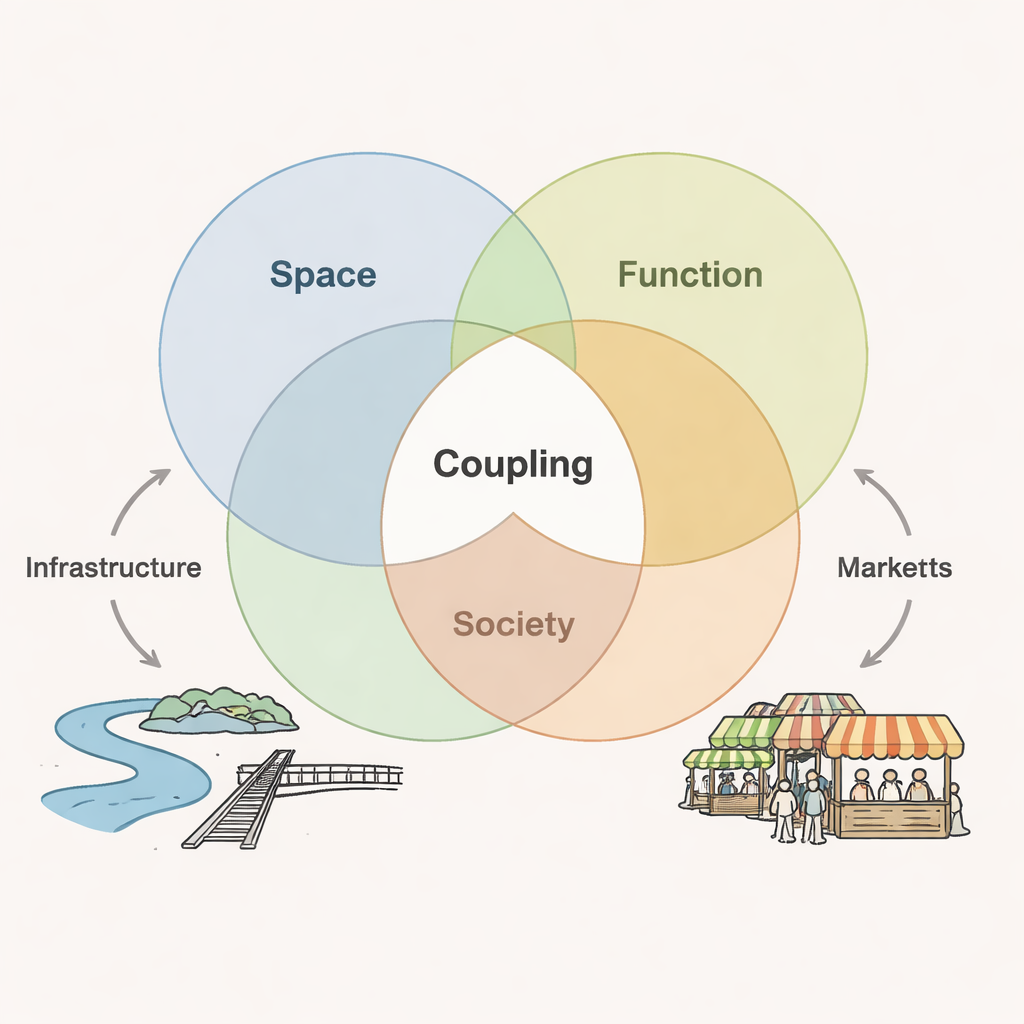
Instead of treating space as just dots and lines on a map, the authors draw on “spatial anthropology,” which treats streets, embankments, and stations as lived environments. Governments and colonial powers tried to impose neat plans through rail routes, port layouts, and tax rules. But residents and traders constantly adapted these plans. Street corners became informal markets; temple courtyards doubled as business and meeting spaces; old river docks gradually turned into cultural hubs as performances, food stalls, and paperwork services clustered there. In this view, infrastructure is not a neutral backdrop but a stage where different groups struggle over where trade happens and who benefits.
Power, profit, and the shaping of town life
The article also traces how local clans, gentry, government offices, and later colonial authorities used infrastructure to build and defend their power. Controlling embankments, canals, or cattle markets did more than move goods; it generated land income, tax revenue, and social prestige. Systems such as shared investment schemes and bundled tax rights turned markets into engines for both profit and influence. Over time, these arrangements changed: imperial officials gave way to chambers of commerce, then to colonial forces and modern bureaucracies. Yet the basic pattern stayed the same—whoever could guide the flow of goods along rivers, roads, and rails could also steer the social order of the settlements around them.
History as a series of shocks and adjustments
Major events—the Opium War, the building of the Guangzhou–Kowloon Railway, the Japanese occupation, and civil war—acted like sudden jolts to this system. Some central markets collapsed during wartime, while out-of-the-way places used older water routes to keep trade alive. The number of markets across the region rose and fell in waves, reflecting booms, crises, and new political rules. The authors argue that these shifts were never purely technical. Each change in transport technology combined with global capital, local politics, and community strategies to create a new pattern of winners and losers in space.
What this means for saving historic places
For readers interested in heritage and planning, the article’s message is clear: traditional market settlements are not frozen museum pieces, but products of long, tangled relationships between nature, technology, and power. Protecting them today means more than restoring old buildings or beautifying waterfronts. It requires understanding how diverse infrastructures—waterways, roads, schools, temples, clinics—once worked together to support everyday life, and how local groups used them to negotiate status and survival. By viewing Dongguan’s past through this wider lens, the study offers a toolkit for guiding river-basin renewal and rural revitalization in ways that respect both cultural memory and the complex social networks that still depend on these places.
Citation: Yin, J., Jia, M. A spatial anthropology perspective on the coupling mechanism between infrastructure and market settlements. npj Herit. Sci. 14, 101 (2026). https://doi.org/10.1038/s40494-026-02373-2
Keywords: Dongguan market towns, infrastructure and heritage, Pearl River Delta history, spatial anthropology, urbanization in China