Clear Sky Science · en
Isotopic insights into han period coastal agriculture on the liaodong peninsula in northeast China
Farming at the Edge of Empire
Along the rocky shores of northeast China, ancient communities of the Han Dynasty lived between fertile plains and fish-rich seas. It might seem obvious that such coastal people would rely heavily on seafood. This study shows the opposite: by reading chemical traces locked in ancient bones, researchers reveal that life on the Liaodong Peninsula was driven far more by fields and pigs than by fish, offering a window into how imperial policy could reshape everyday diets.
Why Coastal Farmers Matter
The Han Dynasty (202 BCE–220 CE) was China’s first long-lasting empire, powered by a booming population and expanding frontiers. To feed tens of millions of people and secure distant borders, the state promoted a strong “farm first, trade second” philosophy. On the Liaodong Peninsula, where the city of Dalian sits today, officials set up commanderies and military farming colonies. Soldiers and migrants from the Central Plains were settled on new lands, armed with iron tools, ox-drawn ploughs, and know-how for growing millet and keeping pigs. Yet, despite rich local fisheries, we have known surprisingly little about whether coastal communities followed their own ecological opportunities or conformed to inland farming traditions.
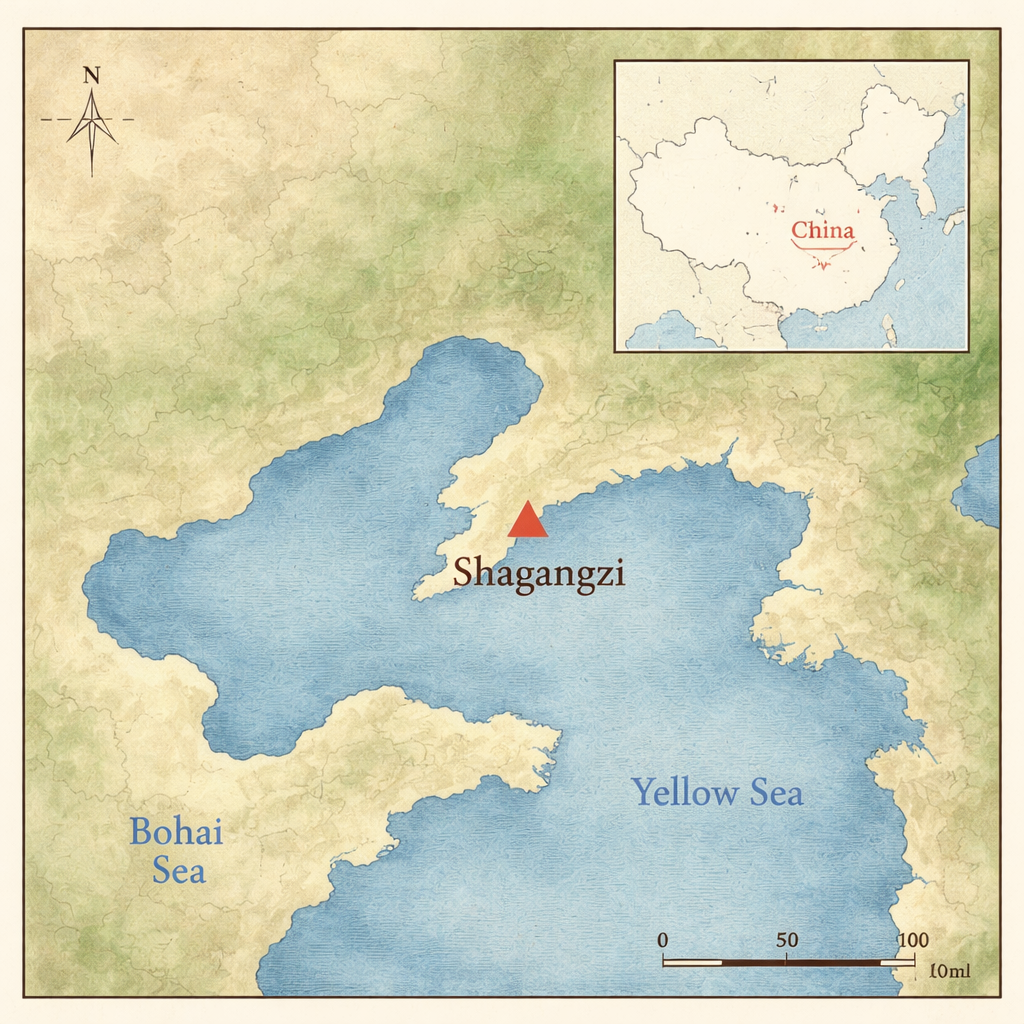
Digging into a Busy Coastal Community
The Shagangzi Cemetery near Dalian preserves the burials of people who lived during the Western Han period, roughly 200–50 BCE. Archaeologists have uncovered more than 300 tombs in the broader area, with graves built from layers of seashells and filled with pottery, bronze, lacquer, and jade. These finds suggest a prosperous, densely settled community tied into imperial networks. From Shagangzi, the team sampled 74 human skeletons and 10 animal bones, mostly pigs and a chicken, and dated one individual with radiocarbon methods to confirm the Western Han timeframe. The key to the study was not the grave goods themselves, but tiny chemical markers in bone collagen—forms of carbon and nitrogen that vary depending on what people and animals ate.
Reading Diets from Bone Chemistry
Plants that thrive in dry northern fields, like broomcorn and foxtail millet, carry a different carbon signature than crops such as wheat and rice. Similarly, marine foods and heavily manured crops tend to show higher nitrogen values. By measuring these signatures, the researchers found that most people at Shagangzi had carbon values pointing to a diet strongly based on C4 plants—classic millet crops of northern China—with some contribution from C3 foods like wheat. Nitrogen values were high, similar to what is often seen in meat-eating or seafood-heavy diets, but the pattern in animals told another story. Pigs showed evidence of being fed both millet and wheat, and even piglets already reflected this farm-based diet through their mothers’ milk. Crucially, the nitrogen values in local animals were already elevated, a hallmark of fields heavily fertilized with animal dung and household waste.
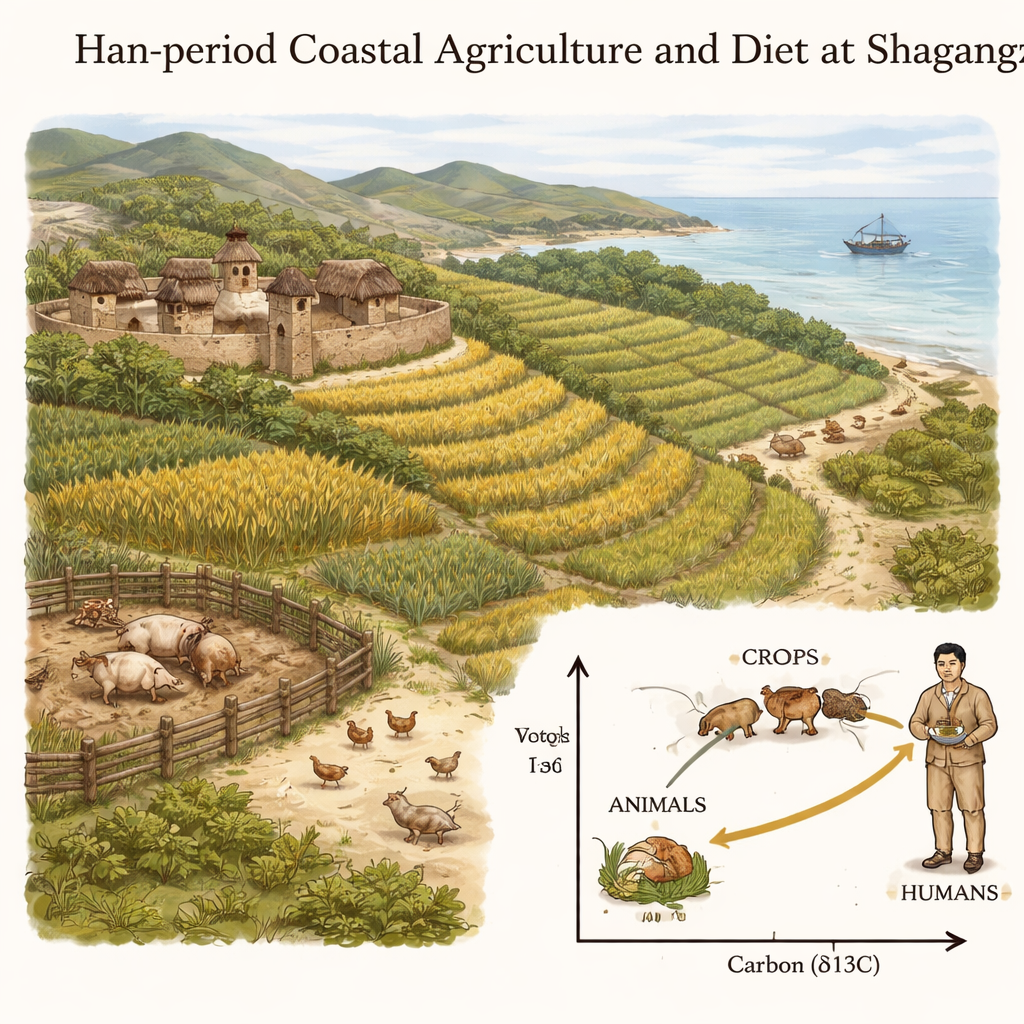
Land Food over Sea Food
If Shagangzi people had depended heavily on fish or other marine life, their nitrogen values would typically be much higher than what was observed. When the team compared the human data with fish from nearby seas and with coastal communities in Japan and Korea known to be marine-oriented, the difference was striking: Shagangzi’s values fit a land-based pattern. Even the abundance of shells in the tombs turned out to be misleading as a dietary clue. Historical texts indicate that shells were used mainly as practical building material in graves—for drainage and support—rather than as food offerings. Together, the chemical evidence and historical records suggest that meat, particularly pork, was not an everyday staple for commoners, but more likely reserved for special occasions, while millet porridge and other grain-based foods dominated daily meals.
Empire’s Hand in Everyday Meals
When the Shagangzi results are compared with 18 other Han-era sites across China, the coastal community clusters with inland farming centers of the Central Plains rather than with mixed farming-and-fishing settlements. This suggests that imperial policies promoting intensive, manured agriculture—especially millet-based farming combined with pig husbandry—successfully took root even on a coastline rich in marine resources. Favorable local soils and climate made such farming productive, while the needs of a large frontier population and military garrisons encouraged reliable, high-yield crops over more variable marine harvests. In simple terms, the state’s push for fields and fodder outweighed the lure of the sea, showing how political decisions can leave a clear imprint not only on landscapes and settlements, but also in the chemistry of human bones.
Citation: Lin, Y., Yu, R., Dai, Q. et al. Isotopic insights into han period coastal agriculture on the liaodong peninsula in northeast China. npj Herit. Sci. 14, 98 (2026). https://doi.org/10.1038/s40494-026-02357-2
Keywords: Han Dynasty agriculture, Liaodong Peninsula, stable isotope analysis, ancient diet, millet farming