Clear Sky Science · en
Narrative as cognitive infrastructure reduces semantic opacity in virtual industrial heritage
Why old factories still matter
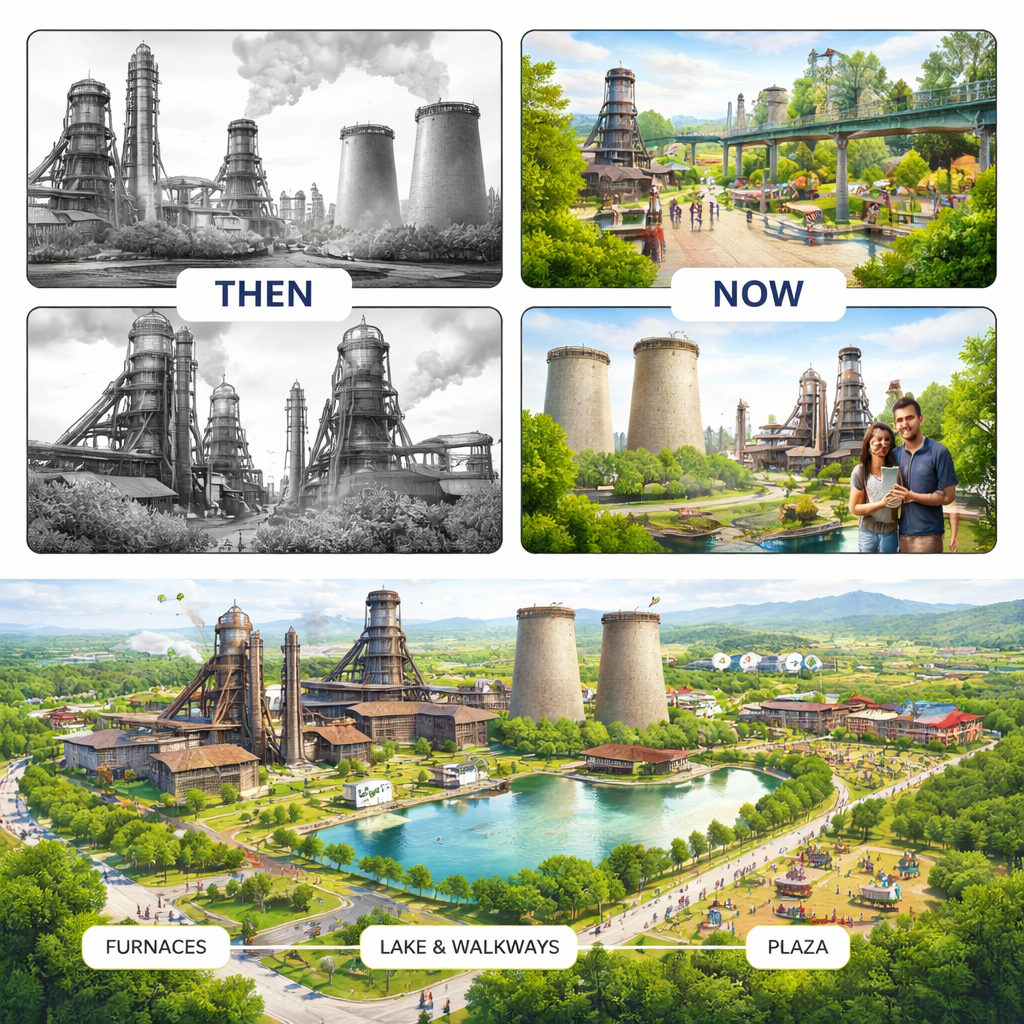
All over the world, rusting steelworks and power plants are being turned into parks, museums, and entertainment districts. They look dramatic, but most visitors see only striking shapes of pipes and towers, not the stories of workers, risks, and communities behind them. This paper asks a simple question with big implications: can well-timed storytelling inside virtual reality help ordinary visitors move from “That looks cool” to “Now I understand what happened here and why it matters”?
From eye candy to meaningful places
The researchers focus on Beijing’s Shougang Park, once one of China’s largest steel plants and now a showpiece of urban renewal and an Olympic venue. The site is visually spectacular, yet surveys show that many visitors walk away impressed by the scenery but unclear about the labor, technology, and social change that shaped it. The authors call this problem “semantic opacity”: the buildings are highly visible, but their meaning is opaque. Modern digital heritage projects, they argue, often worsen this gap by chasing ever more realistic 3D models without providing enough help in understanding what is being shown.
Turning stories into mental scaffolding
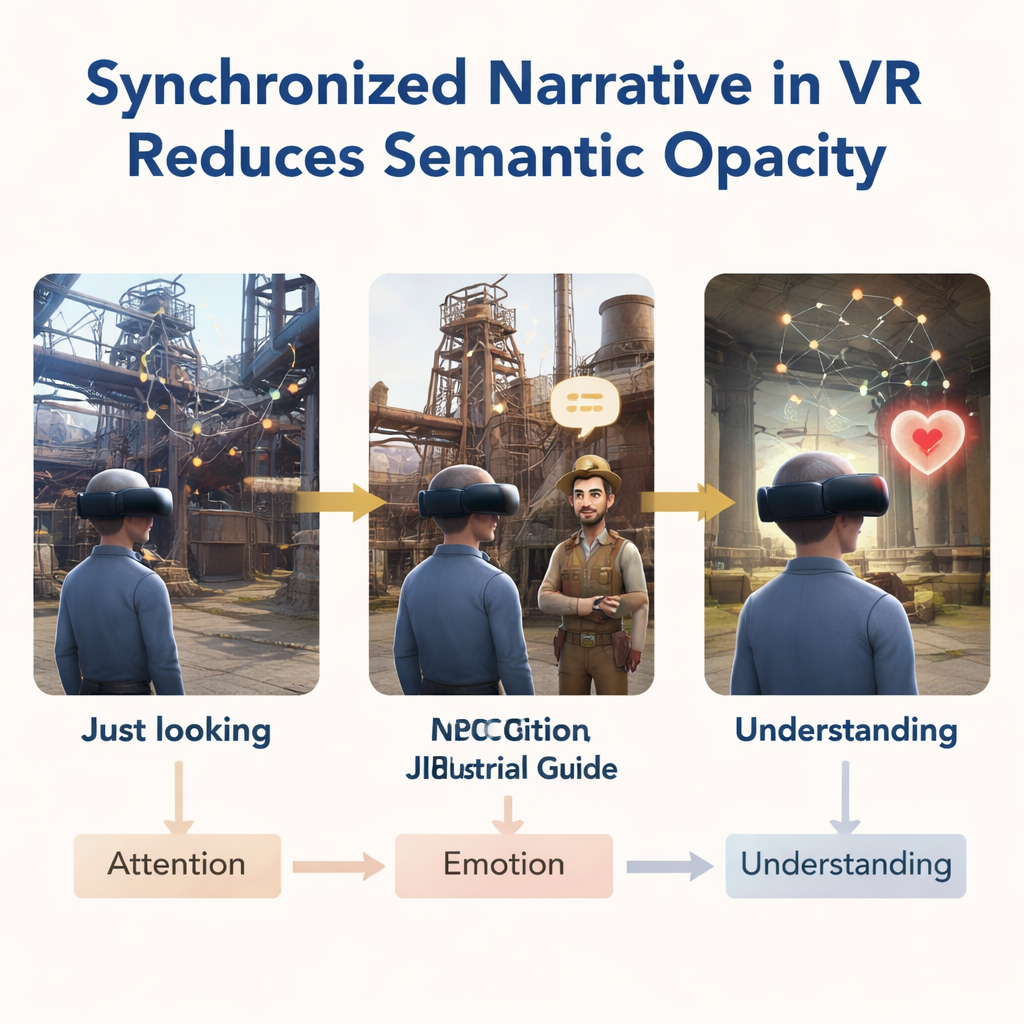
To tackle this, the team built a highly detailed virtual version of part of Shougang Park using a game engine. Participants wore a VR headset and could freely walk around towering blast furnaces, cooling towers, pipes, and new public spaces. Half of them simply explored on their own. The other half met lifelike virtual guides—non-player characters, or NPCs—who appeared when a visitor looked at key structures for more than a brief moment. These guides offered short, tailored stories about how the machinery worked, what it meant for workers’ lives, and how the site later changed into a public destination. The idea was to treat narrative not as decoration, but as “cognitive infrastructure”: a support system that directs attention, stirs emotion, and helps weave scattered impressions into a coherent picture.
Watching eyes, bodies, and thoughts
While people explored, the system quietly recorded where they looked, how long they stared, and how their bodies reacted. Eye-tracking hardware measured whether visitors focused on historically important features or just wandered over the skyline. Wearable sensors monitored tiny changes in skin conductance, breathing, and heart rhythms that signal arousal and mental effort. Afterward, participants filled out questionnaires about how engaged and informed they felt, and they wrote short reflections on what they had learned. The researchers then analyzed these reflections as networks of concepts—looking at which ideas, such as background history, design features, emotions, and learning, tended to appear together.
Stories that change where you look and what you keep
The differences between groups were striking. With NPC guides, people fixated more often and for longer on structures that carried rich historical meaning, such as blast furnaces and redevelopment zones, instead of just scanning scenic views. Their bodies showed sharper, well-timed spikes of arousal and focused effort exactly when the stories unfolded, suggesting that the narrative moments felt important rather than merely entertaining. On questionnaires, guided visitors reported clearer understanding of the site’s history and design intentions, and stronger emotional and physical involvement. Their written reflections revealed more tightly woven concept networks: they more often linked background information, architecture, and personal learning, instead of describing only how “real” or “immersive” the VR scene looked.
What this means for visiting old industrial sites
For a general visitor, the takeaway is that seeing is not the same as understanding. High-resolution images of industrial ruins can still feel empty unless something helps connect what you see to who worked there, what risks they took, and how the place shaped a city’s life. This study shows that short, well-placed stories—delivered at the exact moment your eyes land on a crucial detail—can rewire how you look, how you feel, and what you remember. By treating narrative as invisible mental infrastructure, museums, parks, and digital experiences can turn impressive shells of industry into living carriers of social memory, making regenerated sites like Shougang Park not just backdrops for photos, but gateways into their deeper past.
Citation: Huang, X., Liang, H., Wang, Y. et al. Narrative as cognitive infrastructure reduces semantic opacity in virtual industrial heritage. npj Herit. Sci. 14, 126 (2026). https://doi.org/10.1038/s40494-026-02352-7
Keywords: virtual heritage, industrial heritage, storytelling, virtual reality, museum interpretation