Clear Sky Science · en
The impact of visual emotional cues in cultural heritage on public sentiment and behavioral intention: an image emotion recognition approach
Why heritage photos on your feed matter
Every day, millions of people scroll past photos of temples, old streets, festivals, and museum treasures. We might pause, tap “like,” or feel a pang of sadness at a ruined site—then move on. This study asks a simple but powerful question: do those fleeting emotional reactions to cultural-heritage images actually change how people feel and behave in the real world? By tracking emotions hidden in social-media photos, the authors show that heritage imagery can quietly influence our travel plans, our online conversations, and even our willingness to care for the past.
Turning online photos into an emotion barometer
To explore this, the researchers created something they call the Heritage Sentiment Index, or HSI 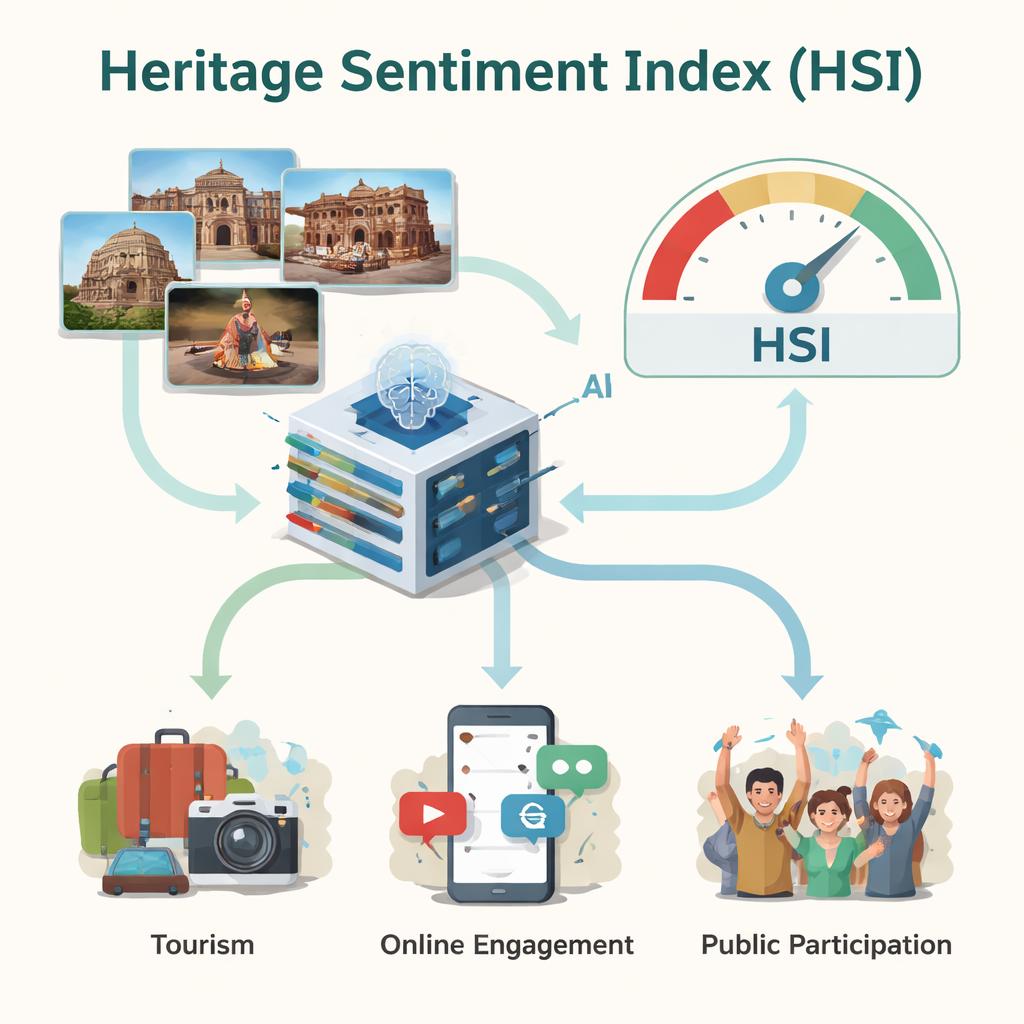
From emotional pictures to public behavior
Armed with this automated “emotion reader,” the team analyzed more than 14,000 heritage-related images posted between 2021 and 2025. For each day, they calculated the share of images that looked negative—showing damage, conflict, or loss—and used this share as that day’s HSI. They then compared the daily HSI to several measures of public response: how many people seemed interested in visiting heritage sites, how often they liked, shared, or commented on posts, and how positive or negative those comments were overall. The results reveal a clear pattern: when the feed fills with gloomy heritage photos, interest and enthusiasm tend to fall the very next day.
Shock today, rebound tomorrow
The emotional story, however, does not end with this short-term dip 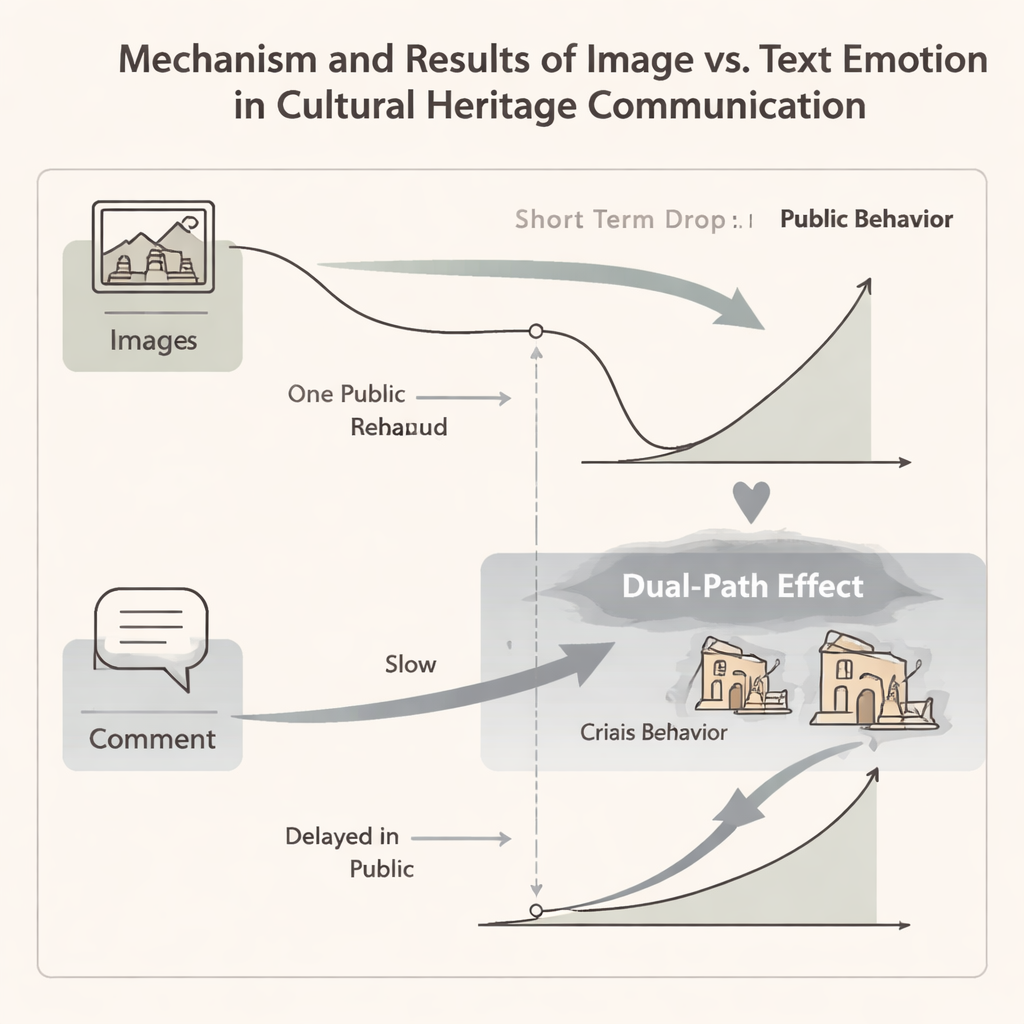
Pictures shout, words echo
Crucially, the researchers also compared image-based emotion (HSI) with an emotion index built from the text of user comments, called CSI. They discovered a “dual-path” process. Images act like emotional loudspeakers: they grab attention and trigger immediate reactions, especially during crises such as natural disasters at heritage sites or heated debates over restoration projects. Comments, in contrast, work more slowly. Their emotional tone shows up in behavior with a delay, reflecting the time it takes to read, think, and discuss. When pictures and comments carry the same emotional message, their effects reinforce each other; when they clash, the stronger channel—usually the images—tends to dominate, and the weaker one fades into the background.
What this means for everyday viewers and heritage stewards
For ordinary users, the study’s message is straightforward: the heritage photos filling our screens are not just pretty or upsetting “wallpaper.” They nudge how we feel about places we may one day visit, and how eager we are to protect them. For museums, tourism boards, and heritage managers, the findings suggest that visual storytelling is a powerful lever. Carefully balancing honest depictions of risk and loss with hopeful, dignified images of care and renewal can shape public sentiment in constructive ways. In short, the article shows that the emotional charge carried by heritage imagery is measurable, predictable, and deeply connected to how people respond—online and offline—to the shared past.
Citation: Lai, S., Tian, Y. & Zhang, Q. The impact of visual emotional cues in cultural heritage on public sentiment and behavioral intention: an image emotion recognition approach. npj Herit. Sci. 14, 85 (2026). https://doi.org/10.1038/s40494-026-02348-3
Keywords: cultural heritage, social media, emotion, tourism, deep learning