Clear Sky Science · en
Unpacking digital heritage experiences using PLS SEM and fsQCA through a perception-place behavior model
Why virtual visits to ancient places matter
Imagine standing inside a long-vanished palace or fragile cave temple without leaving your living room—yet coming away not just impressed by the visuals, but more willing to protect culture and the environment. This article explores how such digital trips, built with "digital twin" technology, can move people from simply enjoying virtual heritage to actually caring for real-world sites, and why some visitors are swept up in the experience while others stay cool and detached.
From digital copies to living experiences
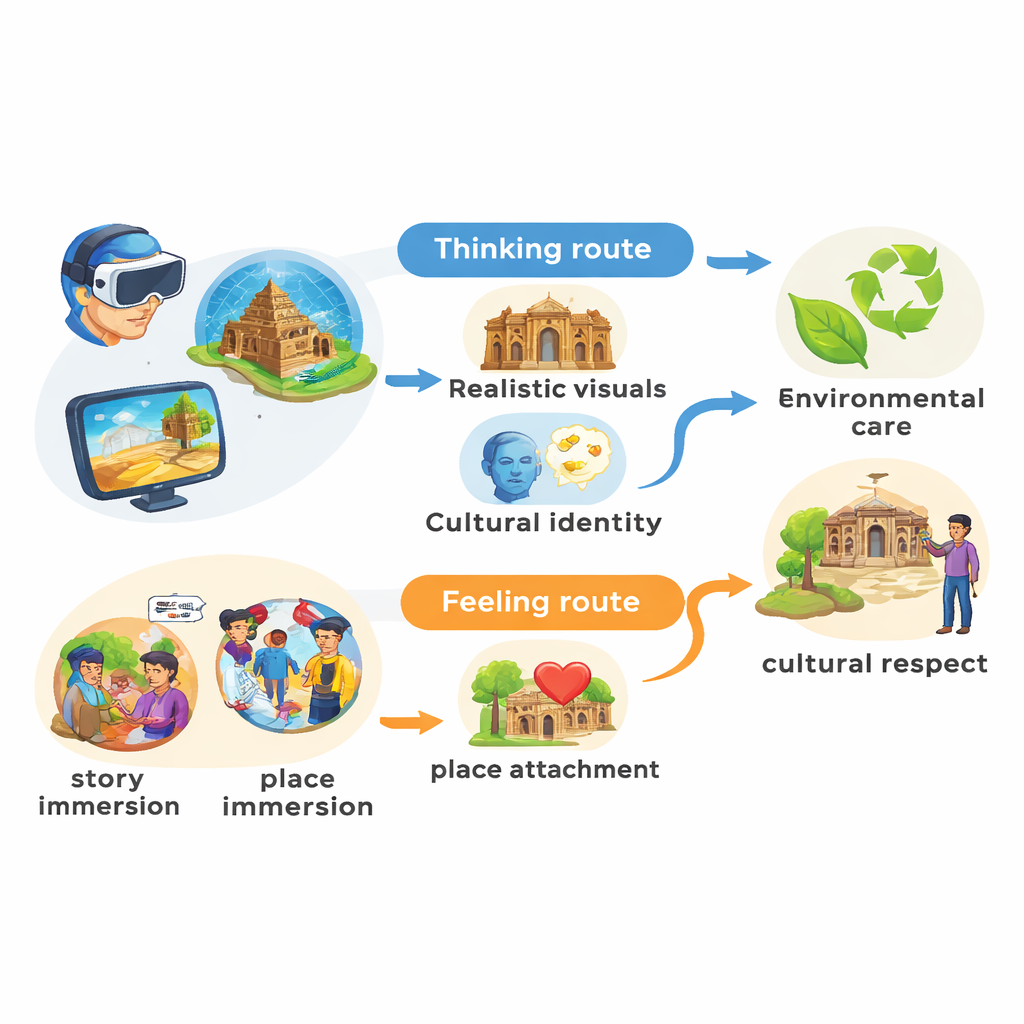
Digital twin technology creates highly detailed, interactive copies of heritage places like the Mogao Caves or Pompeii. Visitors can explore these versions through virtual reality, augmented reality, or large interactive screens. The study argues that two ingredients in these experiences matter most. One is how real the virtual place feels—its lighting, textures, and smoothness of interaction, which together create a convincing sense of "being there." The other is how strong the storytelling is: does the experience simply show objects, or does it pull visitors into a clear, meaningful story with roles, goals, sounds, and events that unfold over time?
Two pathways: thinking and feeling
The researchers propose a "Perception–Place–Behavior" model to explain what happens inside visitors’ minds. On one track, when the digital twin looks and behaves convincingly real, people are more likely to think of the represented culture as important and meaningful. This strengthens their cultural identity—an inner sense of understanding, belonging, and commitment to that culture. On a second track, rich storytelling, role play, and sensory cues can make people feel emotionally connected to the place, even if they are only seeing a digital version. This emotional bond, called place attachment, makes the site feel special and worth returning to. Both tracks can ultimately nudge visitors toward more respectful and eco-friendly behavior when they encounter real heritage sites.
Testing the model in real-world settings
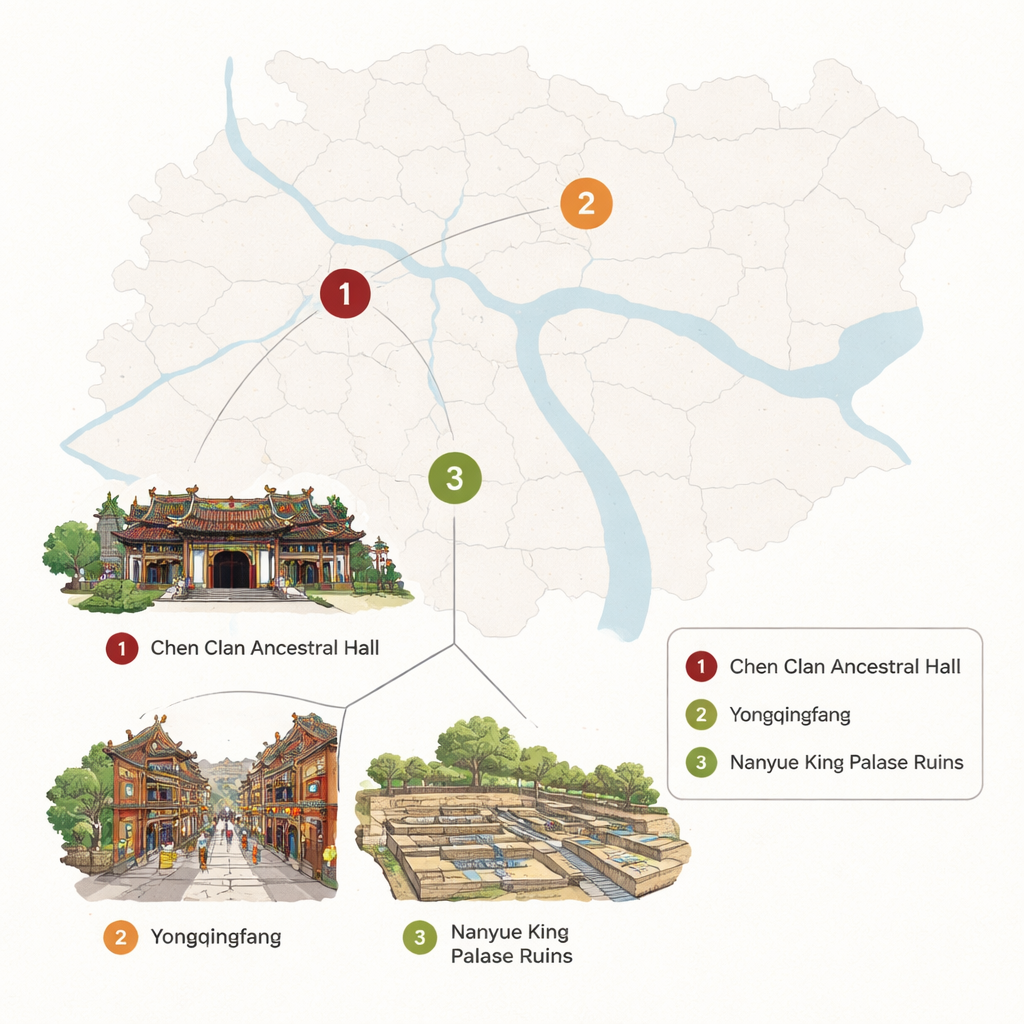
To see whether this framework holds up, the authors surveyed more than 500 visitors at three digitally enhanced heritage sites in Guangzhou, China: an ornate ancestral hall with high-precision AR overlays, a historic street animated by narrative-driven VR, and an archaeological park that blends laser scanning with AR guidance. Visitors answered questions about how real and story-like the digital experience felt, how strongly they identified with the culture, how attached they felt to the place, their level of cultural background, and how willing they were to protect the environment and respect local customs. The team used two advanced statistical tools—one that looks at average cause-and-effect links, and another that looks for multiple combinations of factors that can lead to the same outcome.
Why background knowledge changes the journey
The study finds solid support for the two pathways, but with a twist. Realistic visuals tend to strengthen cultural identity, and strong storytelling tends to deepen emotional attachment—both of which are linked to intentions to reduce waste, travel more sustainably, and follow cultural rules. However, visitors with a lot of cultural knowledge react differently from those with less. People rich in "cultural capital" often become more emotionally engaged when the story is strong, but they may also view ultra-realistic scenes more critically, questioning their accuracy rather than simply accepting them. As a result, realism has a weaker impact on their sense of identity, while narrative immersion has a stronger one. The second analysis shows that there is no single recipe for success: various mixes of realism, story, identity, attachment, and background education can all support caring behavior.
Designing smarter digital heritage for everyone
For non-specialists, the key message is that virtual heritage is not just digital decoration. When carefully designed, it can help people feel that a culture is "theirs" and that a place—physical or virtual—deserves care. But visitors are not all alike. Those with deep cultural background may prefer an "expert" mode that offers sources and historical nuance, while others may benefit more from a clear, emotionally engaging story. The article concludes that future digital heritage systems should adapt to these different needs, blending realism and narrative in ways that turn brief virtual encounters into lasting respect for both culture and the environment.
Citation: Deng, Z., Du, Q., Lei, B. et al. Unpacking digital heritage experiences using PLS SEM and fsQCA through a perception-place behavior model. npj Herit. Sci. 14, 65 (2026). https://doi.org/10.1038/s40494-026-02345-6
Keywords: digital twin heritage, virtual reality tourism, cultural identity, place attachment, sustainable tourism behavior