Clear Sky Science · en
Identification and degradation atlas of plastic objects in the collections of the Musée des Arts Décoratifs, Paris
Why the Plastics in Museums Matter
From colorful toys and designer chairs to fashion-forward raincoats, plastics define much of the look and feel of the last century. Yet the very objects that symbolize modern life are quietly falling apart on museum shelves. This study from the Musée des Arts Décoratifs in Paris explores which plastics these objects are made of, how they are decaying, and how museums can slow that process so future generations can still experience them. 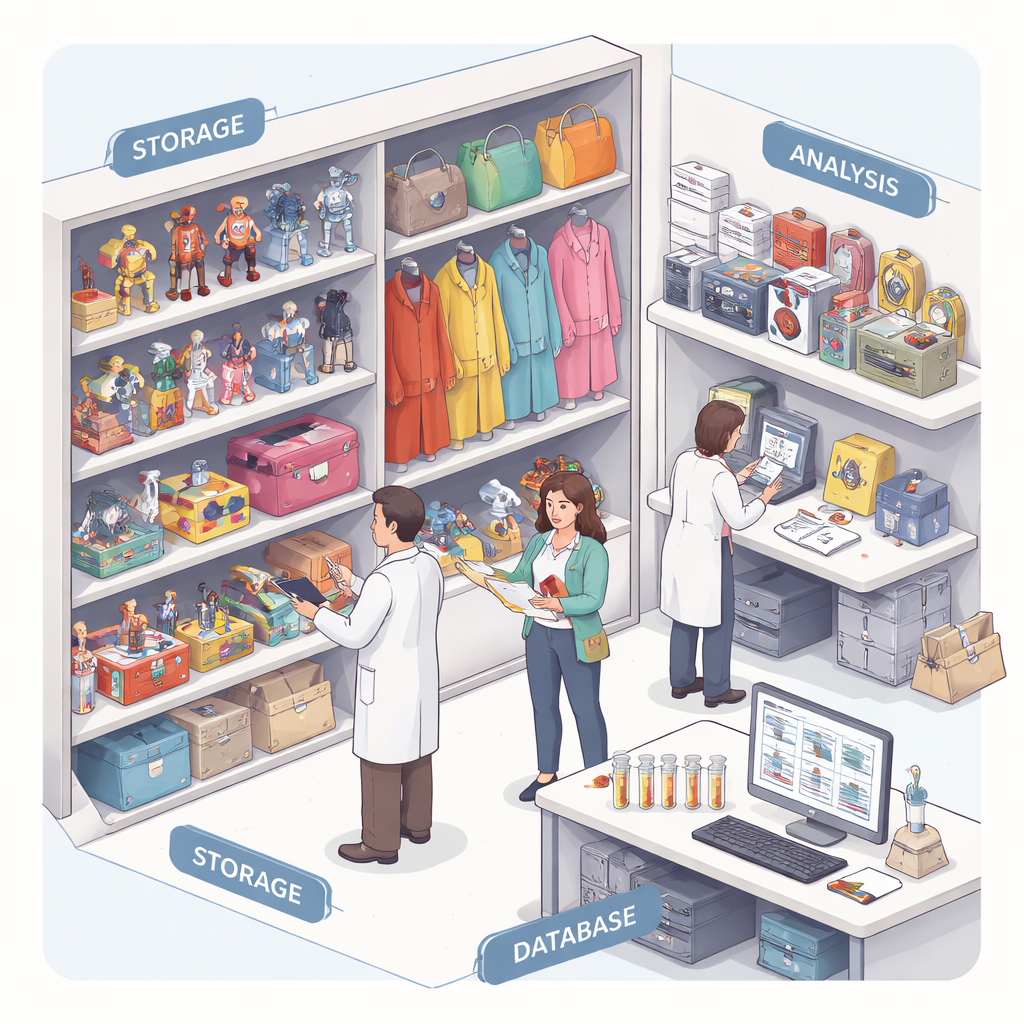
Looking Closely at Thousands of Objects
The museum holds about 12,000 plastic objects across fashion, toys, advertising, and design. Because it would be impossible to test them all, the researchers selected 142 representative items, ranging from mid‑20th‑century toys to contemporary fashion accessories. They began with careful visual inspections and photographs, then used a handheld infrared device to “fingerprint” the plastics without cutting into them. When this quick test was inconclusive, they took tiny samples for closer study under the microscope or with more advanced chemical analysis.
What These Museum Plastics Are Made Of
The team found a surprising mix of materials, and in four out of five cases, the original records about what each object was made from were wrong or incomplete. The most common plastic was PVC (polyvinyl chloride), followed by polyurethane (often used in faux leather), polyethylene and polystyrene. Many items were made of just one plastic, but a quarter were composites: toys combining several plastics, coated fabrics, or objects made from different layers. These combinations can look seamless to the eye, but the different plastics do not always age well together, and can even accelerate each other’s decay.
How Modern Icons Are Falling Apart
By comparing material type with visible damage, the researchers built a “degradation atlas” — a visual guide linking specific plastics to typical forms of deterioration. Polyurethane emerged as the worst offender, especially in fashion objects such as shoes and coated fabrics from the 1960s onward. These items often showed sticky or weeping surfaces, white crusts, cracking and layers peeling away, problems serious enough to make many pieces too fragile to display or even handle. PVC showed different issues: yellowing, loss of flexibility, and oily additives seeping out to the surface. In contrast, polyethylene and polystyrene tended to be more stable when used alone, though scratched surfaces, dirt and some discoloration were common. 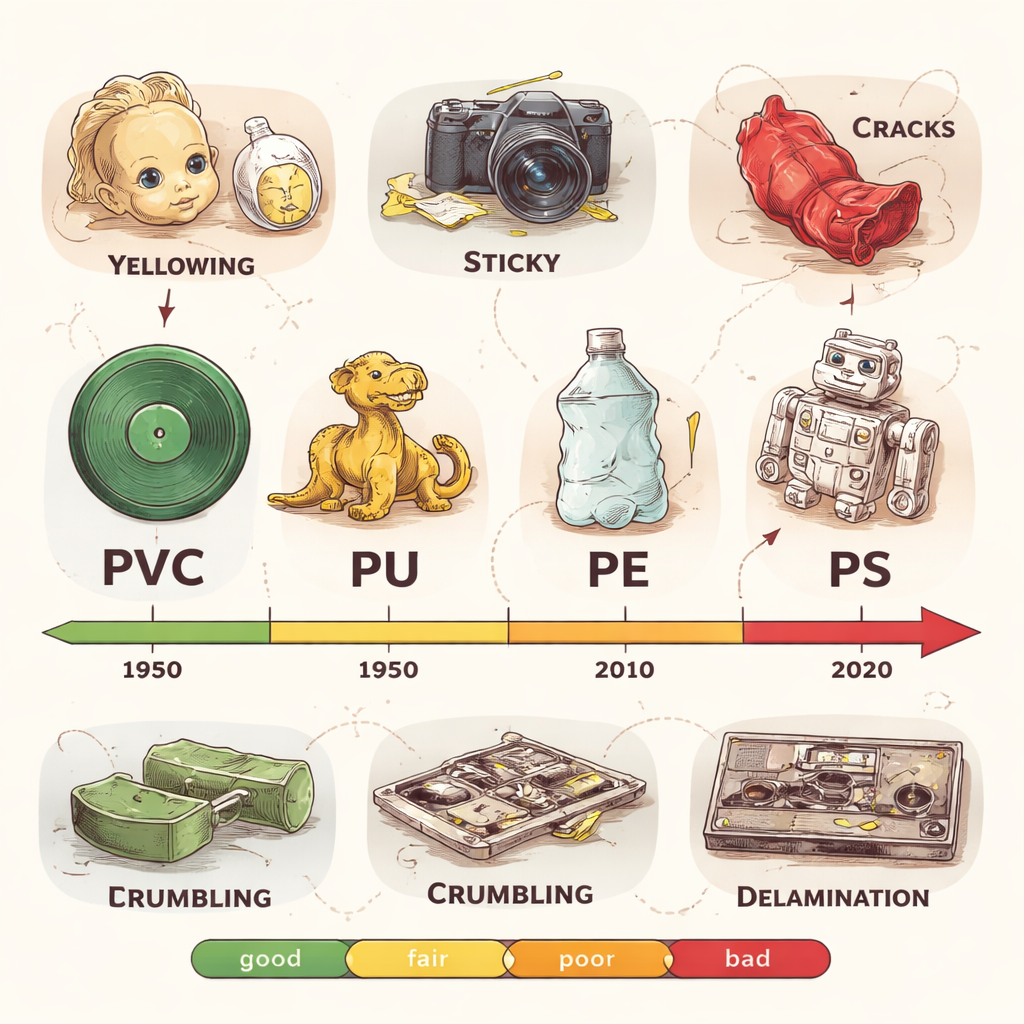
Time, Storage and Mixed Materials
The researchers then asked how age and storage conditions influence damage. The most troubled objects were generally made between the 1960s and early 1990s, when plastics were booming in everyday life and manufacturing recipes were still shifting quickly. Very early plastics from before 1950 were rare and often already in poor condition, suggesting many have not survived at all. Items made after the mid‑1990s were usually in better shape, perhaps thanks to improved formulations and more careful museum storage. Still, there was no simple rule: two objects from the same year could age very differently, depending on the exact plastic used, the way it was made, and what it had been in contact with during storage or display.
Building a Practical Tool for Conservators
All the findings — from material identifications to photographs of damage and overall condition ratings — were gathered into an open database. Conservators can search this resource by plastic type or by type of damage to find comparable cases. It gives them a realistic picture of how quickly certain plastics fail, which objects are at highest risk, and which storage materials or pairings of plastics could make things worse. Over time, as more objects are added, the atlas may even help specialists make educated guesses about what an unknown plastic is made of, based on how it looks and how it is breaking down.
What This Means for the Future of Plastic Heritage
For a general visitor, the message is simple but sobering: many beloved plastic objects in museums are inherently short‑lived. Faux‑leather shoes, inflatable chairs, vinyl raincoats and cartoon figurines may crumble, yellow or turn sticky within a human lifetime. This study does not stop that process, but it does give museums a clearer map of where the dangers lie and how to respond — by improving storage, handling and monitoring, and by planning conservation treatments while intervention is still possible. In doing so, it helps safeguard the everyday plastic things that tell the story of our recent past.
Citation: Larrieu, M., Tessier, H., Balcar, N. et al. Identification and degradation atlas of plastic objects in the collections of the Musée des Arts Décoratifs, Paris. npj Herit. Sci. 14, 70 (2026). https://doi.org/10.1038/s40494-026-02337-6
Keywords: plastic degradation, museum conservation, PVC and polyurethane, heritage science, modern design objects