Clear Sky Science · en
Optimization of extraction conditions for residual proteins in aged silk fabrics
Why Old Silk Still Matters Today
Ancient silk is more than a beautiful fabric—it is a fragile time capsule. Threads recovered from tombs and archaeological sites still carry clues about past technologies, trade routes, and even the animals that produced the silk. To read these molecular traces, scientists need to gently pull out the remaining proteins from silk that has been buried, heated, and degraded for thousands of years. This study shows how to fine‑tune a common chemical recipe so that it extracts more protein from aged silk while doing less damage, strengthening a powerful tool for studying and preserving cultural heritage. 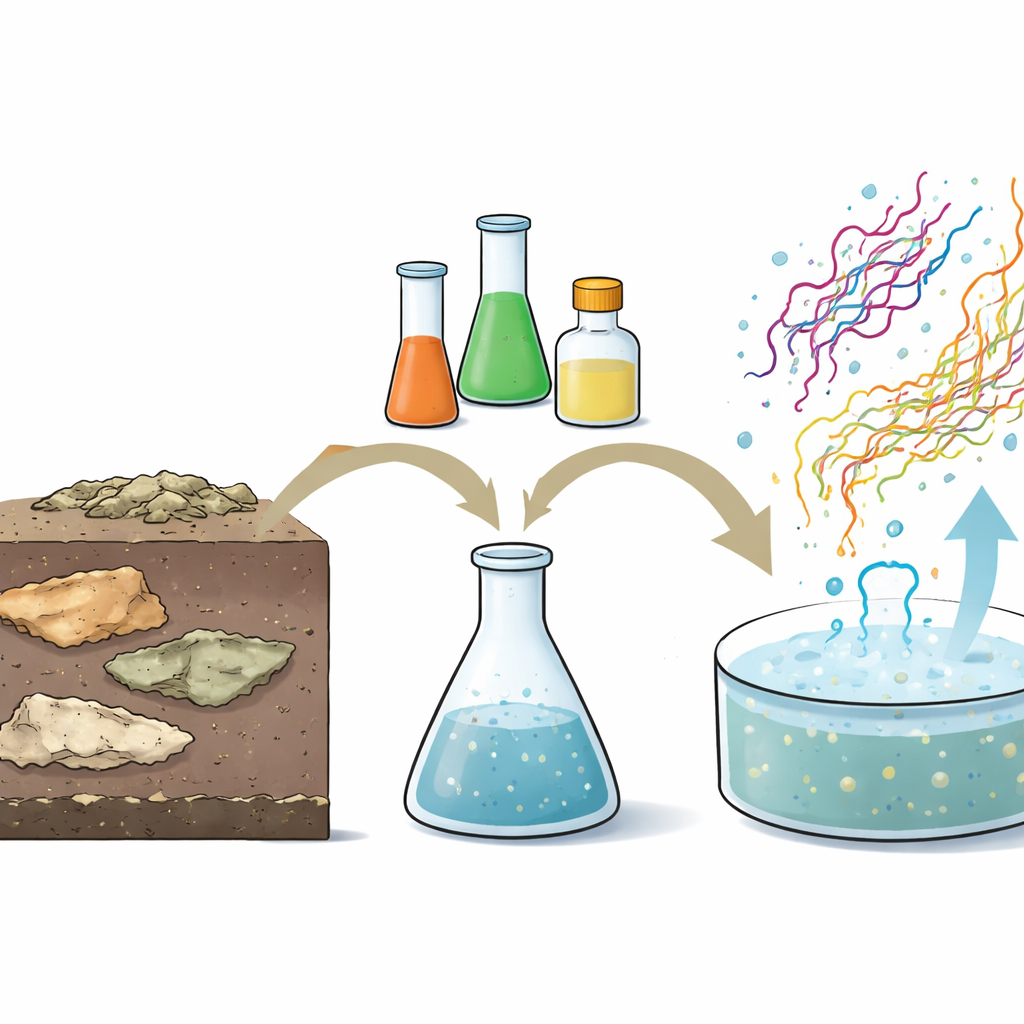
Silk as a Window into the Past
For over five millennia, silk has been woven into the story of human civilization, from ancient Chinese workshops to merchants along the Silk Road. Historic silk fabrics found in tombs or ruins are often brittle, darkened, and heavily decayed. Yet their protein building blocks—mainly a structural protein called fibroin—can still reveal where the silk came from, how it was made, and how it has aged. Modern proteomics, which identifies proteins in tiny samples, has transformed this kind of analysis. The challenge is that very old silk often contains only traces of protein, and these traces are tightly bound up in damaged fibers and soil contaminants. If the extraction step is inefficient or too harsh, much of this information is lost.
Finding the Sweet Spot in a Chemical Bath
Previous work showed that a mixture of calcium chloride, ethanol, and water is particularly good at dissolving silk proteins from aged fabrics. However, the details—how much salt, how much alcohol, how hot, and for how long—make a big difference. In this study, the authors created model silk samples by artificially aging modern silk in soil from a Chinese tomb at very high temperature for different times, mimicking thousands of years of natural decay. They then used a structured statistical approach to explore how four factors—the ratio of calcium salt to water, the ratio of ethanol to water, the temperature, and the extraction time—influence how much protein can be recovered.
Letting Statistics Steer the Experiment
Instead of testing every possible combination by trial and error, the team used a method called response surface methodology. This approach designs a smart set of experiments that systematically varies all four factors at three levels each, and then fits a curved surface through the results. With only 30 runs, they could pinpoint which factors mattered most and how they interacted. Calcium salt level and temperature turned out to be especially powerful: too little salt or too low a temperature left proteins trapped in the silk, while too much or too hot caused proteins to clump or degrade. Ethanol mainly shaped the overall environment, helping ions move and reach the protein, but did not strongly interact with the other variables.
A Better Recipe for Gentle Extraction
The optimized conditions that emerged were quite different from the earlier “standard” recipe. The best mixture used a lower amount of calcium salt, a slightly higher ethanol proportion, a moderate temperature of about the mid‑80s degrees Celsius, and an extraction time of just over four hours. Under these conditions, the extraction efficiency climbed to around 46%, close to the model’s prediction and noticeably higher than both the conventional method and other test combinations. 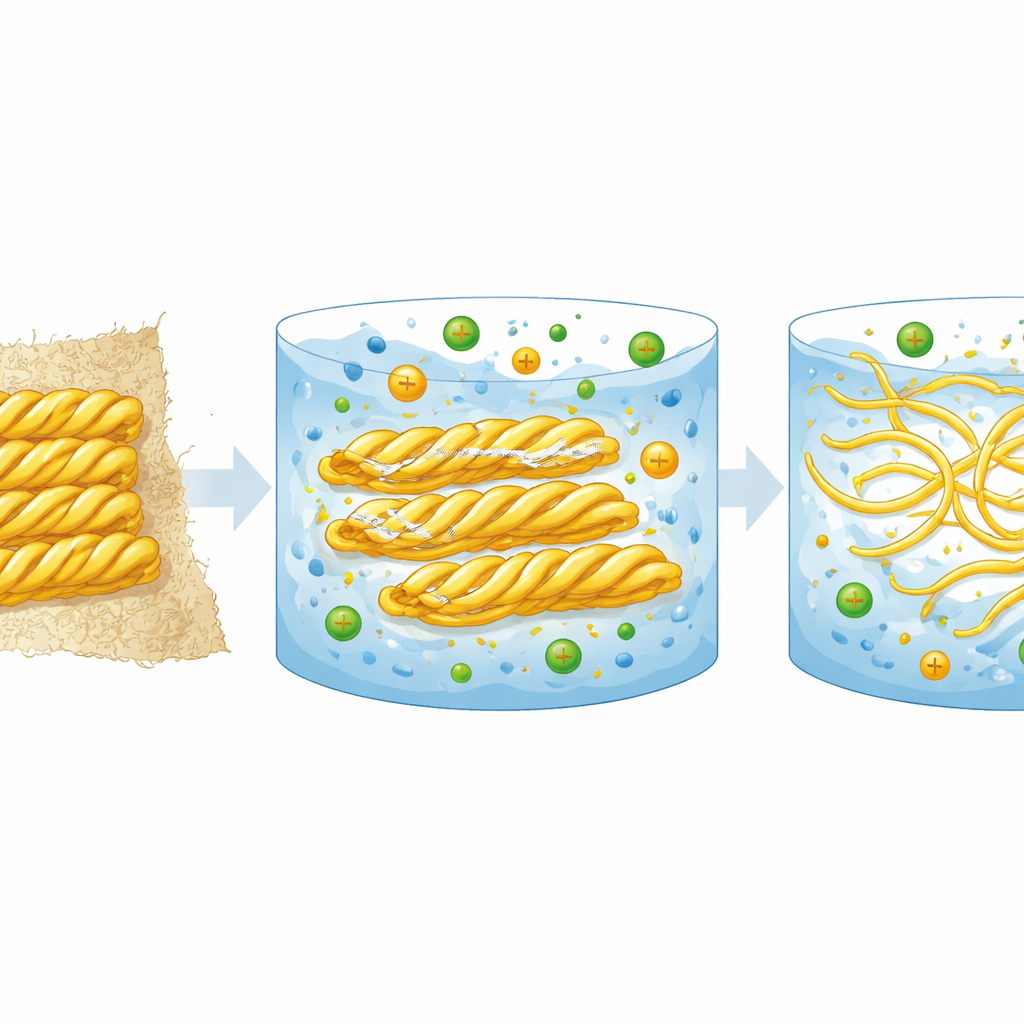
Keeping Protein Clues Intact
Higher yield alone would be useless if the process shredded what little protein remained. To check this, the researchers compared the size and structure of the recovered proteins under common versus optimized conditions, across silk aged for different lengths of time. Gel patterns showed that, for moderately aged samples, the new protocol better preserved higher‑molecular‑weight protein fragments instead of breaking them down further. Light‑absorption and circular‑dichroism measurements indicated that important aspects of the proteins’ secondary structure—such as flexible coils and helical regions associated with a relatively stable silk form—were slightly better maintained. Even for the most severely aged silk, where proteins were already reduced to tiny fragments, the optimized conditions still increased how much could be recovered.
What This Means for Ancient Fabrics
In practical terms, the study delivers a carefully tested recipe that pulls more protein out of degraded silk with minimal extra damage. That means archaeologists and conservators can glean richer molecular information from smaller, more precious samples, improving species identification, understanding of decay, and design of conservation treatments. By showing how statistical design can be used to tune every step of the extraction, the work also offers a template for refining other methods used on fragile cultural materials. In short, smarter chemistry at the lab bench helps ensure that the stories locked inside ancient silk threads can still be told.
Citation: Du, J., Zhu, Z. & Yang, J. Optimization of extraction conditions for residual proteins in aged silk fabrics. npj Herit. Sci. 14, 174 (2026). https://doi.org/10.1038/s40494-025-02074-2
Keywords: ancient silk, protein extraction, cultural heritage, proteomics, material conservation