Clear Sky Science · en
KCC2 activation during postnatal development alleviates long-term deficits in CDKL5-deficient mice
Why this research matters
For families of children with hard-to-treat epilepsy, seizures are only part of the struggle. Many affected children also grow up with severe learning difficulties and social challenges, and today’s medicines rarely help with those long-term problems. This study in mice asks a hopeful question: if we can gently correct how brain cells handle a common salt in early life, could we not only reduce infant seizures but also improve thinking and behavior in adulthood?
A rare childhood disorder and its hidden costs
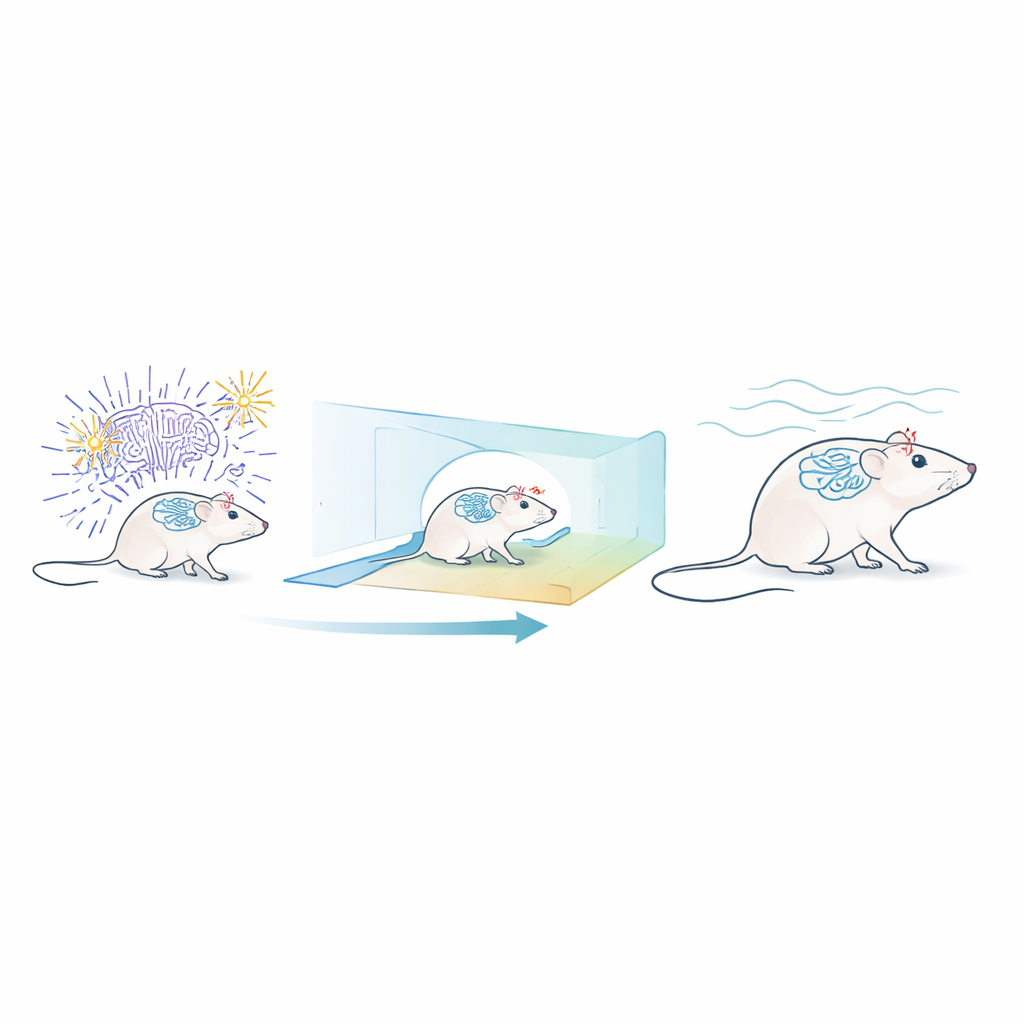
The work focuses on CDKL5 deficiency disorder, a rare genetic condition that usually begins in infancy with frequent, drug-resistant seizures. As children grow, they often face intellectual disability, movement problems and autistic-like behaviors. Current treatments mainly rely on anti-seizure drugs that can cause sleepiness and other side effects, and they do little for learning or social skills. To explore new options, researchers use mice that have the same missing CDKL5 gene, which develop many of the same features seen in people: spontaneous seizures, anxiety-like behavior and memory problems.
A brain salt pump that goes off track
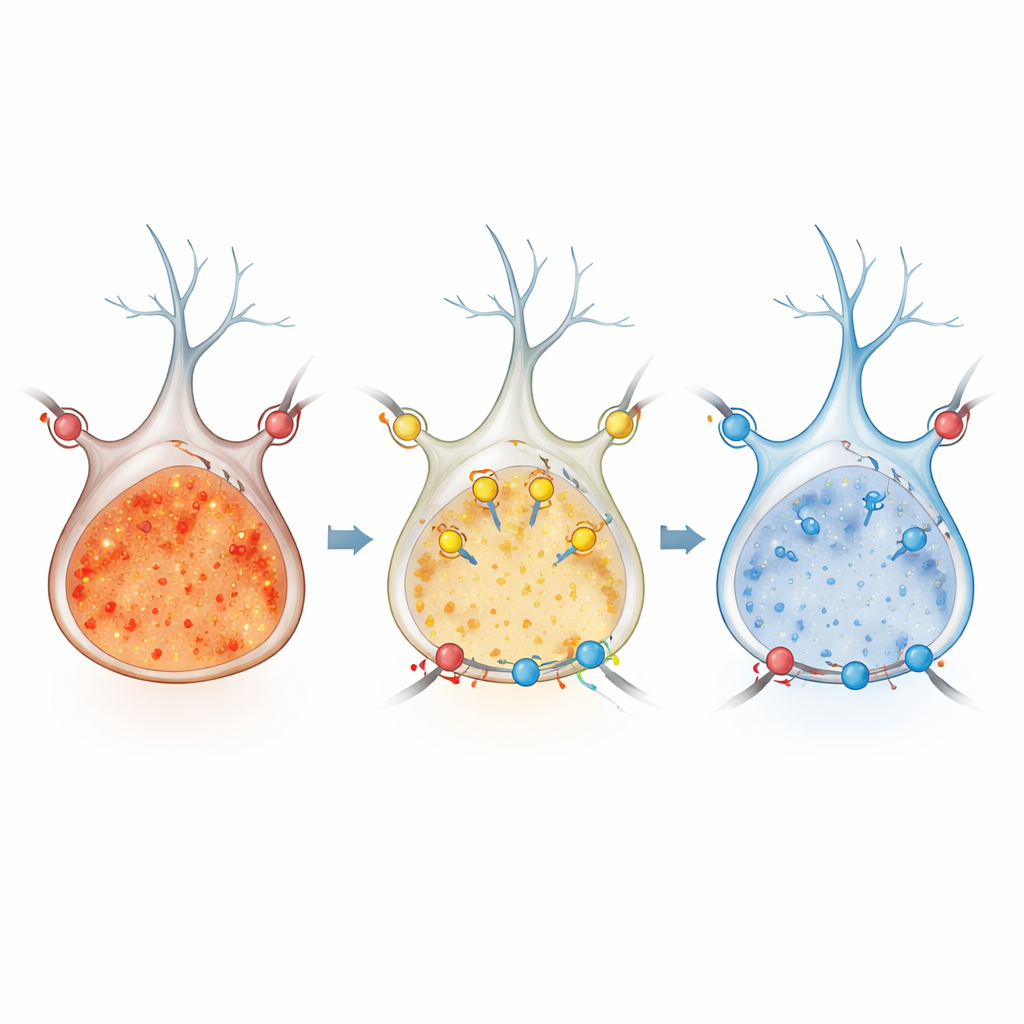
Brain cells rely on a delicate balance of electrically charged particles such as chloride to decide when to fire or stay quiet. A protein called KCC2 acts like a pump, pushing chloride out of nerve cells so that calming signals can do their job. The team discovered that in CDKL5-deficient mice, KCC2 is not only less abundant but also chemically modified in a way that keeps it in a more immature, less effective state. During the early weeks after birth—a critical time when brain circuits flip from overly excitable to properly controlled—the mice showed abnormal patterns in this pump, along with brain cells that remained too easily triggered. At the same time, the young mice displayed intense infant-like spasms and delays in basic movements.
Testing an early-life rescue window
The researchers then asked whether gently boosting KCC2 during this early window could reset development. They used a small molecule called OV350, designed to enhance KCC2’s activity, and gave it daily to CDKL5-deficient pups from postnatal day 10 to 21—a period in mice roughly comparable to late infancy in humans. Compared with untreated littermates, treated pups showed far fewer spasm-like movements, spent less time in abnormal postures and began walking more normally. Importantly, the treatment stopped at three weeks of age, but the team followed the animals into adulthood to see if the benefits would last.
Lasting gains in brain activity, seizures and behavior
As adults, the mice that had received OV350 as pups had quieter baseline brain electrical activity, which in this disorder is typically abnormally strong and linked to seizure risk. When exposed to a chemical that normally triggers severe, drug-resistant seizures, treated mice took longer to seize and to enter prolonged seizure states. Strikingly, a standard anti-anxiety and anti-seizure drug that usually fails in this model now became effective again after early OV350 treatment. Beyond seizures, the benefits extended to behavior: treated CDKL5-deficient mice were more willing to interact with other mice in social tests and performed better on a maze task that measures spatial learning and short-term memory, though not all memory problems were fully corrected.
What this could mean for future therapies
In plain terms, the study suggests that giving the brain’s chloride pump a nudge during a narrow early-life period can change the course of disease in a severe genetic epilepsy model. Temporarily enhancing KCC2 function in infant mice reduced early spasms, made adult seizures easier to control and partly rescued social and cognitive skills. While mice are not people and the exact timing, dose and safety would need careful testing, the work points to KCC2 as a promising target for disease-modifying therapies in CDKL5 deficiency and possibly other early-onset epilepsies, shifting the focus from just stopping seizures today to reshaping brain development for better tomorrows.
Citation: Arshad, M.N., Bope, C., Cho, N. et al. KCC2 activation during postnatal development alleviates long-term deficits in CDKL5-deficient mice. Exp Mol Med 58, 591–604 (2026). https://doi.org/10.1038/s12276-026-01670-x
Keywords: CDKL5 deficiency, epileptic encephalopathy, KCC2, infantile spasms, brain development