Clear Sky Science · en
TFEB, FOXO3 and TLR4 in resveratrol-induced autophagy in a mucopolysaccharidosis IIIB mouse model
A Rare Childhood Disorder and a Red Wine Molecule
Mucopolysaccharidosis type IIIB, also called Sanfilippo syndrome type B, is a rare inherited disorder that robs children of their abilities, leading to severe behavior changes, loss of movement, and early death. Families currently have no effective treatment. This study explores whether resveratrol—a natural compound found in grapes and peanuts and often linked to the benefits of red wine—can help protect the brain, calm inflammation, and restore the cell’s waste‑disposal systems in a mouse version of this disease.
When Cellular Trash Overwhelms the Brain
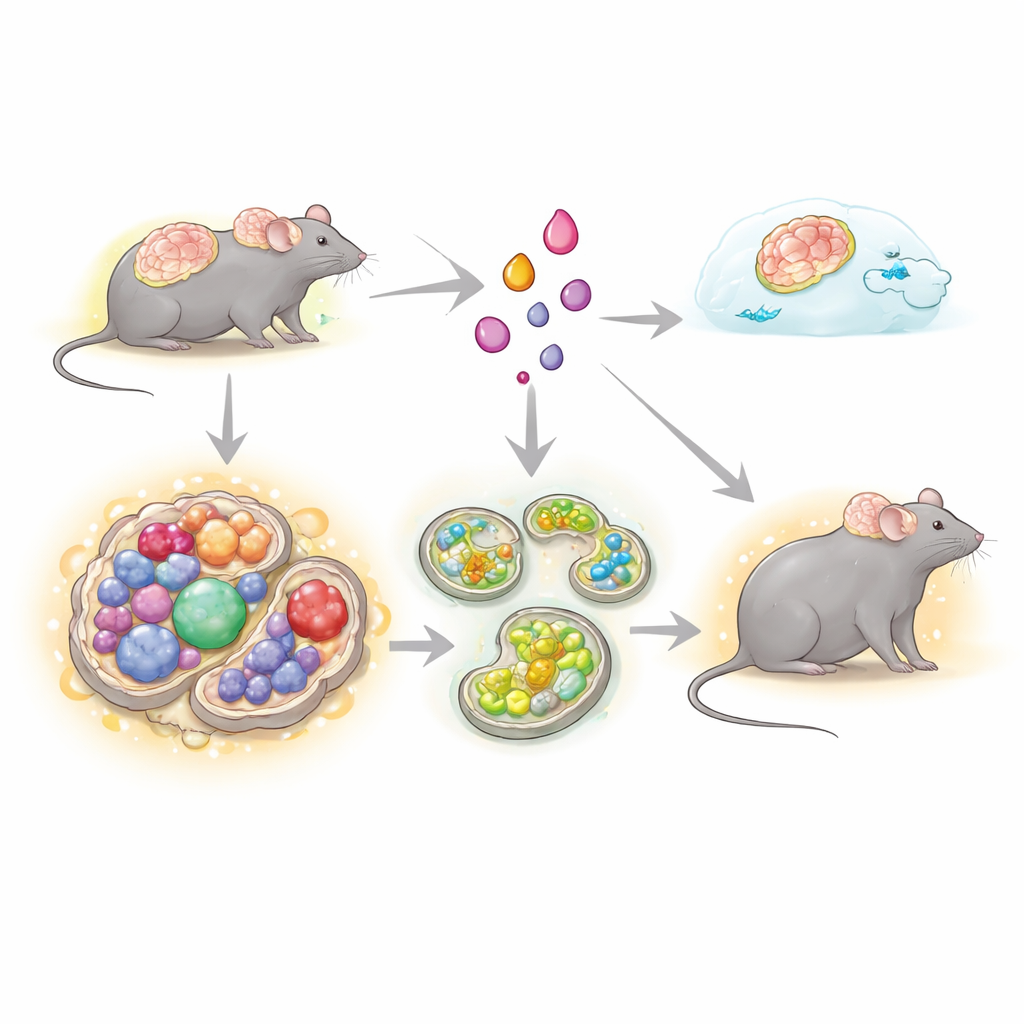
Sanfilippo syndrome arises when a single missing enzyme prevents cells from breaking down long sugar chains called glycosaminoglycans, especially heparan sulfate. Over time, these molecules pile up inside small sacs known as lysosomes, damaging many organs but hitting the brain hardest. Children first show speech and learning delays, then extreme hyperactivity, sleep problems, anxiety, and finally a loss of movement and awareness. Standard approaches, such as replacing the missing enzyme or using bone marrow transplants, struggle to reach the brain and can trigger strong immune reactions, leaving families with few options.
Testing Resveratrol in Diseased Mice
The researchers used mice that completely lack the Naglu enzyme, closely mimicking human Sanfilippo type B. Both male and female animals were studied to uncover any sex‑related differences, an often overlooked issue in earlier work. Beginning at eight weeks of age, mice received either water or a daily dose of resveratrol high enough to ensure that some of the compound reached the brain. Over several months, the team tracked behavior, measured the levels of stored sugars in urine, analyzed inflammatory molecules in blood and brain, and examined how well the cells’ internal recycling system—autophagy—was working in key organs such as the brain, liver, and spleen.
Behavior, Inflammation, and Cell Cleanup Improve
Untreated Sanfilippo mice were already abnormally hyperactive and anxious at just five weeks old, long before excess sugars could be easily detected in urine. They spent less time exploring, froze more often in open spaces, and reacted strongly to stress, mirroring the restlessness and behavioral distress seen in children with the disease. Their blood and brains showed high levels of inflammatory signals like TNF and low levels of calming signals such as IL‑10. Inside brain cells, the authors found clear signs that autophagy was disturbed: waste material accumulated while key recycling markers were altered. Resveratrol changed this picture. In both males and females, it reduced sugar build‑up to near‑normal levels by the end of the study, lowered inflammatory signals in blood and brain regions that control mood and movement, and largely normalized behavior, especially in males.
How Resveratrol Reawakens the Recycling System
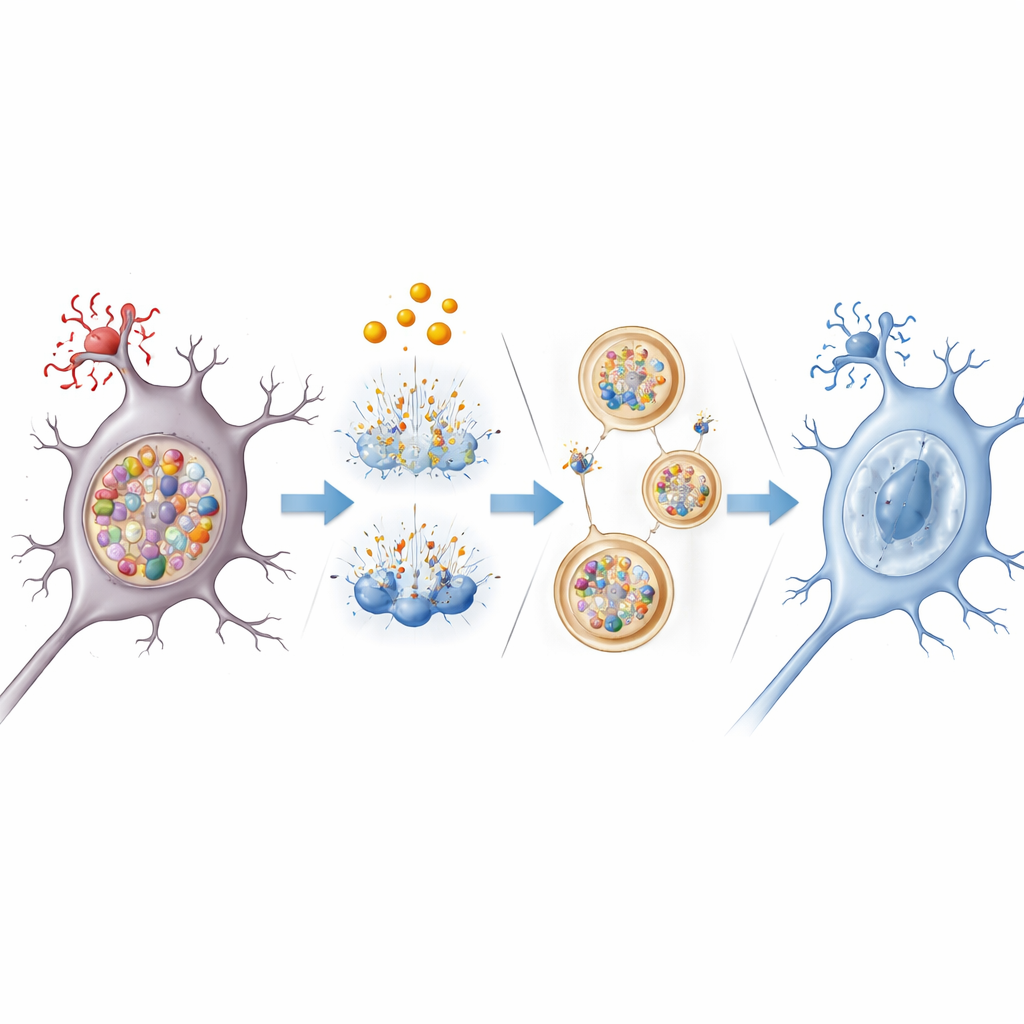
Diving deeper, the team mapped out how resveratrol nudges the cell’s machinery. They showed that the compound acts through at least two major routes. One route involves easing the brakes on autophagy controlled by a protein complex often called a nutrient sensor; when this brake is released, a factor named TFEB can move into the nucleus and spur the production of lysosomes and recycling components. A second route centers on a regulator called FOXO3. In diseased cells, FOXO3 is blocked by chemical tags that keep it inactive. Resveratrol removes these tags, allowing FOXO3 to enter the nucleus, stimulate autophagy genes, and help clear stored material. Laboratory experiments silencing FOXO3 sharply reduced the recycling response, confirming its importance. The work also revealed crosstalk with an immune sensor, TLR4, which responds to the accumulated sugars and helps drive inflammation, further tying together immunity and cellular cleanup.
Different Responses in Males and Females
Although both sexes benefited, the details were not identical. Male Sanfilippo mice tended to have higher levels of stored sugars and a broader shutdown of autophagy‑related proteins across tissues, making the rescue by resveratrol particularly striking. Females showed a more mixed pattern, with some recycling markers already elevated, as if their cells were attempting a partial self‑rescue. They also displayed stronger anxiety‑like immobility and certain brain regions with especially high inflammation. Importantly, a higher dose of resveratrol was required to achieve clear benefits in females, hinting that hormonal signaling and interactions between heparan sulfate and hormone receptors may shape disease severity and treatment response.
What This Could Mean for Future Treatment
To a lay reader, the main message is that a natural compound can, at least in mice, help diseased brain cells restart their internal cleaning crews and quiet damaging inflammation. By activating key control points like TFEB and FOXO3 and dampening overactive immune sensors such as TLR4, resveratrol reduced toxic buildup, improved behavior, and normalized many molecular disturbances in a severe genetic brain disease. While the doses used here are much higher than any supplement and many challenges remain—especially delivering enough drug safely to human brains—this work suggests that boosting the cell’s own recycling system and taming inflammation could be a promising strategy for children with Sanfilippo syndrome and possibly other neurodegenerative disorders.
Citation: Rintz, E., Podlacha, M., Gaffke, L. et al. TFEB, FOXO3 and TLR4 in resveratrol-induced autophagy in a mucopolysaccharidosis IIIB mouse model. Exp Mol Med (2026). https://doi.org/10.1038/s12276-026-01643-0
Keywords: Sanfilippo syndrome, resveratrol, autophagy, neuroinflammation, lysosomal storage disease