Clear Sky Science · en
Repeated treatment with short-term mild stress reverses aging- and stress-induced emotional and social behavioral deficits
Why gentle stress might be good for an aging brain
Most of us think of stress as something to avoid, especially as we get older. Yet this study in mice suggests a surprising twist: brief, gentle stress, given in a controlled and repeated way, can actually undo some of the damage caused by long-lasting stress and aging. By tracking hormones, brain activity, and social behavior, the researchers show that tiny daily stress doses can reset an overtaxed stress system and restore emotional balance and sociability in both young and aged animals.
How stress and aging tangle the brain’s alarm system
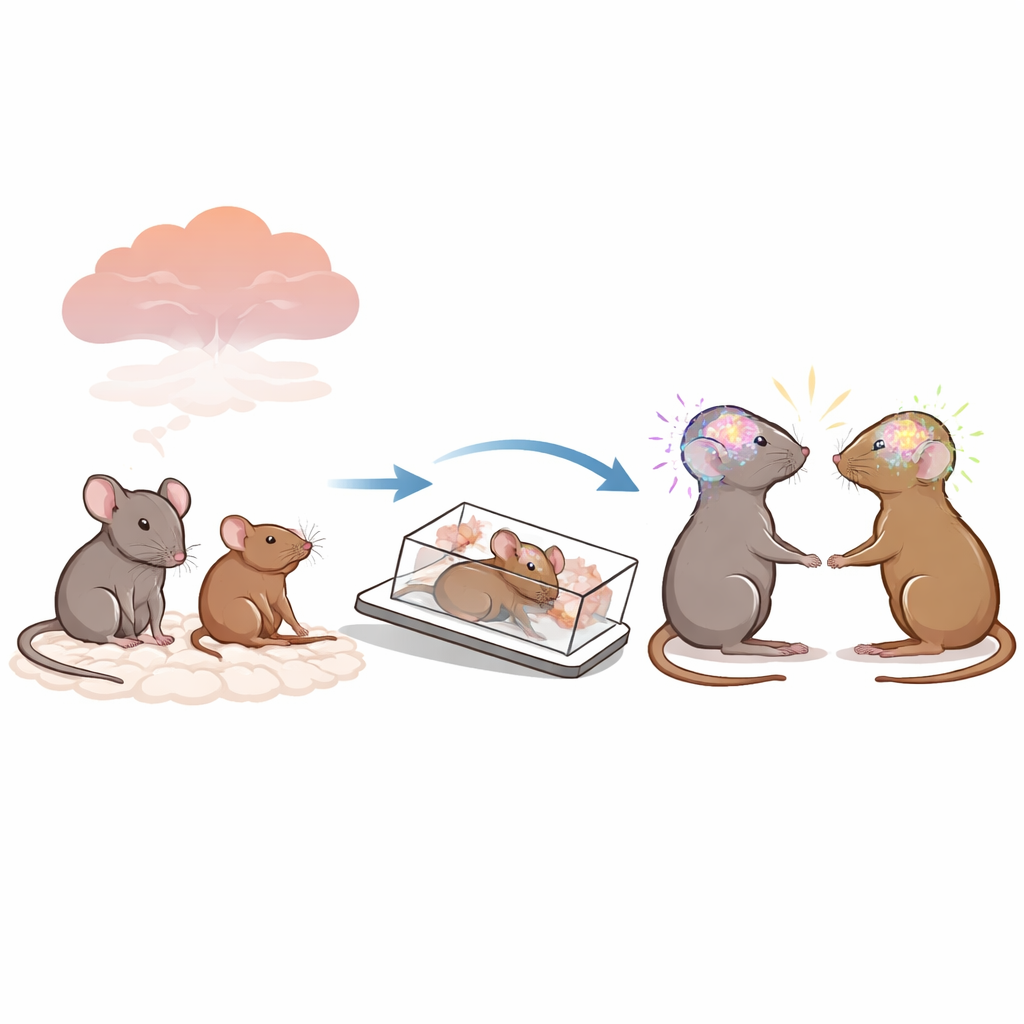
The body’s main stress alarm involves a hormone circuit that runs from the brain to the adrenal glands and back again. When danger appears, this system releases glucocorticoids—stress hormones that help us cope. In young mice exposed to weeks of strong restraint stress, this system became overactive: baseline hormone levels stayed high, brain cells that trigger stress responses were over-engaged, and the animals showed despair-like behavior and poor social interactions. Interestingly, older mice, even without extra stress, already had high baseline stress hormones and a brain signature that looked a lot like chronically stressed young mice. They did not seem overtly “depressed,” but closer testing revealed subtle social memory problems, hinting that aging quietly shifts the brain into a stress-like state.
When a little stress heals too much stress
The counterintuitive heart of the study is a type of “stress therapy.” After young or aged mice were pushed into a stressed state, the scientists gave them just 5 minutes a day of mild stress, such as a very short restraint or a brief gentle rocking of their cage, for two weeks. These tiny daily challenges reversed many of the harmful changes. Stress hormone levels dropped back toward normal, brain cells in key regions calmed, and the animals became less despair-like and more sociable. Remarkably, gentle rocking—a noninvasive, drug-free treatment—worked about as well as a low daily dose of stress hormone itself, suggesting that small, well-timed hormone pulses may help re-tune an overdriven stress system.
A hidden hub that links stress hormones and social life
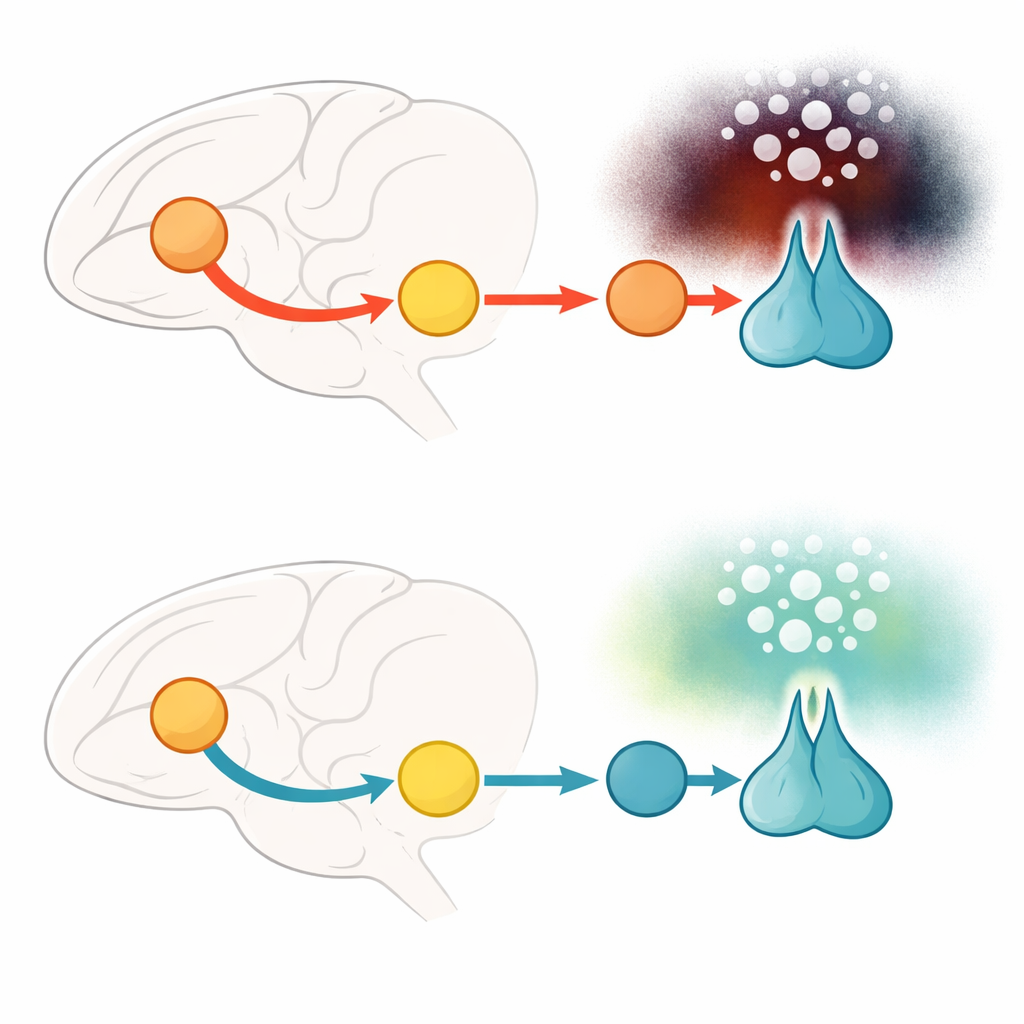
To understand how this works, the researchers zoomed in on a deep brain region called the ventral subiculum, a major output station of the hippocampus. This area connects to several emotion and motivation centers and feeds into a relay called the bed nucleus of the stria terminalis, which in turn controls hormone-releasing cells. By using engineered receptors to turn the ventral subiculum circuit on and off, the team showed that activating this pathway could mimic the benefits of mild stress: it lowered baseline stress hormones and improved mood- and social-like behaviors in both young and old stressed mice. Blocking the pathway, in contrast, prevented mild stress from helping, highlighting it as a crucial route by which the brain reins in its own alarm system.
Stress genes that age the brain—and can be dialed back
Beyond circuits, the team examined which genes were switched on or off in the ventral subiculum. Aging alone, and chronic stress in youth, both produced a similar gene pattern: molecules involved in stress hormone signaling and inflammation were turned up, while genes linked to brain plasticity and development were turned down. One stress-regulating gene, Fkbp5, stood out. It was elevated in aged and chronically stressed mice and is known to tune how cells respond to stress hormones. When the researchers selectively reduced Fkbp5 in the ventral subiculum, stress hormone levels fell and emotional and social problems eased. Repeated mild stress, or low-dose hormone treatment, naturally pushed Fkbp5 levels back down and restored a healthier gene profile, including receptors that support flexible brain signaling.
What this could mean for healthy aging
Taken together, the findings paint aging not just as wear and tear, but as a slow drift into a chronic stress-like condition that leaves the brain vulnerable to new challenges. Carefully dosed, short-lived stressors appear capable of nudging the system back toward balance, both by rerouting activity through key brain circuits and by reprogramming stress-related genes such as Fkbp5. While this work was done in male mice and cannot be applied directly to people, it suggests that brief, predictable challenges—perhaps analogs of controlled physical or sensory stress—might someday help restore emotional resilience and social engagement in older brains by gently resetting the body’s own stress thermostat.
Citation: Lee, EH., Park, JY., Kwon, H. et al. Repeated treatment with short-term mild stress reverses aging- and stress-induced emotional and social behavioral deficits. Exp Mol Med 58, 519–532 (2026). https://doi.org/10.1038/s12276-026-01641-2
Keywords: aging brain, stress hormones, emotional resilience, social behavior, glucocorticoids