Clear Sky Science · en
The rise of astrocytes: are they guardians or troublemakers of the brain disorder?
Why Brain Support Cells Matter
The human brain is often portrayed as a network of neurons, but an equally important cast of “support” cells quietly keeps this network alive. This review article zooms in on astrocytes—star-shaped cells once thought to be mere scaffolding—and reveals them as powerful guardians of brain health that can, under chronic stress, turn into troublemakers. Understanding how and why astrocytes switch between helpful and harmful roles is becoming central to explaining diseases like Alzheimer’s, Parkinson’s and ALS, and may open new paths for treatment.
Hidden Helpers in Everyday Brain Life
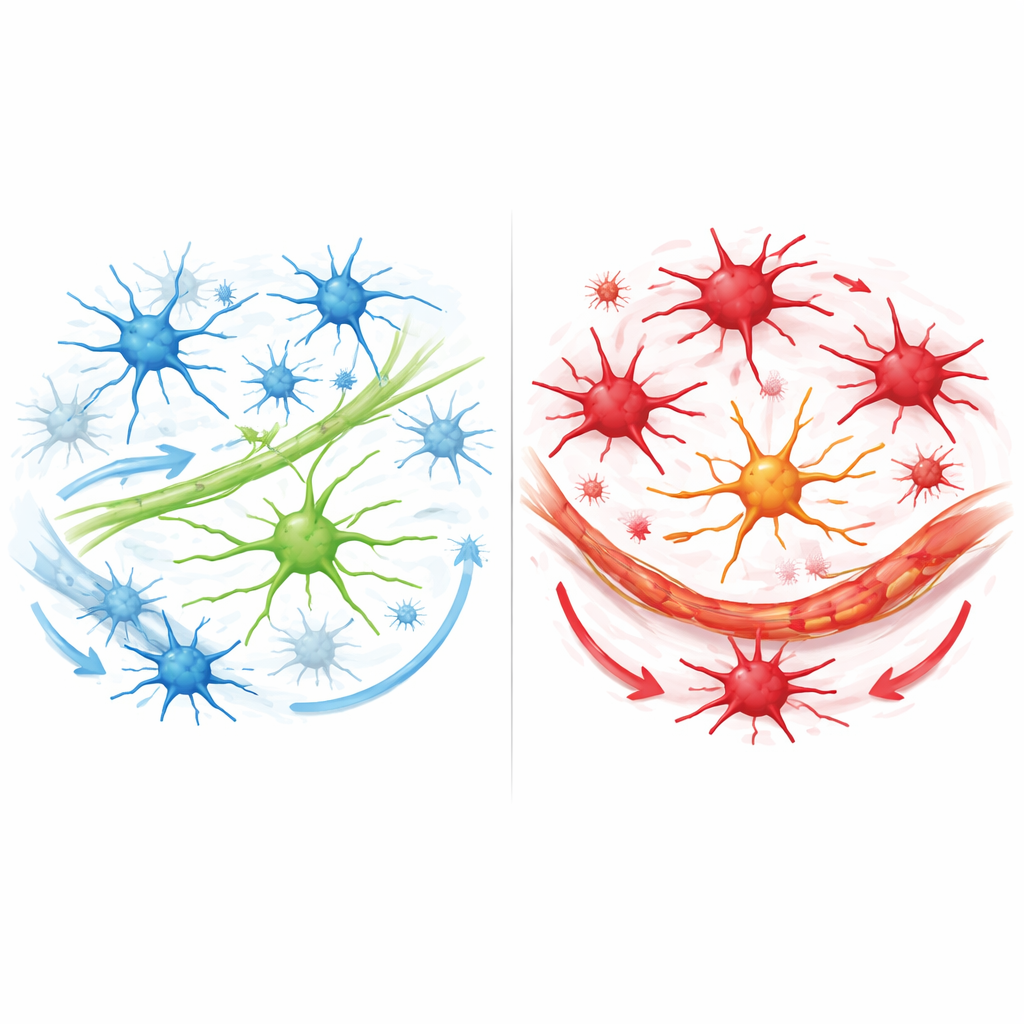
In a healthy brain, astrocytes are multitasking workhorses. They feed neurons by managing sugar use, store energy as glycogen and supply alternative fuels like lactate and ketones. They mop up chemical messengers such as glutamate and GABA, recycle them so signaling stays sharp and prevent toxic build-up that could overexcite neurons. Astrocytes also help form and maintain the blood–brain barrier, regulating what gets in and out of brain tissue, and fine-tune blood flow so active brain regions receive more oxygen and nutrients. Far from passive, they communicate with neurons and blood vessels through waves of calcium and other ions, and release growth factors that support learning, memory and repair.
When Helpers Sense Danger
When the brain is injured, infected or chronically stressed by protein build-up, astrocytes change form and behavior in a process called reactivity. Their branches thicken, their gene activity shifts and they begin to act more like first responders. In the short term, this can be beneficial: reactive astrocytes wall off damaged areas, help repair blood vessels, clear debris and release protective molecules that support surviving neurons. They also ramp up internal recycling systems, such as autophagy, to digest harmful protein clumps like amyloid‑beta, a key player in Alzheimer’s disease. These changes are not all-or-nothing but span a spectrum of states that differ by brain region, disease stage and type of insult.
When Defenders Go Too Far
Problems arise when stress is intense or long-lasting. Under such conditions, astrocytes can cross a threshold and become chronically reactive. Their metabolism shifts: glucose handling becomes inefficient, key transporters for sugar and ions are misplaced or reduced, and mitochondria—the cell’s powerhouses—struggle. Instead of simply removing toxic proteins, overloaded recycling systems may fail, allowing aggregates and damaged cell parts to accumulate. Reactive astrocytes can then release excess inhibitory chemicals, reactive oxygen species and inflammatory signals, weakening nearby neurons, disturbing electrical balance at synapses and even damaging the blood–brain barrier. In Alzheimer’s and related disorders, certain subpopulations of reactive astrocytes are now recognized as active contributors to memory loss and nerve cell death, not just bystanders.
Fine-Tuning Genes and Signals
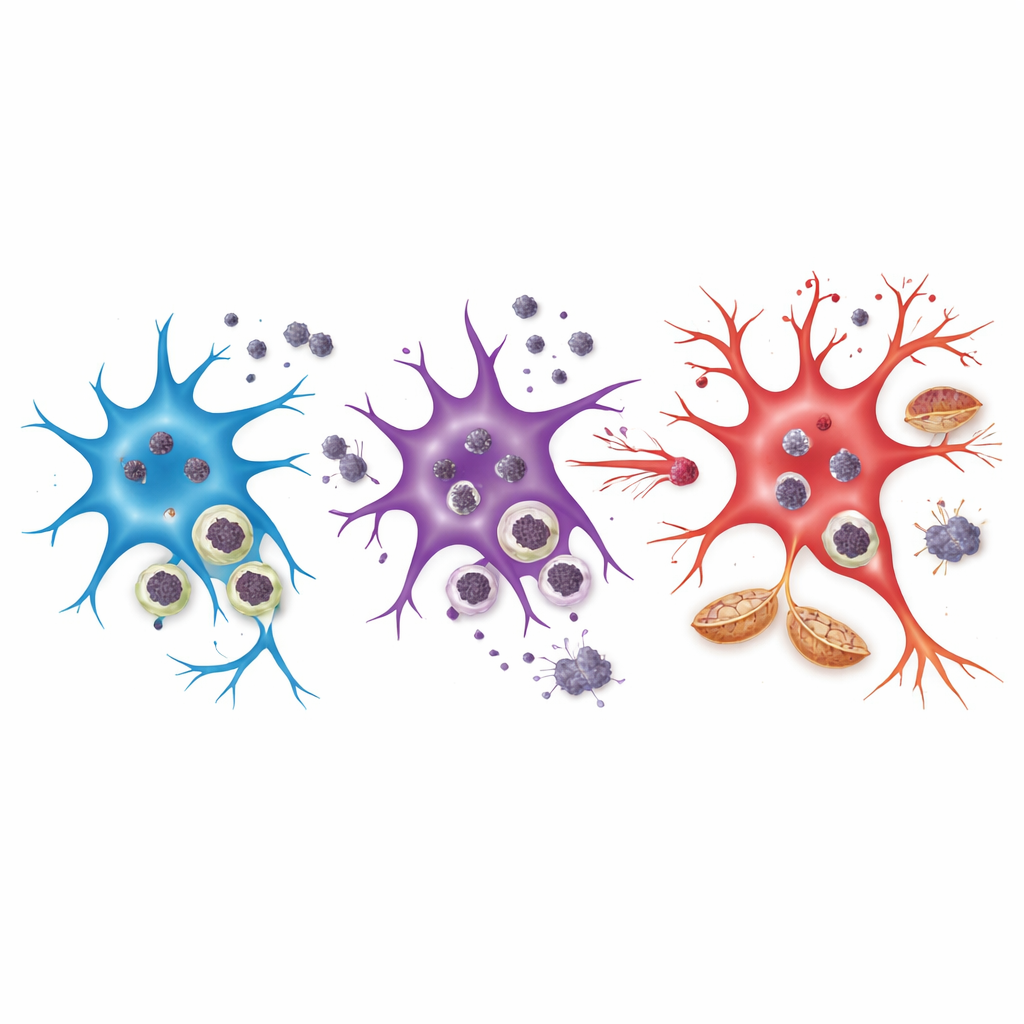
The review highlights that astrocyte behavior is tightly controlled by layers of regulation. Epigenetic changes—chemical tags on DNA and histones, along with noncoding RNAs—reshape which genes are turned on or off as disease progresses, nudging astrocytes toward more protective or more harmful profiles. Ion signaling through calcium, sodium and potassium channels couples astrocyte activity to synapses and blood vessels, but becomes erratic in disease, feeding into a vicious cycle of metabolic strain and inflammation. Because these control systems are adjustable, they offer multiple entry points for therapy: drugs that tweak epigenetic enzymes, stabilize ion channels, reshape metabolism or restore balanced communication with immune cells may shift astrocytes back toward a supportive role.
Turning Trouble Back into Protection
Rather than casting astrocytes as simply good or bad, the authors argue that they are adaptable responders whose role depends on context. Emerging strategies aim either to boost the helpful side of astrocytes—enhancing their ability to clear toxic proteins, buffer oxidative stress and support synapses—or to dampen their most damaging behaviors, such as chronic inflammation, excess inhibitory signaling and breakdown of the blood–brain barrier. Some approaches even explore transplanting healthy astrocytes or reprogramming reactive ones into new neurons. For a lay observer, the key message is that these star-shaped cells are central players in brain disorders: by learning how to steer their many states, researchers hope to slow or prevent neurodegeneration and preserve cognitive function.
Citation: Kim, H.Y., Kim, S., Akaydin, A.N. et al. The rise of astrocytes: are they guardians or troublemakers of the brain disorder?. Exp Mol Med 58, 301–318 (2026). https://doi.org/10.1038/s12276-025-01627-6
Keywords: astrocytes, Alzheimer’s disease, neuroinflammation, glial cells, neurodegeneration